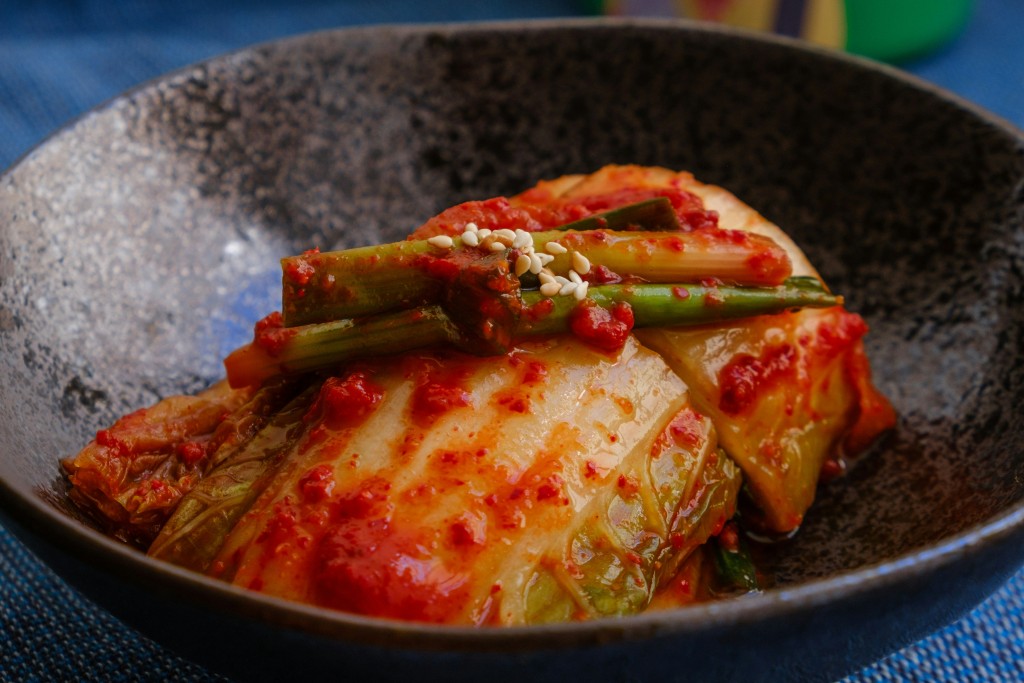
Kimchi is a traditional Korean food containing probiotics that help support the gut microbiome, digestion, and immune health. A recent study suggests that a probiotic in kimchi may help clear nanoplastics from the gut. However, the research is still in its early stages, conducted only in laboratory models and mice, and has not yet confirmed the same effect in humans.
Study: Kimchi Lactic Acid Bacteria May Help Excrete Nanoplastics
The scientific community has been paying attention in recent years to the potential health effects of microplastics and nanoplastics, including possible inflammation and effects on the digestive, respiratory, and endocrine systems. A study tested a specific lactic acid bacterium isolated from kimchi in a laboratory model simulating the human gut and in mice, observing its interaction with nanoplastics.
Results showed that in the laboratory gut model, the lactic acid bacterium was able to bind to about 57% of nanoplastics. In mice fed the probiotic, the amount of nanoplastics excreted in their feces was twice that of mice not fed the probiotic. Study author Dr. Se Hee Lee explains: "We think this probiotic works somewhat like Velcro. The bacterial cell surface contains many chemical structures that weakly attract and grab nanoplastics. Once attached, the plastic is more likely to pass through the digestive system and be excreted in feces, rather than being absorbed by the body."
Expert: Human Effects Still Need to Be Confirmed
Lee points out that it is still uncertain whether eating kimchi in daily life would produce the same effect in humans. Dr. Allison Childress, a registered dietitian and associate professor of nutritional sciences at Texas Tech University, also reminds that store-bought kimchi may not contain the same probiotic strain tested in the study, so one should not expect that eating kimchi will clear plastics from the gut.
She suggests that citizens focus on known effective health habits: eating a diet rich in fruits, vegetables, whole grains, and other minimally processed foods; maintaining a healthy gut microbiome; staying physically active; and avoiding unnecessary plastic exposure where practically possible.
Kimchi's Own Benefits: Both Probiotics and Prebiotics
Although the plastic-clearing effect remains to be confirmed, experts point out that kimchi, as a fermented food, already has established health benefits. Dr. Matthew Landry, assistant professor of population health and disease prevention at the University of California, Irvine, states: "Kimchi acts like both a prebiotic and a probiotic in many ways." Kimchi undergoes fermentation and produces good bacteria that can reach the gut and grow; the fiber in kimchi can serve as a prebiotic to feed the good bacteria.
Half a cup of kimchi can provide about 2 grams of fiber, as well as 20% of the daily required vitamin C and 15% of vitamin A. Fermented foods may also help with overall health, weight management, and relieving symptoms of irritable bowel syndrome.
Practical Tips to Reduce Plastic Exposure
To reduce plastic exposure, experts offer the following methods:
-
Drink tap water and avoid bottled water;
-
Consider using glass, stainless steel, or bamboo kitchen utensils instead of plastic cutting boards and tools;
-
If storing food in plastic containers, never heat them in the microwave.
Dr. Michael Hansen, senior scientist at Consumer Reports, points out: "Even if a plastic container is labeled microwave-safe, heating may still release plastics into food." A recent Greenpeace report also found that plastic containers labeled microwave-safe still release plastics when heated.
In recent years, foods such as Korean kimchi and kombucha have been sought after because they contain probiotics and are considered beneficial to the gut, regarded as symbols of a healthy diet. However, experts warn that these foods may be hidden traps of high salt and high sugar, and frequent consumption may pose a potential threat to heart health.
Is Eating Kimchi a Wellness Trap? May Harm Heart Health
The British Heart Foundation has previously published a report stating that fermented foods many people eat to promote gut health may unknowingly harm the heart. The report specifically names probiotic-rich foods such as Korean kimchi and German sauerkraut, pointing out that large amounts of salt are often added during production for pickling and preservation.
If consumed frequently or in large amounts, it is easy to take in excessive sodium, raising blood pressure and increasing the long-term risk of heart disease and stroke. The foundation suggests that citizens should control portions when enjoying such foods and pay attention to whether "low-salt" or "low-sodium" options are available when purchasing.
Source: Verywell Health, British Heart Foundation