When eating, if you accidentally splash oil onto your beloved clothes and leave it unattended, the oil stain will penetrate deep into the fibers and become difficult to clean later. In fact, as long as you use the right method, you can easily remove oil stains at home. To save your beloved clothes, you need to learn to distinguish the types of stains and 4 effective oil stain removal methods!
Stains Are Divided into 3 Types: Water-Soluble, Oil-Soluble, and Insoluble
According to a report by the Japanese media outlet Grape, stains on clothes can be roughly divided into 3 types:
Water-soluble stains: Such as coffee, black tea, fruit juice, and soy sauce, which contain more water. After they attach, rinse with water or clean with neutral dishwashing liquid as soon as possible, and they are easier to remove.
Oil-soluble stains: Commonly known as "oil stains," including sebum, cooking oil, chocolate, butter, curry, foundation, lipstick, etc. Oil stains are insoluble in water and are harder to clean; they need to be broken down with alkaline dishwashing liquid or specific methods.
Insoluble stains: Such as mud, ink, soot, and metal rust stains, which are difficult to dissolve in both water and oil. Mud-type stains should first be kept dry, brushed off with a brush or abrasive items such as toothpaste, and then washed normally.
When handling, stains should be treated gently, avoiding vigorous rubbing. The key to removing oil stains lies in choosing the appropriate method according to the state of the stain, including the following 4 types of oil stain removal methods:
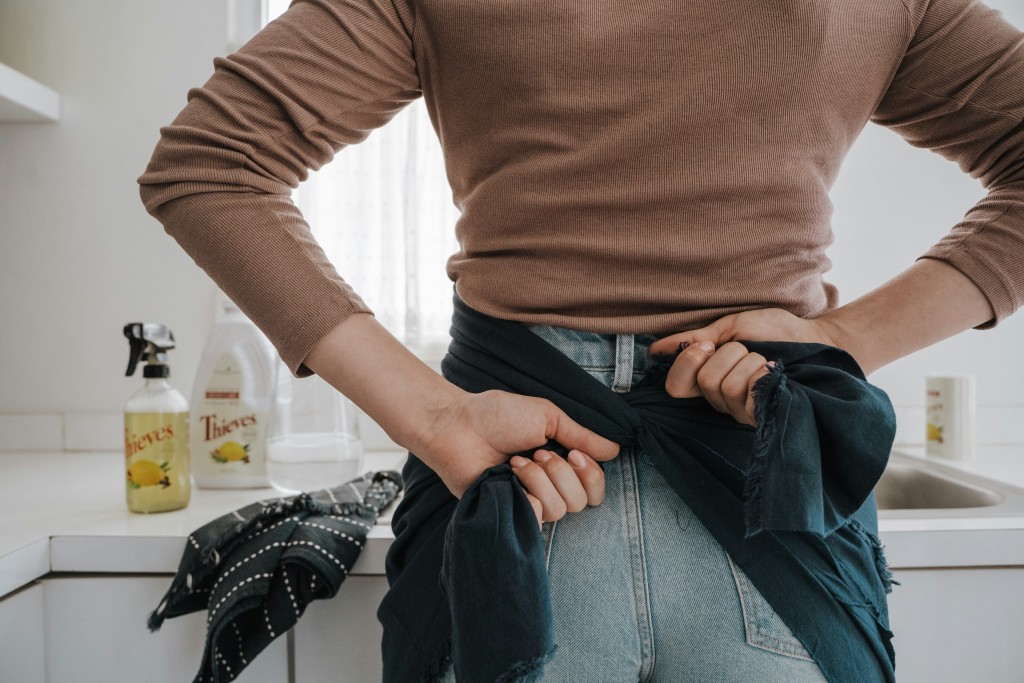
1. Dishwashing Liquid (Mild, Fresh Oil Stains)
If the oil stain has just been picked up not long ago, you can treat it with dishwashing liquid:
-
Soak the clothes in about 40°C warm water to let the oil float up.
-
Drop a small amount of dishwashing liquid on the stain.
-
Gently brush in circles with a soft-bristled toothbrush; do not press too hard to avoid damaging the fibers.
-
Rinse off the dishwashing liquid with clean water.
-
Put into the washing machine and wash on the normal program, then dry thoroughly.
Note: Dark-colored or sensitive materials should first be tested in an inconspicuous area.
2. Cleansing Oil (Oil Stains That Have Been There Longer)
For oil stains that have been left for a while, cleansing oil is an effective choice. Cleansing oil contains vegetable oil or mineral oil, which can merge with the oil stain and make it float up.
-
Keep the clothes dry, and place a towel underneath the stain.
-
Drop a few drops of cleansing oil onto the stain and gently massage.
-
Gently pat the stain with a soft-bristled toothbrush.
-
Let it sit for about 5 minutes to let the cleansing oil merge with the oil stain.
-
Carefully rinse with about 40°C warm water.
-
Finally, wash according to the normal method.
Note: Some materials may discolor or be damaged as a result; testing first is recommended.
3. Oxygen Bleach (Stubborn Oil Stains)
If ordinary dishwashing liquid or spot cleaning is ineffective, oxygen bleach can be used:
-
Wear rubber gloves and prepare hot water in a basin.
-
Add an appropriate amount of oxygen bleach according to the instructions and stir to dissolve.
-
Soak the clothes for 1 to 2 hours.
-
Take out and rinse gently, then put into the washing machine for normal washing.
-
Dry thoroughly after washing and check whether the stain has been removed.
Note: Delicate materials such as wool and silk are not suitable; be sure to check the care label before use.
4. Workwear-Specific Detergent (Strong Oil Stains Such as Machine Oil)
Workwear from factories or maintenance sites often picks up stubborn oil stains such as machine oil, which ordinary dishwashing liquid finds hard to remove. Workwear-specific detergent can be used:
-
Pour about 60°C hot water into a bucket and dissolve the specific detergent.
-
Soak the workwear for about 2 hours.
-
After the stain floats up, gently brush with a soft-bristled toothbrush.
-
Put into the washing machine, add specific detergent, bleach, and fabric softener, and wash on the normal program.
Note: The water temperature should not be too high, to avoid damaging the fibers; and the care label must be checked.