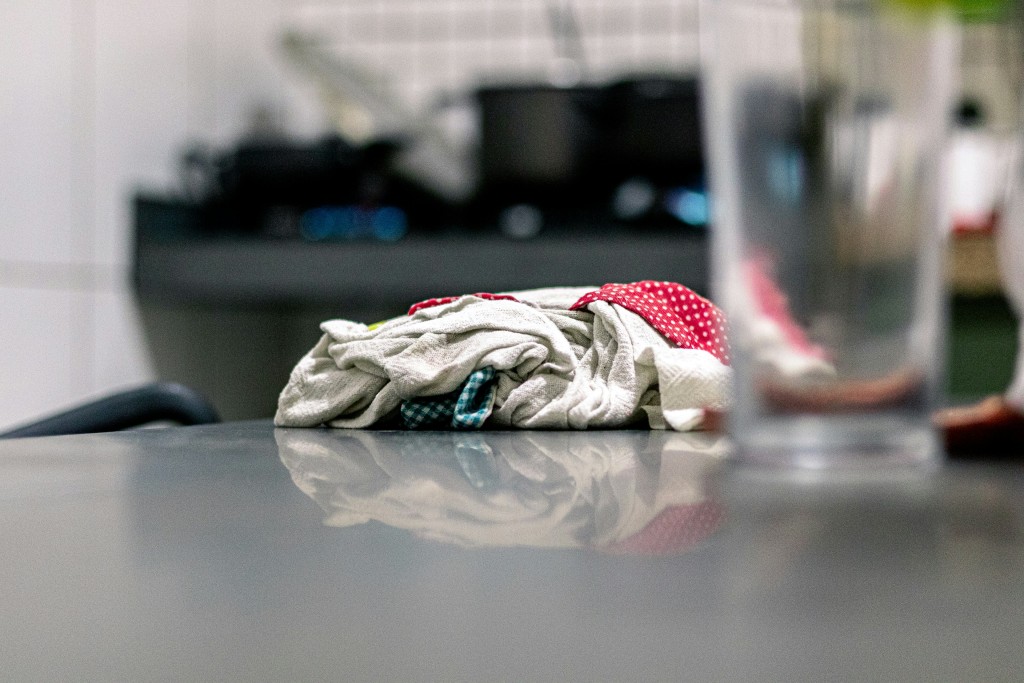
According to a report by the American food media outlet Food Republic, every item in the kitchen, from large appliances to cooking tools, has its lifespan limit. For example, a refrigerator generally lasts about 12 years, a microwave oven has a service life of about 7 to 10 years, and a dishwashing sponge should be replaced at least every two weeks. As for a kitchen dishcloth used to wipe utensils, wipe hands, or hold hot pots, the average service life is only about 3 years.
Why Does a Durable Dishcloth Deteriorate So Quickly?
Although some people wonder whether textile fabrics can be preserved for a long time, the report points out that kitchen towels and dishcloths are used frequently multiple times almost every day, and each use, washing, and drying process causes a certain degree of micro-damage to the fabric fibers. Dishcloths becoming dirty and deteriorating is a gradual process. After about one to three years, depending on how many sets of dishcloths are used alternately at home and the washing frequency, the dishcloth will noticeably become ragged, and its water absorption will also drop significantly.
3 Major Signs That the Kitchen Dishcloth Must Be Replaced — Or You May Swallow Bacteria
The report points out that if the kitchen dishcloth or dishcloth at home shows the following 3 major conditions, it means it has lost its function and must be replaced immediately:
1. The Dishcloth Becomes Thin
The dishcloth fabric becoming thin is the most important sign that it needs to be replaced as soon as possible. If the wear is severe, the fabric will eventually form holes. When the dishcloth is worn down to the fibers or even directly falls off, whether from a practicality or aesthetic perspective, it is absolutely time to replace it.
2. Water Absorption Drops Significantly
When the dishcloth begins to fade, its main function will also degrade accordingly. If you find that you need to wipe utensils repeatedly to dry them completely, or need to wipe repeatedly after washing your hands to absorb the water, it means the fabric fibers are damaged. It is time to downgrade them to ordinary cloths for wiping the floor, and stop using them to touch clean utensils.
3. Still Emits a Musty Smell After Washing (Most Dangerous!)
A dishcloth that has just wiped utensils certainly will not smell good, but if after thorough washing the dishcloth still emits an unpleasant musty smell, it means dirt and grease have long penetrated deep into the fibers, and no amount of soap and dishwashing liquid can wash it clean. In this case, please discard it immediately, and do not even store it together with other clean towels, to avoid cross-infection and spreading germs.
Source: Food Republic