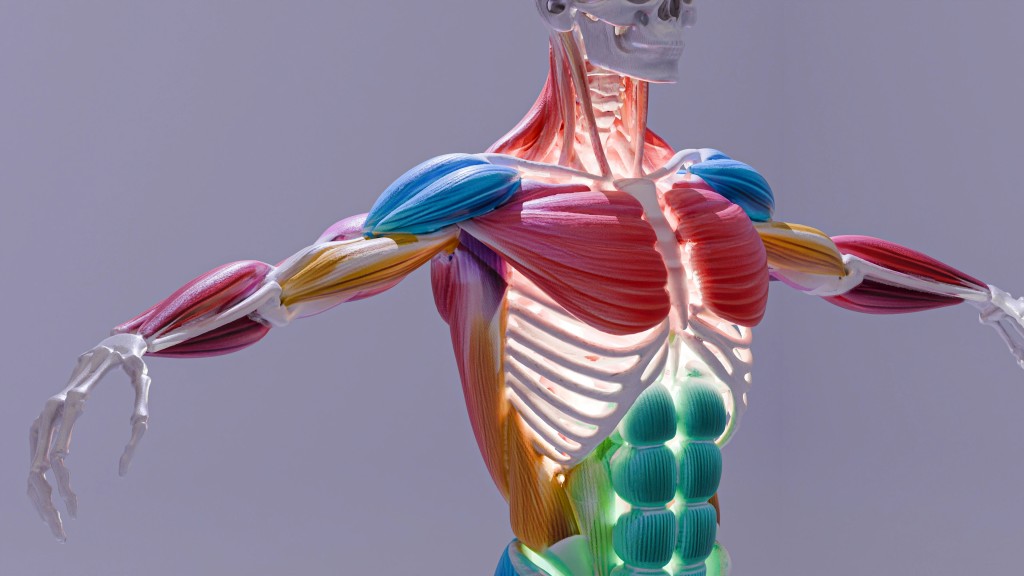
Recently I read an article titled "Four Muscles that Decide How Well You Age," which aroused great interest. The article proposes a rather challenging viewpoint: if we ask "what are the most important muscles in the human body," the answer may not be the pectorals, abs, or biceps commonly seen in fitness magazines, nor the body lines most sought after on social media, but possibly four groups of muscles rarely discussed in daily life—the gluteus maximus, soleus, spinal extensors, and tibialis anterior.
What Is the True Definition of Muscle?
Modern lifestyles are increasingly far from the human body's original design. In the past, humans needed to walk for long periods, carry things, squat, climb slopes, and move on uneven ground; today, most things can be done from morning to night sitting on office chairs, car seats, and sofas. The article points out that modern adults can sit for up to 9 to 12 hours a day. Even if you exercise several times a week, long periods of sitting still affect muscles, metabolism, and mobility. The body does not just count whether you exercise; it also records how you use it 24 hours a day. In other words, exercising for one hour in the morning and then sitting for 8 to 10 hours may not fully offset the consequences of prolonged sitting. The body is very honest: muscles that are commonly used are preserved, while those left idle for long periods gradually degenerate. In a sedentary life, the most easily overlooked are precisely the muscles that maintain standing, walking, and balance.
So how exactly should "important muscles" be defined? Is it by whether they are big enough? Good-looking enough? Or by whether they can help us still stand steadily, walk far, climb stairs, get up from a chair or the floor, and even avoid a fall that could change our lives when we are old? Starting from the latter, these four groups of muscles are indeed worth re-understanding:
1. Gluteus Maximus: The Engine That Propels Life Forward
The gluteus maximus is the largest muscle in the human body, responsible for walking, climbing stairs, standing up from a chair, running, jumping, and stabilizing the pelvis. Prolonged sitting keeps the hip joints flexed for long periods, and the glutes gradually "forget" how to generate force, which physical therapists call "gluteal amnesia." When the gluteus maximus cannot work effectively, the lower back, knees, and hip joints compensate, and over time this may lead to lower back pain, knee pain, unstable posture, and even increased fall risk.
To awaken the gluteus maximus, you can do glute bridges, hip thrusts, deadlifts, step-ups, and squats, and stand up and move around more. For the elderly, strong gluteus maximus means being able to go up and down stairs independently, stand up after sitting down, and steady the body again when losing balance.
2. Soleus: The "Second Heart" Deep in the Calf
The soleus is located deep in the calf, hidden beneath the gastrocnemius, so it rarely becomes the star of fitness topics. It is very important for human circulation: when standing and walking, it helps send blood from the lower limbs back to the heart, so some researchers call it the "second heart." This muscle is mainly composed of endurance-type muscle fibers, suitable for long periods of work, and is also related to blood sugar regulation and metabolic health. Studies have found that even specific soleus contractions done while sitting can improve blood sugar and insulin response.
Prolonged sitting makes the soleus almost dormant, affecting lower limb circulation, sensory feedback, and balance. Training methods include slow, full-range calf raises (especially on a step), as well as standing more, walking on slopes, and taking stairs. The movement is simple, but the rewards are high.
3. Tibialis Anterior: The Goalkeeper That Prevents Tripping
The tibialis anterior is located at the front of the calf, and its main function is to lift the front of the foot (dorsiflexion). With every step, it helps the toes leave the ground and avoid dragging; when the heel lands, it also controls the speed at which the foot is lowered. If this muscle weakens, the toes easily hit thresholds, carpet edges, or uneven surfaces, increasing fall risk. For the elderly, one fall may cause fractures, hospitalization, and even loss of independent living ability.
This muscle group is often overlooked in mainstream fitness content, but training methods are simple: toe raises while sitting or standing, walking on heels, single-leg standing, and walking on uneven ground under safe conditions can all effectively stimulate it. The movements are not flashy, but they may quietly extend the years of safe walking.
4. Spinal Extensors: Letting the Body Stand Tall to Face the World
The spinal extensors are distributed along both sides of the spine and are responsible for extending the back and maintaining an upright posture, allowing us to hold our heads up and chest out. They are very important when standing, walking, carrying things, and maintaining balance. Modern people sit for long periods, especially looking down at phones and hunching over computers, causing the spinal extensors to be stretched for long periods and become weak, which may lead to rounded shoulders, hunchback, and forward head posture. Many people think that a curved back in old age is a natural phenomenon, but it is actually related to years of postural habits.
Weakening of the spinal extensors not only affects appearance: excessive curvature of the upper back may limit chest movement and affect breathing; forward shift of the center of gravity increases fall risk; difficulty looking up and forward also affects safety when crossing roads, going down stairs, and walking on uneven surfaces. Training methods include deadlifts, rows, back extensions, supermans, and maintaining better standing and sitting posture in daily life. Beginners or the elderly should progress gradually and seek professional guidance when necessary.
Muscles Are Not for Appearance, But for Freedom in Old Age
Modern fitness culture often links muscles with appearance, but what is truly needed in the second half of life is function: whether you can stand up on your own, walk steadily, climb stairs, avoid falls, and still retain freedom in your eighties and nineties. From this perspective, the gluteus maximus, soleus, tibialis anterior, and spinal extensors are not obscure. They work silently every day but are often ignored, until weakness makes walking slower, climbing stairs harder, lower back pain appear, and balance poor—only then discovering that the problem has accumulated for years.
To protect these four muscle groups, you do not need to immediately go to the gym or buy expensive equipment. The most basic thing is to give the body the stimulation it needs:
-
Reduce prolonged sitting and stand up and move every 30 to 45 minutes
-
Stand or pace while talking on the phone
-
Take stairs more and elevators less
-
Walk on slopes or natural surfaces on weekends
In addition, arranging simple training 2 to 3 times a week can also help. Glute bridges train the gluteus maximus; slow calf raises train the soleus; toe raises and heel walking train the tibialis anterior; rows, back extensions, and appropriate deadlifts train the spinal extensors. Add daily practice of getting up from the floor, and you can combine strength, balance, flexibility, and coordination.
Written by: Dr. Chung Wai-man, Physiotherapist