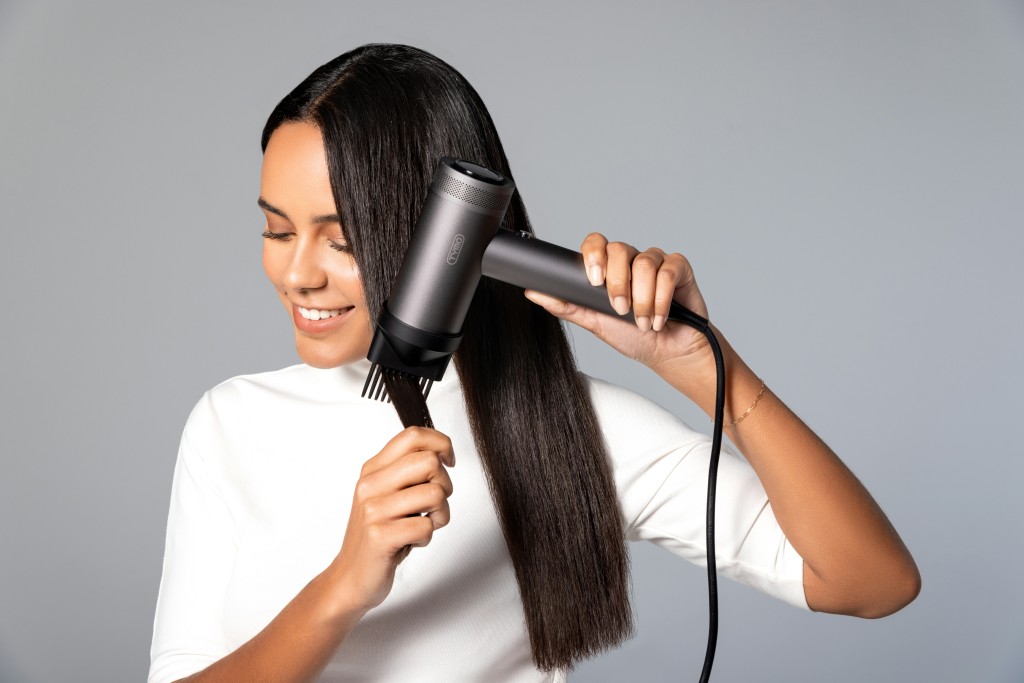
According to a report by Good Housekeeping, compared with curling irons and flat irons, hair dryers may seem to cause less heat damage to hair. However, if used improperly, they can also unknowingly damage hair quality. In particular, people with fine, soft hair, mature hair, or white hair are even more prone to problems such as frizz, breakage, and loss of shine due to over-drying. Cos Sakkas, who has won the UK Hairdresser of the Year award three times, points out that many people make a very common hair-drying mistake every day, yet are often completely unaware of it.
Cos Sakkas says that using a hair dryer itself does not harm hair. In fact, blow-drying hair is usually better than letting it air-dry naturally, because hair is at its most fragile when soaking wet. The key is to stop blow-drying when the hair has just dried through. He emphasizes that continuing to use a hair dryer on hair that is already completely dry is what causes heat damage. Many people think their hair is not dry yet, when in fact it has already entered a state of over-drying—there is only a fine line between the two. He suggests that before formally blow-drying and styling, you can first quickly dry about 70% of the whole head to remove excess moisture, and then start styling. This will greatly shorten the actual blow-drying time. In addition, when blow-drying, be sure to start from the inner layers, and only blow-dry the surface hair on top at the end.
Why Does Over-Drying Damage Hair Quality?
Cos Sakkas explains that once hair is completely dry, continuing to blow-dry it for even one more minute will strip moisture from the hair strands. The cuticle is the protective outer layer of each hair strand. Over-drying causes it to lose its natural elasticity, making hair become brittle, dull, and even prone to breakage.
He especially reminds that with age, hair becomes thinner and naturally drier, and its resistance to heat damage also decreases. People with fine, soft, or fragile hair will notice this damage more quickly. White hair is more easily damaged by over-drying than black hair, because white hair itself loses moisture more easily. Excessive heat will make white hair look dry, rough, or frizzy, losing its soft, shiny feel. Therefore, he recommends that regardless of hair type, heat-protective hair care products must be used before using heated styling tools to protect the hair strands.
Does Over-Drying Affect Hair Growth?
Over-drying hair can also damage scalp health, and a healthy scalp is precisely the best soil for hair growth. If you have fine, soft hair, the damage caused by over-drying is especially serious. The thinner the hair, the less physical barrier there is between heat and the scalp. Exposure of the scalp to hot air can lead to dryness, inflammation, and sensitivity. Just like facial skin, the scalp also needs protection and care to avoid unnecessary heat damage. He suggests that when blow-drying, the hair dryer should be kept moving, and the nozzle should also be kept at least 15 cm away from the scalp.
How Can I Tell If My Hair Is Already Completely Dry?
Cos Sakkas suggests using your fingers to comb through each section of hair to feel whether there is a cool or damp sensation, especially in the lower layers. Damp hair feels heavier, while dry hair is lighter and more flowing. Therefore, when blow-drying, you should keep checking, and once it feels completely dry, you should immediately turn off the hair dryer.
What Signs Appear If Hair Has Already Been Over-Dried?
If hair has already been damaged by over-drying, the following 7 major phenomena usually appear:
-
Feels rough and not smooth
-
Dry like straw
-
Loss of shine
-
Natural curls become more obvious
-
Increased split ends
-
More broken hair
-
Easily tangled and knotted
5 Major Hair Care Tips to Repair Damaged Hair
Cos Sakkas shares the following 5 major hair care tips, which help repair dry, damaged hair:
-
Gentle cleansing: Water that is too hot when washing hair will dry out the hair and scalp, causing hair strands to become frizzy and dry. It is recommended to wash hair with warm water, and rinse with cold water at the end, which helps close the cuticle, lock in moisture, and maintain shine.
-
Always use conditioner: Conditioner carries a positive charge and can neutralize static electricity on the hair, reducing friction and breakage during combing and styling. It can also strengthen and nourish the hair strands, protecting the cuticle from environmental damage.
-
Deep nourishment: Using a deep nourishing hair mask or leave-in hair care product once a week can effectively improve dryness and damage, reduce breakage, smooth frizz, and restore hair elasticity.
-
Create a heat-protection barrier before blow-drying: Before blow-drying hair, be sure to spray on a heat-protection spray, especially on the more fragile and dry ends. In addition, never use high-temperature styling tools when the hair is completely wet and dripping, to avoid destroying the hair structure.
-
Finishing the style: To create soft, smooth hair, after finishing the style, you can spray on a hair care styling spray, which can firmly lock in the style and present a refined effect.
Source: Good Housekeeping