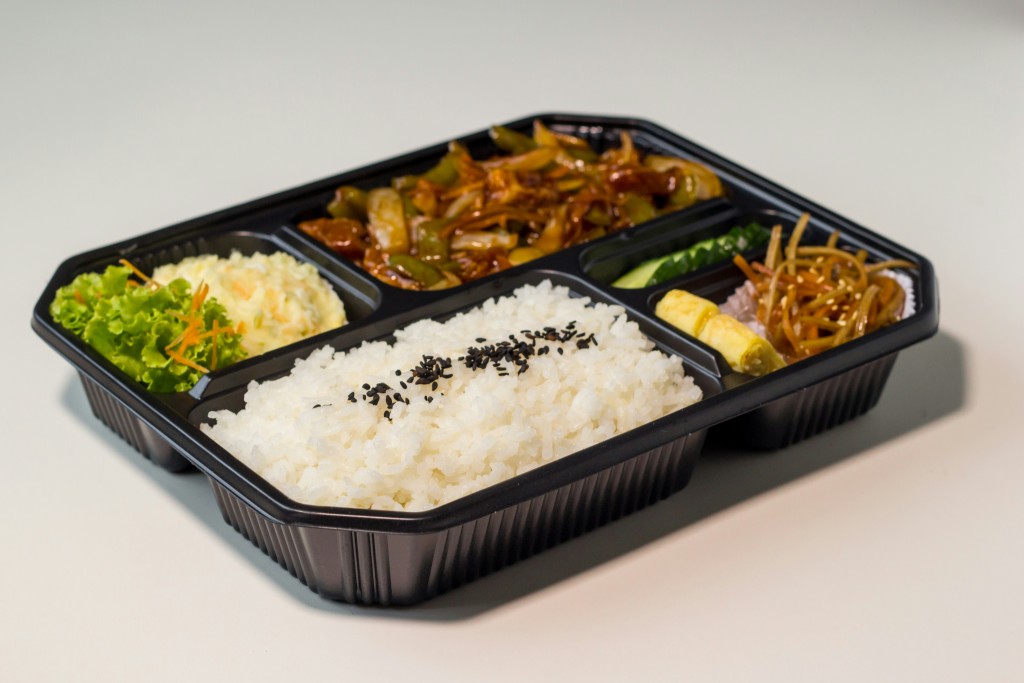
Whether a takeout lunch box is safe depends not on whether it is placed in a box, but on whether it can continuously maintain a storage temperature that is "hot enough when hot, cold enough when cold." Dr. Huang Xuan points out that takeout lunch boxes packed in summer carry certain risks.
Once rice and dishes are placed in a box, a relatively sealed environment is formed. When hot rice and hot dishes are stacked together, the core temperature may remain at 20–50°C for a long time, which is precisely the "danger zone" (about 5–60°C) where many bacteria grow fastest. After the lid is closed, water vapor condenses into droplets, and the increased humidity is even more conducive to rapid bacterial reproduction. Many takeout lunch boxes are made several hours in advance. If they are not properly kept hot (above 60°C) or refrigerated (below 4°C), the food safety risk will increase greatly.
In clinical experience, what doctors worry about most is takeout lunch boxes made in the morning being left at room temperature for sale until they are purchased and eaten by citizens at 1 or 2 p.m. According to food safety principles, when the room temperature is about 25 to 35°C, cooked food should not be left out for more than 2 hours; if the ambient temperature exceeds 32°C, it is best to sell it within 1 hour or switch to refrigerated storage. If a takeout lunch box made at 10 a.m. is left on the table for sale until the afternoon, it has already been sitting for 3 to 4 hours, and the risk of food poisoning will increase greatly. In particular, foods rich in moisture and nutrients, such as white rice, meat, eggs, and braising sauce, are more likely to breed bacteria.
It Is Recommended That Refrigerated Takeout Be Thoroughly Reheated to a High Temperature Before Eating
If a takeout lunch box is kept at above 60°C throughout for heat preservation, it can be sold for a longer time, but attention must still be paid to the eating quality of the food. If the takeout lunch box is quickly cooled and kept refrigerated below 4°C throughout, the storage time can be extended by about 1 to 3 days; before eating, citizens must still thoroughly reheat the food to ensure the core temperature reaches at least 75°C.
"Lukewarm" Lunch Boxes Are the Most Dangerous! Bacteria Easily Multiply in Large Numbers at 30 to 50°C
Huang reminds citizens that when buying takeout, they can grasp several principles to prevent food poisoning, including giving priority to food that is ordered, stir-fried, and packed on the spot. Hot food should feel clearly hot to the touch, and cold food should remain cold. On the contrary, if a takeout lunch box has already been packed and left at room temperature for a long time, or feels only "lukewarm" to the touch, citizens should be more alert, because 30 to 50°C is exactly the temperature at which bacteria are most likely to multiply in large numbers.
Source: Dr. Huang Xuan