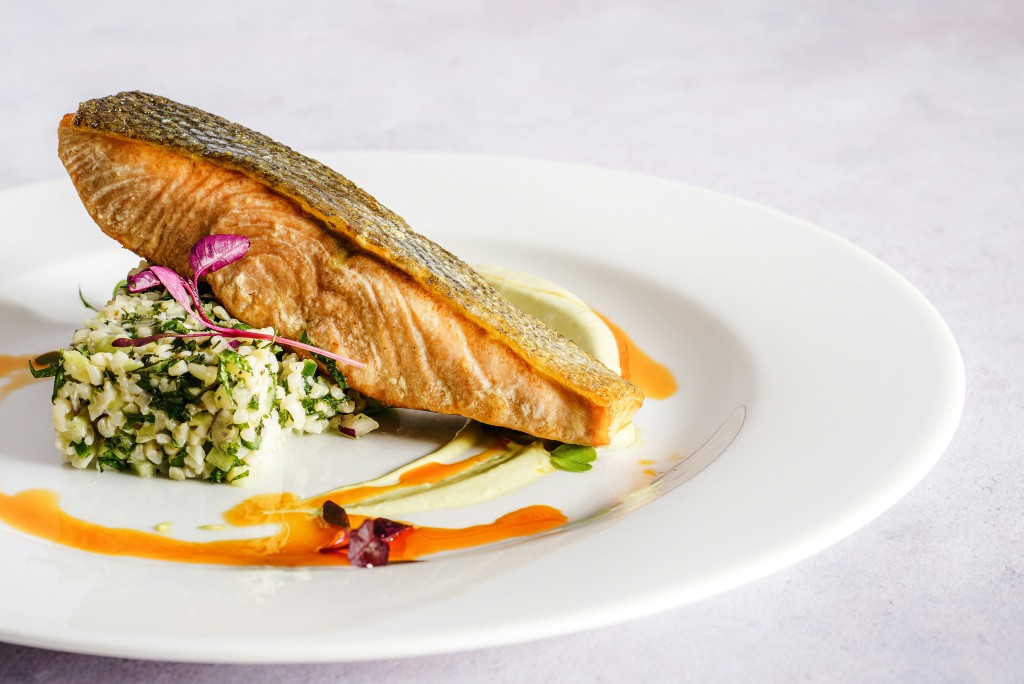
When pan-frying salmon, should you place the skin side down first or the flesh side down? Cooking expert Papuchan points out that the conclusion is to recommend frying "skin side down" first. Of course, frying the flesh first is not impossible, but from a cooking effect perspective, frying the skin first is more ideal.
Papuchan explains that the main reason for frying the skin first is that fish skin easily shrinks after heating. Salmon skin shrinks when heated, and during frying the fish meat may curl up, with part of the skin lifting off the pan surface. Frying the skin first allows it to be pressed against the pan surface before it shrinks, so the entire piece of skin is heated evenly and becomes crispy. Conversely, frying the flesh first causes the skin to curl up, making it harder to press against the pan when frying the skin afterward, so only part of the skin is heated, easily resulting in uneven heating and making it difficult to achieve a crispy texture. This method is especially suitable for people who love crispy fish skin.
The Culprits Behind Dry Fish Meat: No Steam-Baking, Adding Fish to a Hot Pan
Besides the order of frying skin and flesh, a common problem with pan-frying salmon is dry meat. Papuchan points out two major reasons:
1. Not Using Steam-Baking
If the lid is not covered throughout the frying process, moisture will continuously be lost. Salmon is an ingredient that cooks easily, and prolonged direct heat will cause the fish meat's moisture to evaporate quickly and become dry. Covering the pan with a lid midway and using steam to lock in moisture can keep the fish meat moist and tender.
2. Adding Fish to a Hot Pan
Many people are used to heating the pan before adding the fish, but this causes the surface of the fish meat to instantly become hard from the heat, forcing internal moisture out. Papuchan suggests using a frying pan and adding the fish when the pan is cold—the so-called "cold-pan start"—which can prevent the skin from sticking to the pan and the fish meat from falling apart, and is especially suitable for salmon with thin skin and soft meat.
5 Correct Pan-Frying Steps
Papuchan shares the following process:
-
Gently pat the surface of the salmon dry with kitchen paper to avoid fishiness.
-
Place the salmon skin side down in the frying pan, without turning on the heat yet.
-
Turn on medium heat and fry the skin for about 3 minutes first.
-
When the skin is browned and the flesh has turned white, flip it over, cover with a lid, and fry for another 3 minutes.
-
Open the lid; if the skin color is insufficient, flip it back to the skin side and fry for about 1 minute.
Weight Loss, Alertness, and Diabetes Prevention
As is well known, salmon is rich in Omega-3 fatty acids, protein, and vitamin D. Could eating salmon actually prevent diabetes and also help with weight loss and alertness? Dietitian Li Wan-ping states that fish is a good source of high-quality protein for the human body. Protein can slow digestion, prolong satiety, and prevent post-meal blood sugar from rising rapidly.
Eating Recommendations:
The American Diabetes Association has suggested that diabetes patients can eat salmon or sardines rich in Omega-3 fatty acids at least twice a week.
If you originally eat red meat, replace red meat with fish for at least two meals a week. One serving of fish is about the size of two palms, and recommended types include salmon, mackerel, and saury.
Source: Papuchan