





Read More



Morning Recap - November 25, 2026
2 hours ago



Night Recap - November 24, 2026
10 hours ago
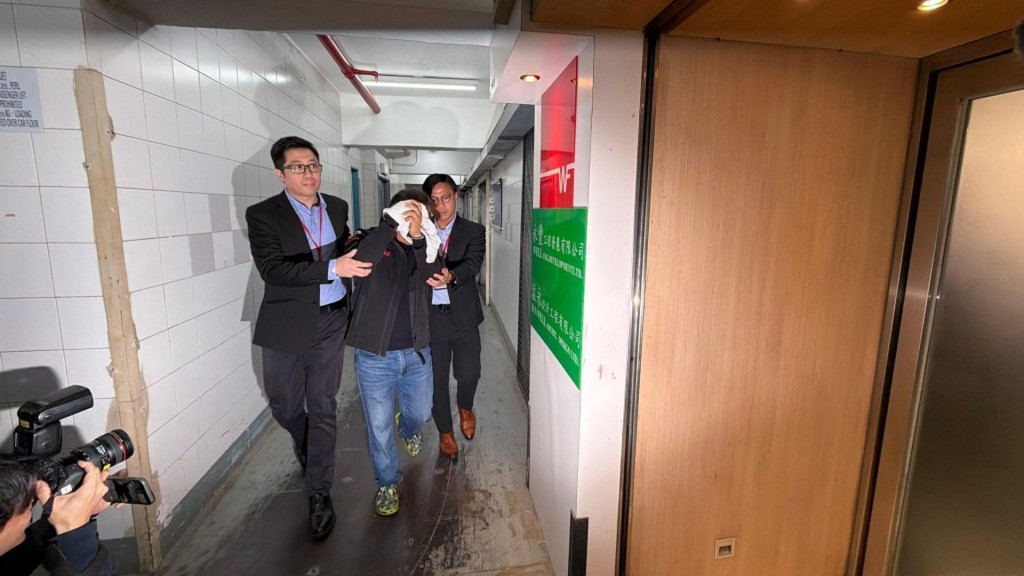
97 arrested in $130m building maintenance bid-rigging bust
24-11-2026 01:02 HKT
Research breakthroughs are driven not only by brilliant minds and intellectual curiosity, but also by robust funding and a well-structured supportive ecosystem that transforms theoretical concepts into tangible impact. In Hong Kong, the University Grants Committee (UGC) and its Research Grants Council (RGC) play a pivotal role in this journey. By offering a wide range of funding schemes for researchers across all career stages, the RGC empowers them with the solid support to address pressing societal issues and pioneer future technologies.
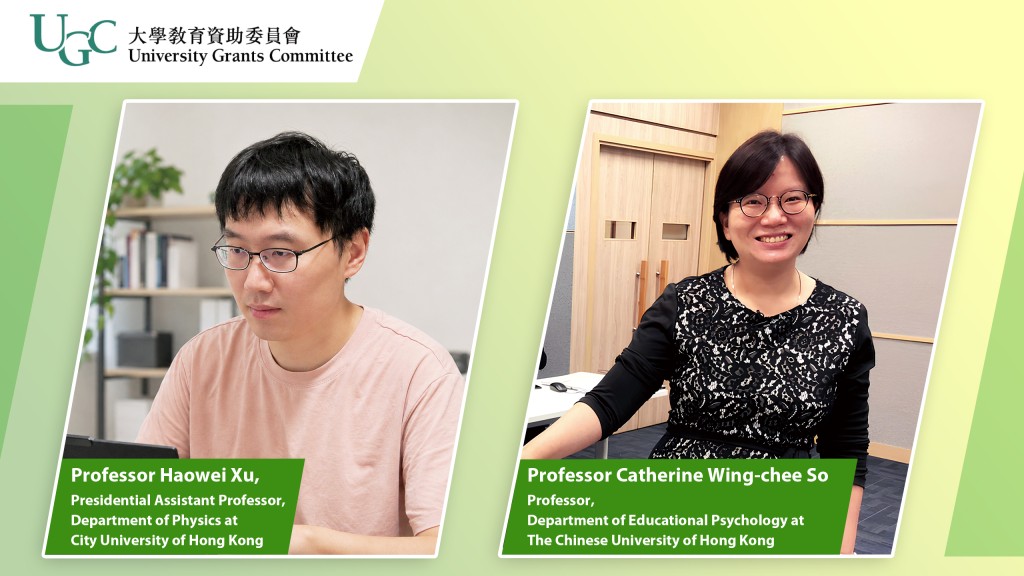
Securing early-career stage funding is critical for junior scholars seeking to establish their academic footing. Professor Haowei Xu, Presidential Assistant Professor in the Department of Physics at City University of Hong Kong, was awarded an Early Career Award (ECA) under the RGC’s Early Career Scheme (ECS), an initiative launched in 2012/13 to nurture emerging academics.
Xu’s research focuses on using nonlinear optical (NLO) effects to achieve precise, non-contact quantum control. His team is developing a unified computational framework to uncover and enhance novel NLO effects in solid-state systems for quantum applications. One promising application involves achieving efficient optical control over nuclear spins, thereby laying the foundation for next-generation quantum technologies.
These fundamental breakthroughs could have significant real-world impacts. For example, in daily life, solid-state memory in computers and mobile phones relies on switching material phases. Xu’s optical methods could toggle these phases within picoseconds, laying the theoretical groundwork for ultra-fast, energy-efficient memory devices. More broadly, his research aims to bridge fundamental condensed matter physics and emerging quantum technology, driving new scientific discoveries and technological innovations. Looking ahead, his team plans to collaborate with startup tech firms and R&D companies to translate these theories into practical hardware.
Xu, having completed his PhD overseas, chose Hong Kong for its open, vibrant academic environment. “Hong Kong offers a high degree of freedom in research, with very few constraints on what we can explore,” Xu said. He also highlights the generous support received from the university and departmental colleagues, as well as the substantial financial support from the RGC, which positively and actively helps scholars settling in and establishing competitive laboratories.
Reflecting on the ECS, Xu is grateful that the ECS does far more than provide vital funding for his research programme and team. “The ECS encourages us to think about how our research connects with the broader society through its pathway to impact requirement. It gives me greater confidence in the value and relevance of my research work”. Offering advice to young researchers, he encourages them to leverage Hong Kong’s international standing: “In Hong Kong, there are many opportunities to engage with diverse cultures and universities around the world through RGC-backed programmes. Remaining in the same environment for too long would make one difficult to think beyond his/her familiar boundaries. In Hong Kong, it offers the global exposure needed to broaden our horizons and discover new inspiration.”
ECS: https://www.ugc.edu.hk/eng/rgc/funding_opport/ecs/index.html
While early-career schemes nurture new talents, senior academics face a different challenge: balancing demanding teaching and administrative responsibilities with the pursuit of long-term, high-impact research. Established in 2012/13, the Humanities and Social Sciences Prestigious Fellowship Scheme (HSSPFS) addresses the need they are facing by providing extended teaching relief and funding support to outstanding scholars.
Professor Catherine Wing-chee So, Professor in the Department of Educational Psychology at The Chinese University of Hong Kong, received this prestigious fellowship to advance her work on Parent Education and Training (PET) programmes for families of autistic children in Hong Kong.
Over the past decade, So has spearheaded robot-assisted social skills training for autistic youth. However, her frontline observations revealed a critical bottleneck: while children made strides in training sessions, their skills did not always carry over to daily life at home. “After the COVID-19 pandemic, we realised that it is not only the child who needs support, but also the parents”, she explained. Her team discovered that primary caregivers providing round-the-clock care often experience considerable psychological strain, with stress and resilience levels reaching clinical thresholds. To address this, she developed three distinct, evidence-based PET programmes: knowledge-based education to dispel misconceptions, peer-led support groups, and hands-on coping skills training featuring structured sensory toolkits for home use.
The societal impact has been transformative, with the overarching initiative supporting more than 3,500 local families. One mother of three autistic children shared that, after eight hours of sensory training, she finally understood her son’s sensory sensitivities, allowing her to remove environmental triggers at home. For So, the HSSPFS grant provides a full year of teaching relief, enabling her to consolidate data from 900 families and conduct field visits across Chinese Mainland, Macao, Taiwan, and Singapore to better understand and compare the family needs across Chinese communities. “I never wanted my research to be just for publications. Publications are just numbers. What matters is knowing that our research is making a real difference to people’s lives”.
“The RGC funding mechanisms sustain a truly comprehensive academic ecosystem,” So said. “From schemes like the ECS that help junior scholars establish their research programmes and build their track records, to schemes that support international collaboration and exchange at the mid-career stage, as well as programmes such as the HSSPFS that give senior scholars the precious, uninterrupted time needed to drive complex research toward profound societal impact, there is support for researchers at every stage of their careers.”
HSSPFS: https://www.ugc.edu.hk/eng/rgc/funding_opport/hsspfs/index.html