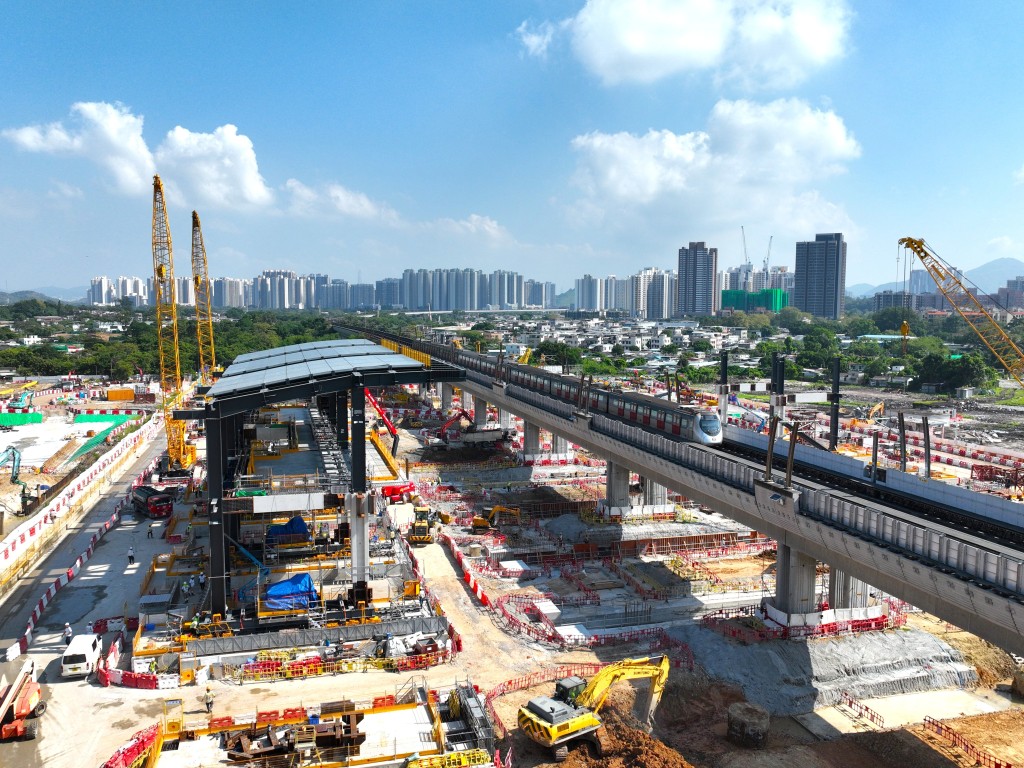
MTR Corporation is rewriting the rulebook on railway engineering by using a skidding method to build the new Hung Shui Kiu Station over a busy, operating Tuen Ma Line viaduct, marking the method’s first application to a heavy-rail project worldwide.
Skidding is a construction technique where a heavy and large structure is moved to a designated position along a controlled sliding system.
Located between Tin Shui Wai and Siu Hong Stations, the new station is a key railway infrastructure project for the Northern Metropolis. Upon its targeted completion in 2030, it will link with the Hong Kong-Shenzhen Western Rail Link and a Smart and Green Mass Transit System in Hung Shui Kiu/Ha Tsuen Development Area to form a strategic three-line cross-boundary transportation hub.
Foundation was conducted at site while station assembly works are being built 30m away from the viaduct concurrently.
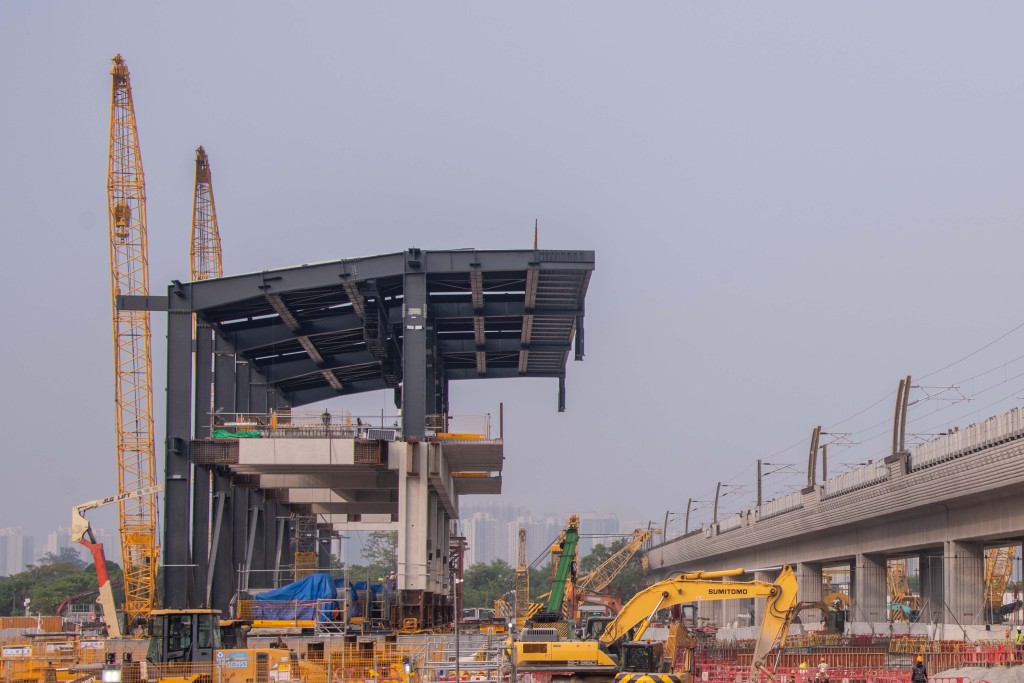
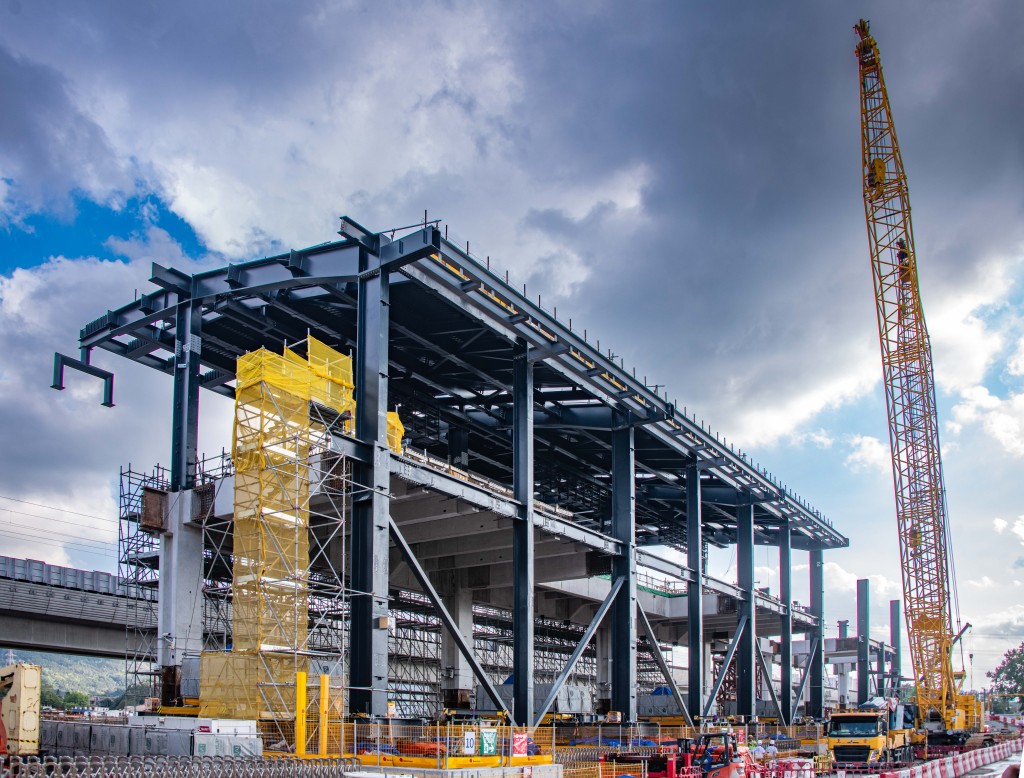
Upon assembly, the completed structure is around 210 meters long, roughly the length of an eight-car train platform.
Alan Yan Wai-ming, MTR Head of Project Delivery (New Territories South), explained the team’s mindset behind the breakthrough construction method. He noted that during the planning stage, the team faced two main challenges: keeping the operating environment for the Tuen Ma Line reliable while minimizing disruption to passengers.
Traditionally, major work near tracks is carried out during the limited overnight service break, known as the “golden two hours.” Yan said attempting to build the station above live tracks within that window would pose considerable safety risks and could stretch construction over many years.
“We had to think outside the box, and seek a completely new feasible solution to turn ‘mission impossible’ into ‘mission possible’,” he said.
Alan Yan, head of Project Delivery-NT South of MTR Corporation.
The team studied skidding techniques used in mainland China and Europe, including methods for moving historic buildings and oil platforms, to ensure the reliability of this method before pinning down an approach for Hung Shui Kiu Station: build the structures beside the railway first, then skid them into the future station position.
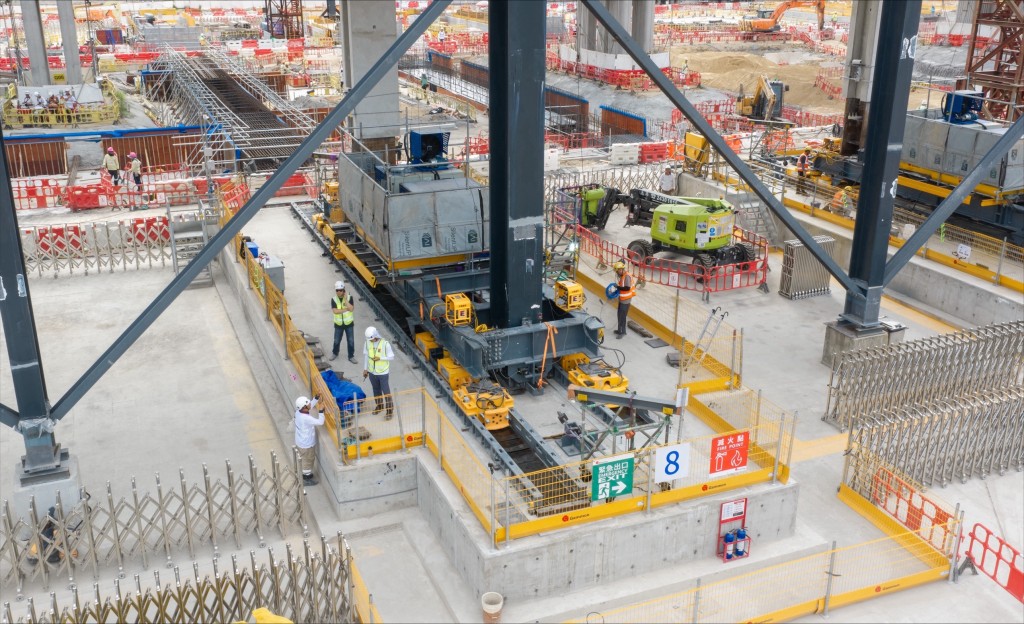
While foundation works proceed at the site, components prefabricated off-site are being assembled in work areas about 30 meters away from either side of the viaduct. The project involves two large station structures, each approximately 210 meters long, 15 meters wide, and 20 meters high. Once ready, each structure, weighing about 10,000 tons – equivalent to the weight of 100 blue whales – will be lifted slightly by synchronized hydraulic jacks and moved along straight guide tracks into position.
The operation demands careful coordination. Yan compared it to a team carrying a heavy object together: every jack must move in sync to keep the structure stable and guide it into place with millimeter-level accuracy. MTR has carried out simulations and risk assessments to prepare for the move.
Hydraulic jacking system with fixed guided tracks to skid the structure accurately and steadily.
The team also considered using self-propelled modular transporters – heavy-duty vehicles with multiple wheels that can turn in any direction. But Yan said fixed guide tracks offered better stability and control over alignment, making skidding the preferred option.
Lawmaker Aaron Bok Kwok-ming said skidding was the only feasible and cost-effective way to retrofit a station onto an existing operational line. He said assembling the platform structures at ground level before moving them into place would reduce the risks associated with prolonged heavy lifting beside a live, electrified viaduct. He said similar techniques have been used in Hong Kong and overseas, including for the canopy at the Hong Kong-Zhuhai-Macao Bridge passenger clearance building.
Foundation work at the site is largely complete, and about a quarter of the platform structure for trains heading towards Wu Kai Sha is already taking shape. Moving the completed structures into place will be the next major step.
Turning to off-site prefabrication for safer, faster builds
To speed up construction without compromising safety, MTR is moving away from the usual step-by-step approach for the Hung Shui Kiu Station, relying instead on off-site prefabrication and Modular Integrated Construction, according to Alan Yan.
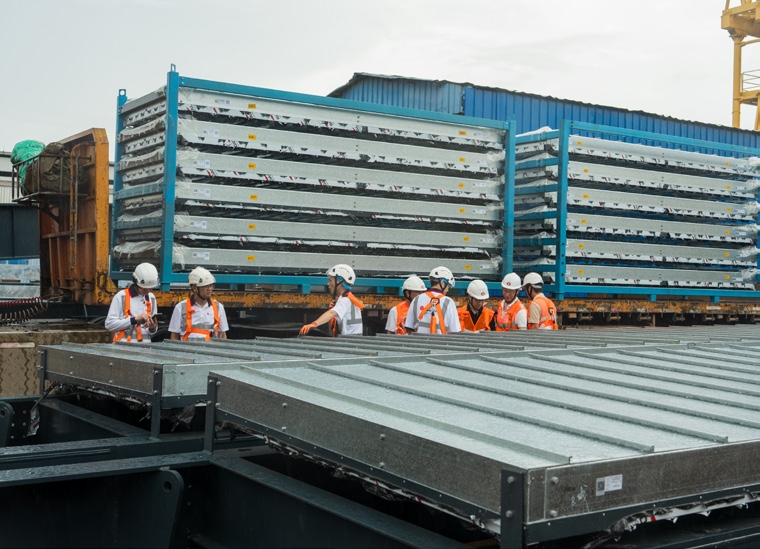
“Using prefabricated components is much safer because they are produced in a factory assembly-line environment,” Yan explained. Factory production also allows for closer quality checks, helping catch defects before components reach the site and reducing the need for difficult repairs later.
The engineering team inspected the quality of prefabricated components at the factory before transportation and installation at Hung Shui Kiu Station.
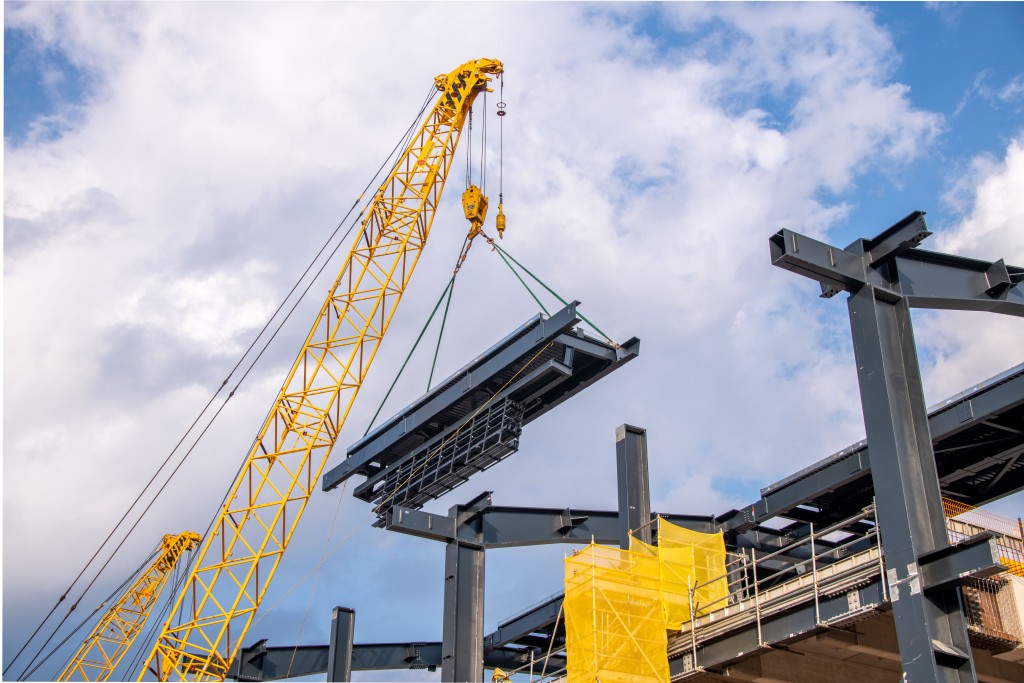
The roof structures, together with equipped pre-assembled electrical and mechanical components, are lifted into the final position.
In total, the station comprises over thousands of major structural elements and electrical and mechanical components. Yan said the team assembles roof structures and ceiling cable containments just two meters off the ground before lifting them 20m into position, while sensitive equipment like Automatic Platform Gates and ventilation systems is pre-installed directly into the modules before skidding.
To keep track of the many custom-made parts, engineers use Building Information Modelling (BIM) to create a detailed 3D model of the station. QR codes help identify and track components on site, making it easier for teams to confirm that each item is delivered and installed in the right place.