Read More




Teenager arrested at Hong Kong airport for luggage theft
02-10-2026 14:00 HKT


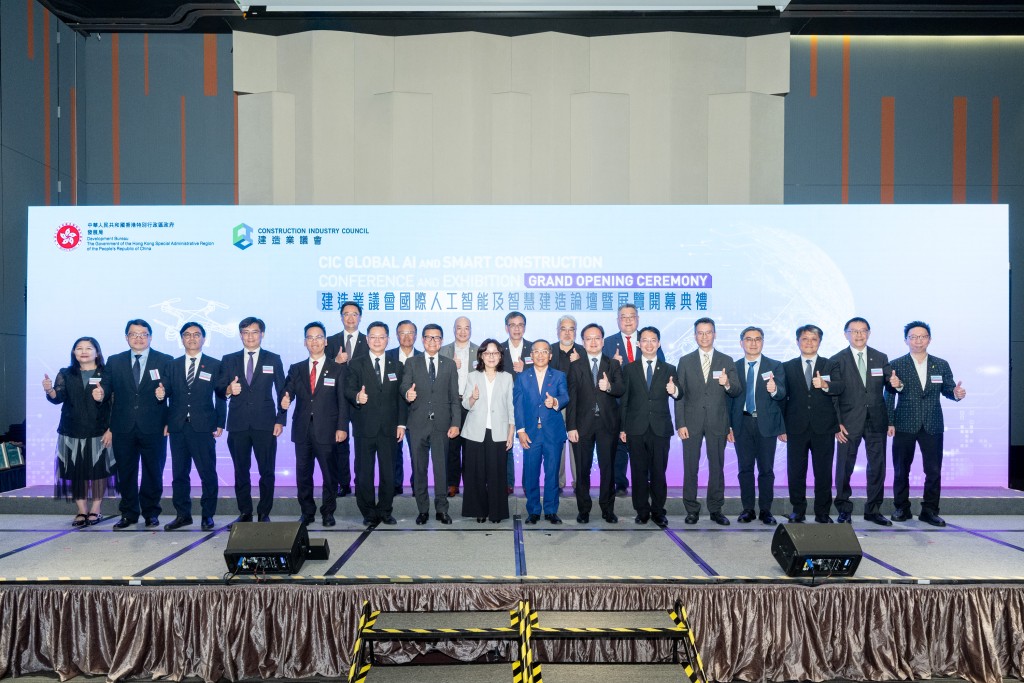
The two-day CIC Global AI and Smart Construction Conference and Exhibition (GASCCE) 2026 stands as a landmark international event for the global building sector. The summit casts a bright spotlight on the development of artificial intelligence (AI), robotics, and low-altitude economy (LAE) technologies, alongside a broad spectrum of smart construction innovations. By serving as a dynamic, collaborative platform, it successfully convenes global leaders, technology trailblazers, leading academics, government officials, and industry practitioners to exchange discerning insights and collectively shape the future of the built environment.
GASCCE was kick started by Ms. Bernadette Linn, Secretary for Development; Ir Prof. Thomas Ho, Chairman of the Construction Industry Council (CIC); Ir Albert Cheng, Executive Director of the CIC, Ir Joseph Lo, Head of Project Strategy and Governance Office, Development Bureau, Prof. Jack Cheng, Chairperson of the Organising Committee of GASCCE and Ir Prof. Alfred Sit, Chairperson of the CIC Committee on Smart Construction.
2026 is a year like no other for the construction industry in Hong Kong. Designated as the "Year of AI" by the CIC, it marks an unprecedented turning point for a sector traditionally defined by bricks, mortar, and manual labor. Ir Prof. Thomas Ho, Chairman of the CIC, said, "In recent years, numerous commercial developments and large-scale infrastructure projects in Hong Kong have adopted advanced technologies such as digital twins, AI, and high-strength construction materials, reflecting the industry’s transformation towards smarter design, delivery, and operational models."
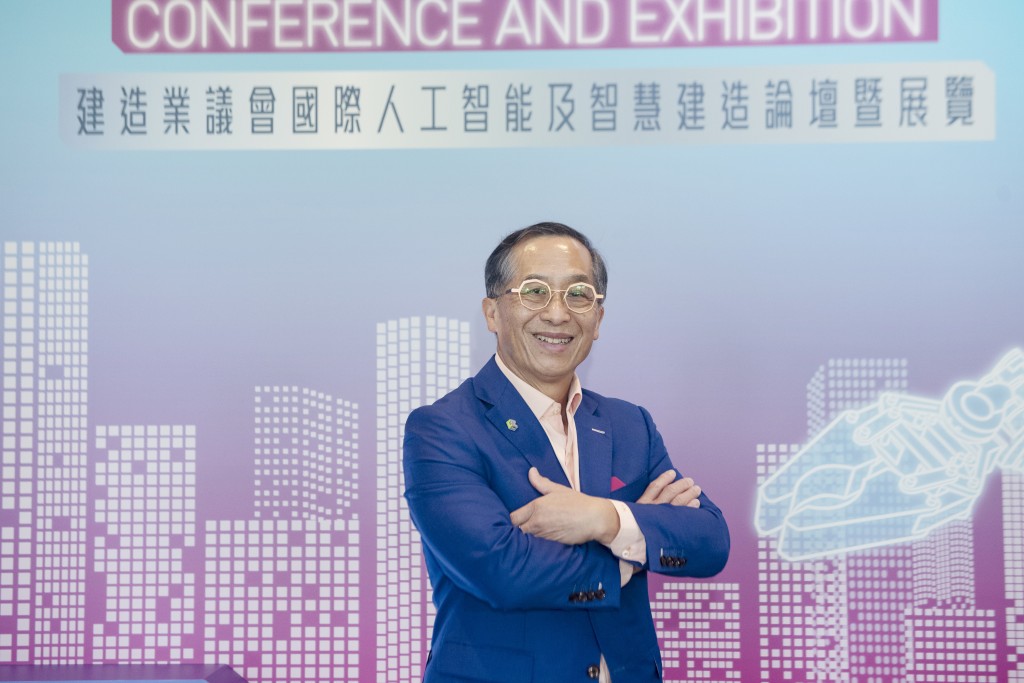
Ho added that, “Over the past year, the CIC has built a comprehensive training ecosystem - from the Centre for Future Construction and Master Classes on Digital Twin, CDE, AI, and Digital Leadership, to our flagship Future Construction Excellence Programme. Building on this foundation, we are advancing AI capability development by launching two dedicated AI programmes to equip our workforce to turn ambition into real adoption. Smart construction and AI+ are no longer a vision, but a reality in progress.”
Ir Albert Cheng, Executive Director of the CIC, frames this transition not as a passing fad, but as a structural imperative. "It is a watershed year for AI adoption in our industry," Cheng observes, pointing to a dual catalyst: as builders battle labor shortages and rising costs, AI has matured from an academic curiosity into a practical on-site necessity. Driven by economic pressure and technological readiness, the construction industry, along with many other traditional sectors, is poised to accelerate its transition toward a holistic “industrial AI integration”.
This critical timepoint extends far beyond local borders. Hong Kong’s current trajectory aligns seamlessly with the "AI+" agenda of the national 15th Five-Year Plan, embedding the city’s cross-sector AI initiatives within a broader macroeconomic strategy. It is within the architecture of this grand blueprint that GASCCE serves as the crucial conduit, channeling high-level policy into boots-on-the-ground deployment. "As the bridge from strategy to industry-wide AI adoption, we provide a global platform where government, industry, and technology leaders come together to move from concept to implementation," Cheng remarks. This operational focus is indeed reflected in the event's scale, drawing 46 elite international experts and 54 cutting-edge exhibitors. Projected to attract over 10,000 visits across its two-day program, the event cements its status as a premier industrial testing ground. "In short," Cheng concludes, "GASCCE is where the industry sees what works, who is leading, and how to adopt at scale."
At the heart of the event's conference schedule are the intellectual heavyweights, who bring diverse, global perspectives to the pressing question of industrial evolution. Yesterday, Dr. Doranda Doo, a renowned AI expert, spearheaded the dialogue with a comprehensive presentation on the theme of "Reconstructing Productivity". Tsinghua University’s Professor Lu Xinzheng expanded on this by elucidating the operational integration of generative AI within engineering, while Dr. Russell Loveridge, representing the Swiss National Centre of Competence in Research Digital Fabrication, will offer a vital window into the new smart construction technologies currently reshaping Europe on the second day of GASCCE.
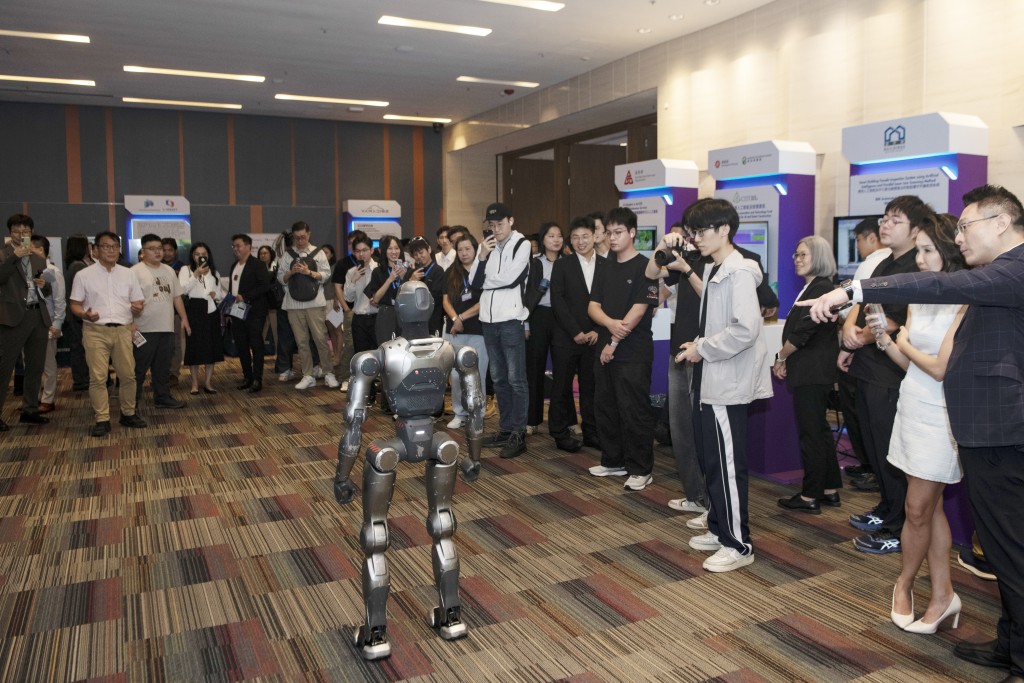
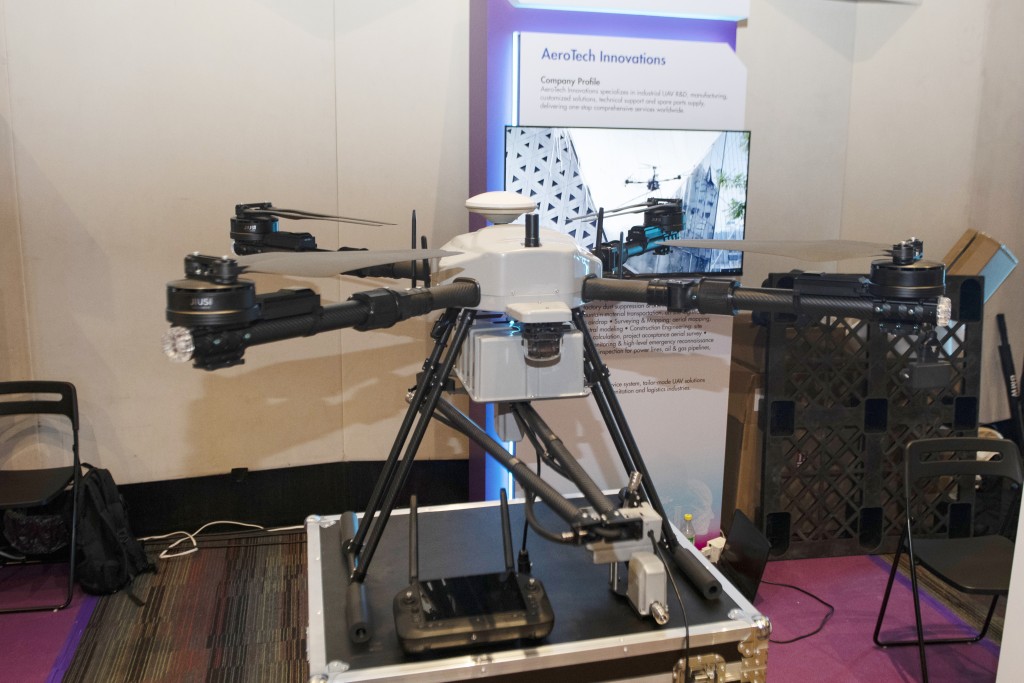
GASCCE’s true impact, nonetheless, lies also in converting this theoretical ethos into tangible, commercial assets across its 54 exhibition pavilions. Here, abstract intelligence manifests as physical hardware and deployment-ready software. On the hardware front, the variety of AI-operated drones on display highlight the way drones are reshaping construction processes. Drones are actively deployed in the building workflows-- such as building, façade, and site inspection-- to detect defects, hazards, or even unsafe practices.
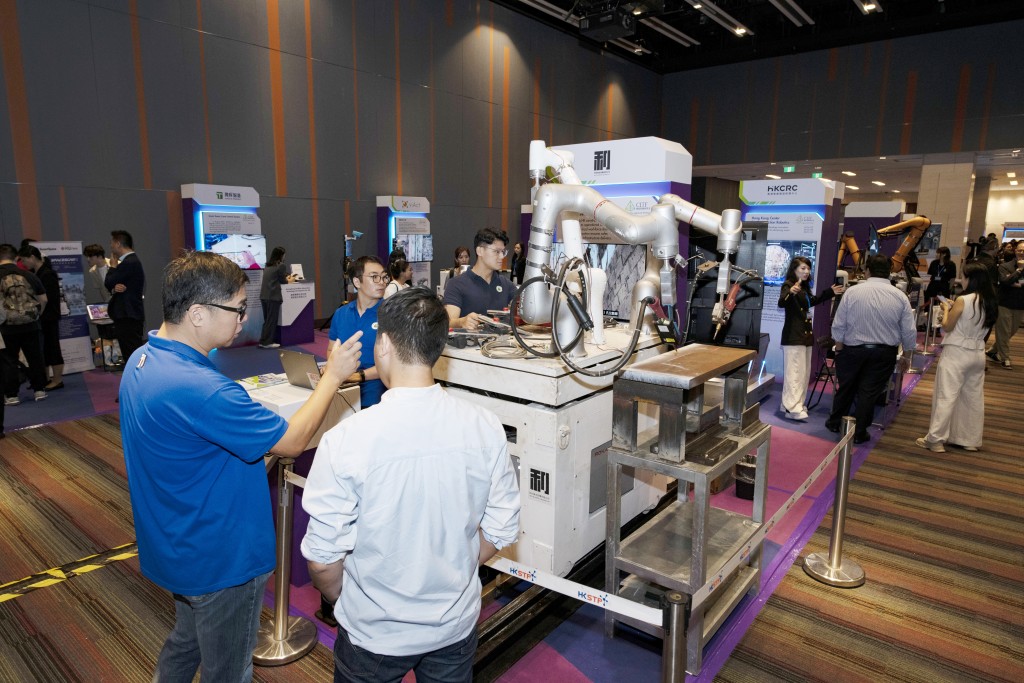
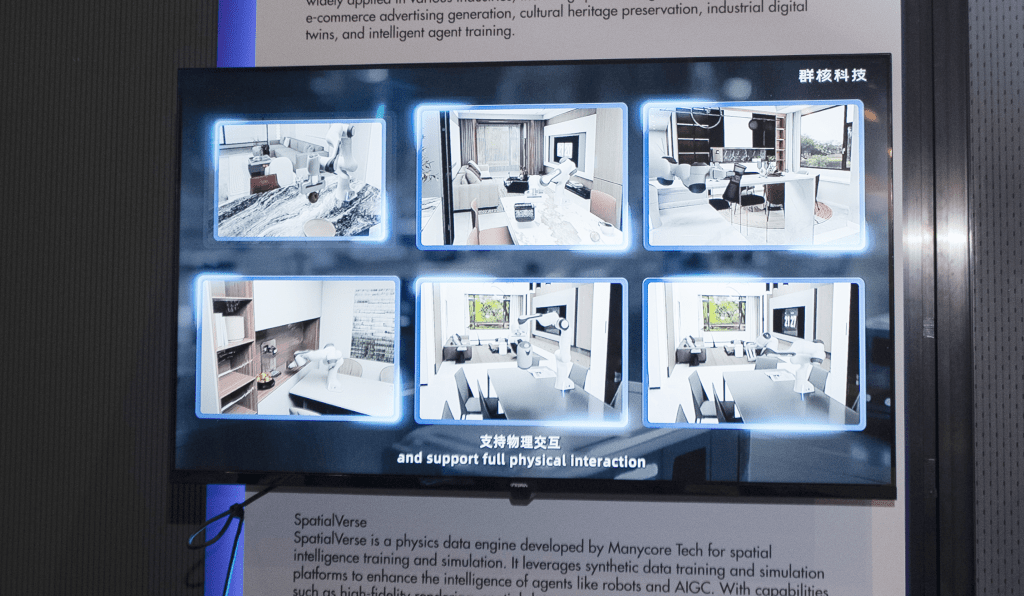
Mirroring this sophistication in the digital realm is a pioneering spatial intelligence platform, SpatialVerse. Developed by Manycore Tech Inc., it acts as a hyper-realistic 3D simulation platform and spatial data engine that enables robotic systems and embodied AI to train, test, and navigate complex physical environments. In addition, architects and interior designers benefit massively from its ability to instantly translate abstract design inputs into photorealistic, interactive 3D structures and automated blueprints.
“GASCCE is designed to deliver visible, practical outcomes,” Cheng asserts, driving home the event’s pragmatic core. He maintains that one of the key outcomes of the summit is to showcase Hong Kong’s success stories–a commitment already vividly illustrated across the city’s changing urban landscape, where construction workflows are fruitfully transformed by AI, robotics and even low-altitude economy. These stories of triumph strengthen Hong Kong’s identity as a premier global connector and the definitive testing ground for innovative technologies in the construction sector.
Yet, he reiterates that the true engine of this revolution is not mechanical, nor digital, but human. "More importantly, it will be powered by a generation of talent." He urges the industry to reframe its vocabulary—moving past the narrow concept of "smart construction" to embrace what he terms a "new quality productive workforce": a sophisticated paradigm where people, AI, and robotics work together in perfect harmony, with the common goal to deliver better outcomes for Hong Kong.