The new round of global scientific and technological revolution is in full swing. He who seizes the opportunity shall seize the future. For a long time in the past, Hong Kong relied heavily on spontaneous market regulation and lacked medium‑ and long‑term strategic coordination. Coupled with multiple complex factors, it missed out on part of the opportunities in the previous wave of technological revolution. Its economy and society are in urgent need of transformation and upgrading toward high‑quality development. Timely, the First Five‑Year Plan for the Economic and Social Development of the Hong Kong Special Administrative Region (2026‑2030) (hereinafter referred to as Hong Kong’s first Five‑Year Plan) has been officially released. As a medium‑ and long‑term policy program that proactively aligns with China’s 15th Five‑Year Plan, it establishes a new governance philosophy of “combining an effective market with a proactive government”, laying preconditions for breaking bottlenecks in science, technology and innovation (STI) development. It marks a crucial step for Hong Kong in achieving stability and prosperity through good governance.
Hong Kong is by no means short of innovation capacity. Its local universities rank among the world’s best in scientific research, boasting solid foundations in original innovation, basic research and international patent reserves, unimpeded channels for international research exchanges, and high‑quality talent pools. Nevertheless, for a long period, Hong Kong’s governance was mainly carried out through annual Policy Addresses, without cross‑cycle top‑level industrial planning. Constrained by land scarcity, fragmented industrial spaces and incomplete upstream‑downstream industrial chains, numerous high‑quality research outcomes have remained confined to laboratories and academic papers, struggling to be commercialized and industrialized. Over time, Hong Kong’s economy has become highly reliant on finance, real estate and trade. Its overly singular industrial structure has become increasingly prominent, depriving economic growth of sustained new drivers and narrowing career pathways for young people.
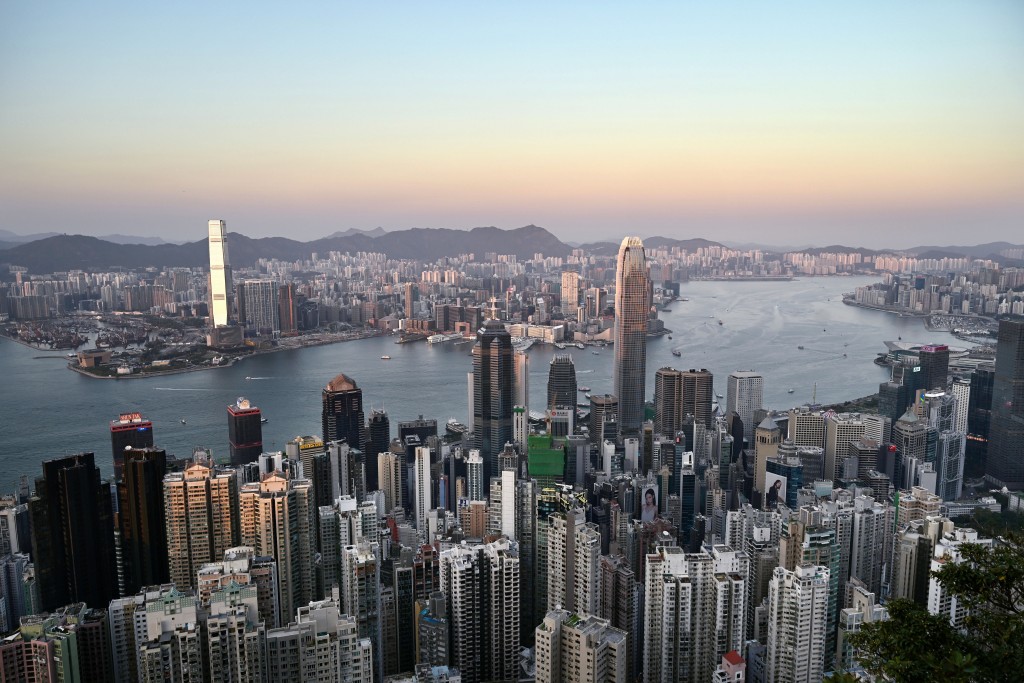
The first Five‑Year Plan shifts Hong Kong’s governance model from short‑term, problem‑driven policy responses to forward‑looking, systematic long‑term planning. It systematically addresses long‑standing STI bottlenecks across three dimensions: urban space, institutions and industries. In terms of urban spatial layout, the Plan articulates a new development vision of “finance in the South, innovation and technology in the North”. Leveraging contiguous land resources including the Northern Metropolis, San Tin Technopole and the Hong Kong Park of the Shenzhen‑Hong Kong Innovation and Technology Cooperation Zone at the Loop, it builds large‑scale carriers for STI industries. This removes spatial barriers and provides critical physical support for the settlement of tech enterprises, industrial cluster formation, and translation of research achievements.
Advancing soft connectivity of regulatory mechanisms constitutes the core reform direction for STI development under the Five‑Year Plan. Hong Kong features international‑caliber research rules, advanced R&D systems and global resource networks, while mainland cities in the Guangdong‑Hong Kong‑Macao Greater Bay Area (GBA) are equipped with complete industrial supporting capacity, mass‑production capabilities and a vast consumer market. The two sides boast highly complementary strengths. In the past, hampered by poor cross‑border flow of factors, inadequate regulatory alignment, and cumbersome approval procedures for cross‑border movement of research equipment, samples and data, Shenzhen‑Hong Kong STI cooperation was largely limited to superficial exchanges, falling short of deep integration. The Five‑Year Plan streamlines procedures for cross‑border flows of research equipment, samples, data, capital and talent. It promotes mutual recognition of research qualifications, industry standards and innovation systems, striving to forge a complete innovation chain of “Hong Kong‑based R&D, GBA‑based commercialization, serving the whole country and connecting to the world”. This addresses Hong Kong’s reality of strong basic research paired with weaknesses in industrial translation, enabling Hong Kong’s cutting‑edge research outputs to undergo rapid prototyping, iterative upgrading and large‑scale promotion within the Greater Bay Area.
Meanwhile, the Plan advances a new‑model industrialization with Hong Kong characteristics, filling the final gap for industrial implementation of scientific and technological innovations. Through targeted recruitment of leading STI enterprises, cultivation of local start‑ups and improvement of industrial support policies, priority will be given to emerging tracks such as life sciences and health technology, artificial intelligence and robotics, microelectronics and semiconductors, as well as advanced manufacturing and new‑energy technologies. A diversified and robust modern industrial system will gradually take shape. Local R&D investment will keep rising, and STI support policies will be optimized, so that scientific research is no longer merely academic pursuit, but a real‑economy engine that generates jobs, fuels economic growth and creates tangible value.
Sound development of the STI industry will also revitalize Hong Kong and reshape its environment for youth development. For decades, high‑quality local jobs have been heavily concentrated in finance, real estate and professional services, leaving young people with relatively limited career options and intense competition. As STI industrial clusters take shape, a wealth of high‑quality and diverse new jobs are expected to emerge, opening up fresh career avenues for Hong Kong youth. This empowers young Hong Kong residents to build their careers in Hong Kong while integrating into the Greater Bay Area, enabling personal growth to go hand‑in‑hand with urban advancement.
The STI‑related planning and layout under Hong Kong’s first Five‑Year Plan represents a shift in development philosophy and governance approach, signifying an in‑depth, structural urban upgrade. It aims to resolve Hong Kong’s long‑standing shortcomings in translating scientific research into industries and unlock its long‑dormant STI resources, endowing this international metropolis with new development aspirations and orientations. As the STI ecosystem matures and research‑industry integration deepens, Hong Kong will foster new core competitiveness while consolidating its traditional strengths. It will continuously brim with fresh vitality as it integrates into and serves the broader national development agenda.
Wang Wanli is a Council Member of the National Association of Hong Kong and Macao Studies; Associate Professor, Faculty of Humanities and Social Sciences, Macao Polytechnic University