For many Hongkongers, rhubarb means traditional Chinese medicine: the bitter herbal tea slowly simmered in a clay pot to cleanse the digestive system. My first taste of rhubarb in Canada, however, was a strawberry-rhubarb compote.
For thousands of years, the Chinese have used rhubarb roots and rhizomes as medicine. Because of its strong purgative effect, rhubarb was known as “the General,” as recorded in Li Shizhen’s Compendium of Materia Medica during the Ming dynasty. Rhubarb reached Europe along trade routes such as the Silk Road, where it was highly valued as medicine. In the 18th and 19th centuries, as sugar became more widely available, Europeans used it to tame the tartness of culinary rhubarb stalks, making pies and jams. European settlers later brought culinary rhubarb to North America, where it became known as the “pie plant.”
Rhubarb thrives in Canada’s cold climate. A variety called “Canada Red” is known for its vibrant red stalks and tender texture. I used to grow a few clumps of rhubarb in my backyard. Each spring, red shoots pushing through the soil told me winter was over.
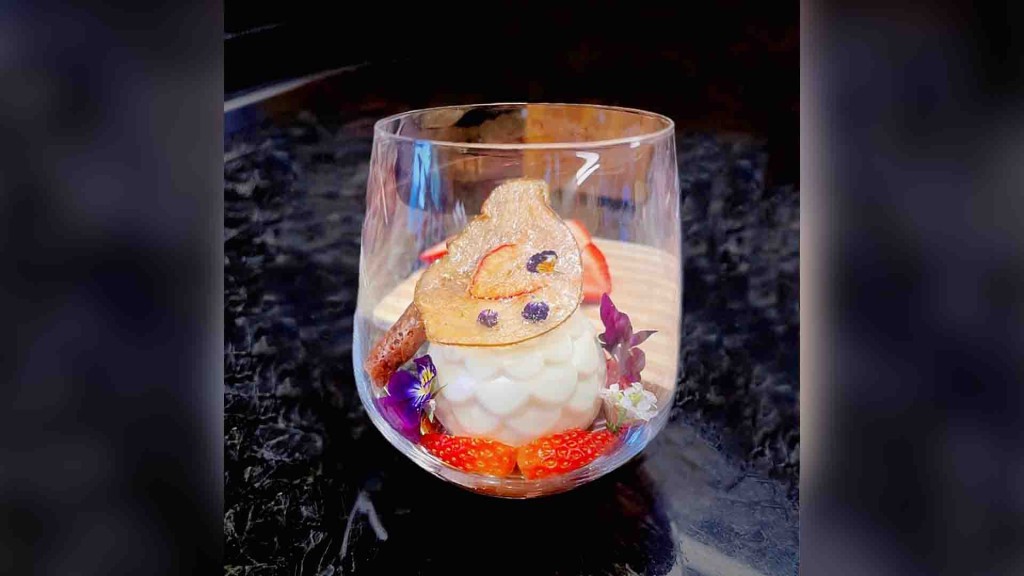
I once worked with talented local chef Tracy Little on a private charity dinner. She led guests on a foraging tour and prepared two courses, while I created the dessert. I simmered my farm-grown rhubarb with strawberries to make a compote and served it with panna cotta, topped with a pear chip and a brandy snap. The rhubarb’s bright acidity balanced the richness of the creamy dessert.
In China, it was “the General;” in Canada, its culinary cousin became the “pie plant.” One bitter, the other tart; one a medicine, the other a food. From Hong Kong’s medicine pots to Canadian dining tables, I rediscovered a plant and found a new way of seeing ingredients.
Isabelle Hon traded her Hong Kong editor’s desk for Canadian kitchens, bringing a writer’s eye and a chef’s grit to stories that connect East and West