At Pearl Dragon in Macau, the meeting between Cantonese-Chaozhou and Hokkien cooking began quietly — with tea.
One glass drew on the hills of Chaozhou, combining Phoenix Dan Cong oolong with sparkling water, citrus peel and osmanthus syrup. The other looked toward the Fujian coast, pairing jasmine white tea with crystal pearls and a delicate sea-salt foam.
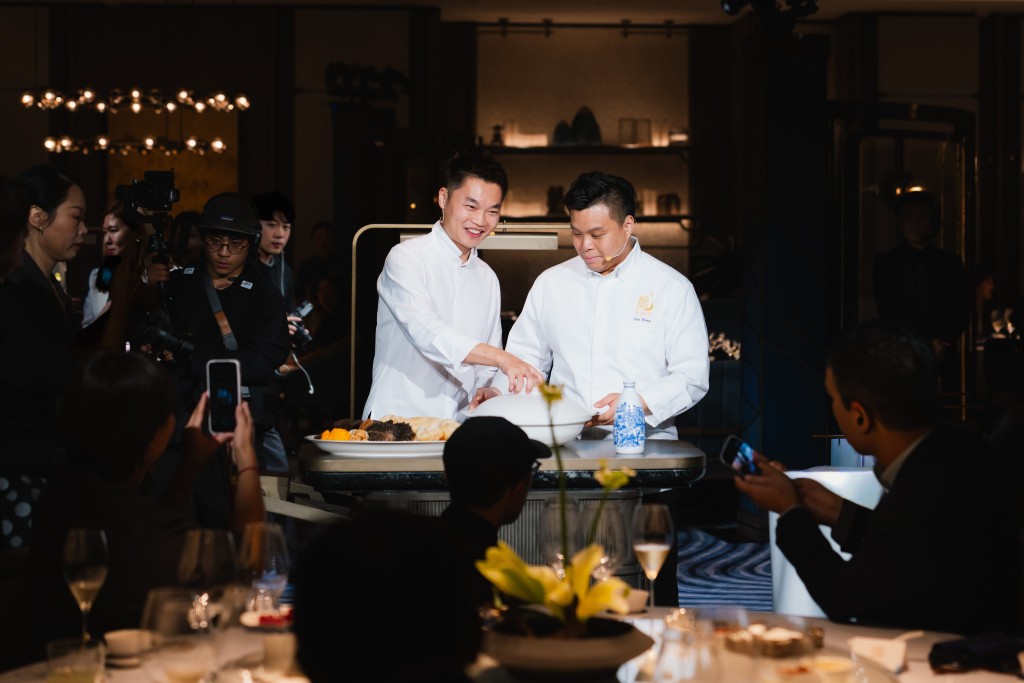
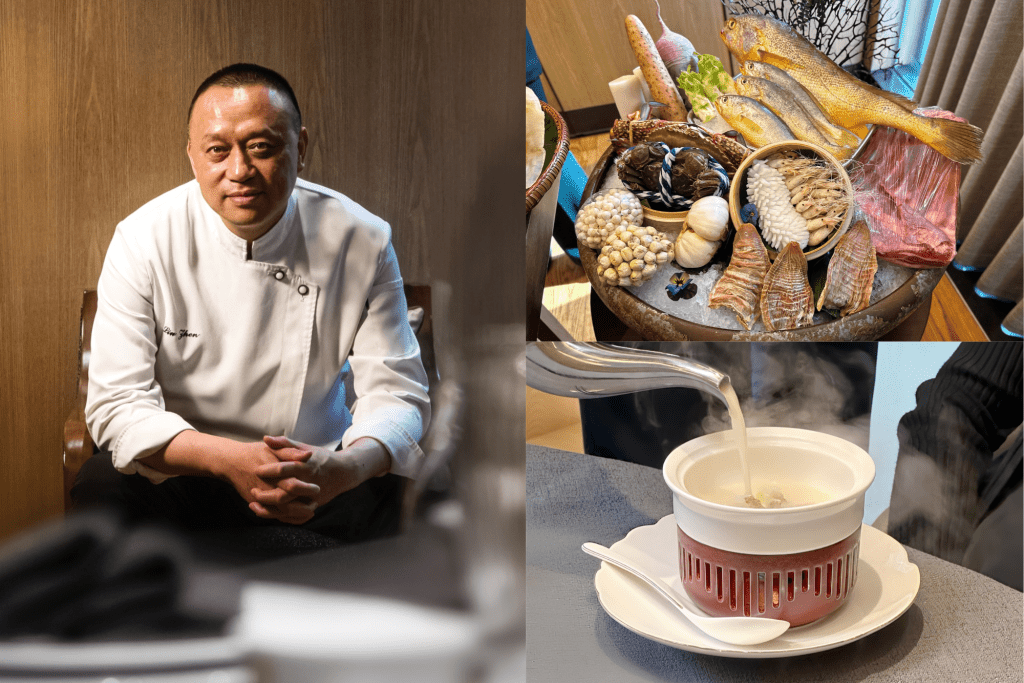
Together, they set the tone for Canton & Min: A Symphony of Peaks and Tides, a two-night dinner held at Studio City Macau on November 13 and 14, bringing Pearl Dragon executive chef Otto Wong together with Justin Yang of Chengdu’s FUMANLOU Hokkien Cuisine. Both restaurants hold one Michelin star, while FUMANLOU also carries one Black Pearl diamond.
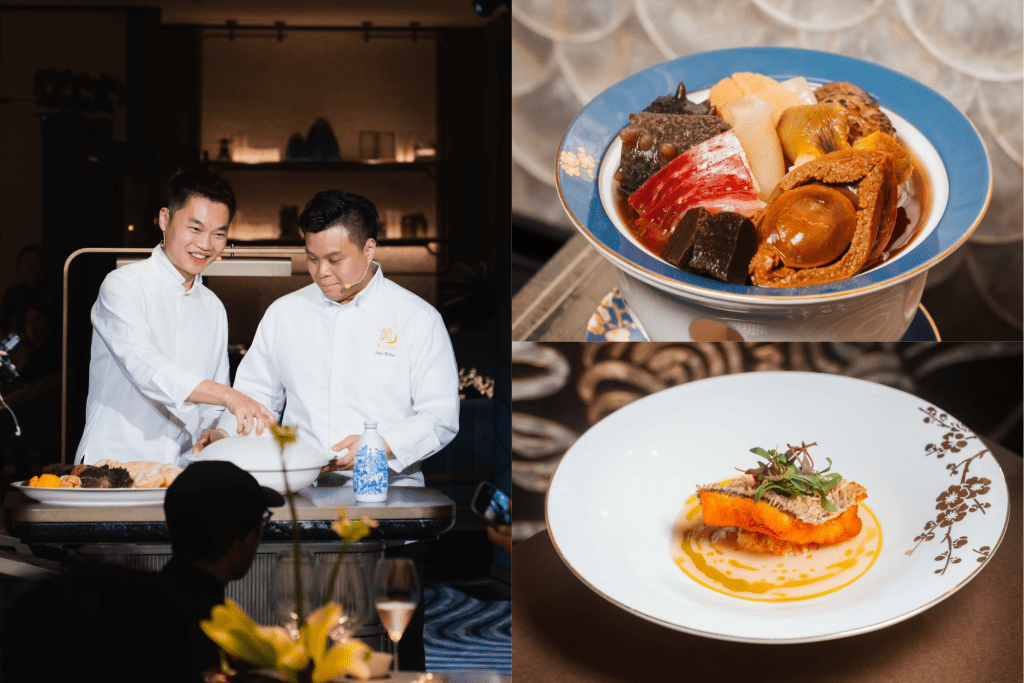
From left, Chef Justin Yang of FUMANLOU Hokkien Cuisine, Chengdu and Executive Chef Otto Wong of Pearl Dragon, Studio City Macau.
The dinner took its inspiration from mountains and seas — a broad metaphor, perhaps, but one that made sense on the plate. Cantonese and Chaozhou cooking brought clarity, seafood and restrained seasoning; Hokkien cuisine contributed richer sauces, preserved flavors and a particular affinity for ingredients from both land and coast.
For Wong, however, the connection between the cuisines runs deeper than flavor.
“Chaozhou and Hokkien cuisines are closely connected geographically and historically,” he told The Standard. “Population migration in earlier times encouraged exchanges in food culture, while differences in local environments and ways of life eventually allowed each cuisine to develop its own distinctive character.”
“What interested me most about this collaboration was that we could find common ground between the two cuisines while also learning from the different ways each interprets food.”
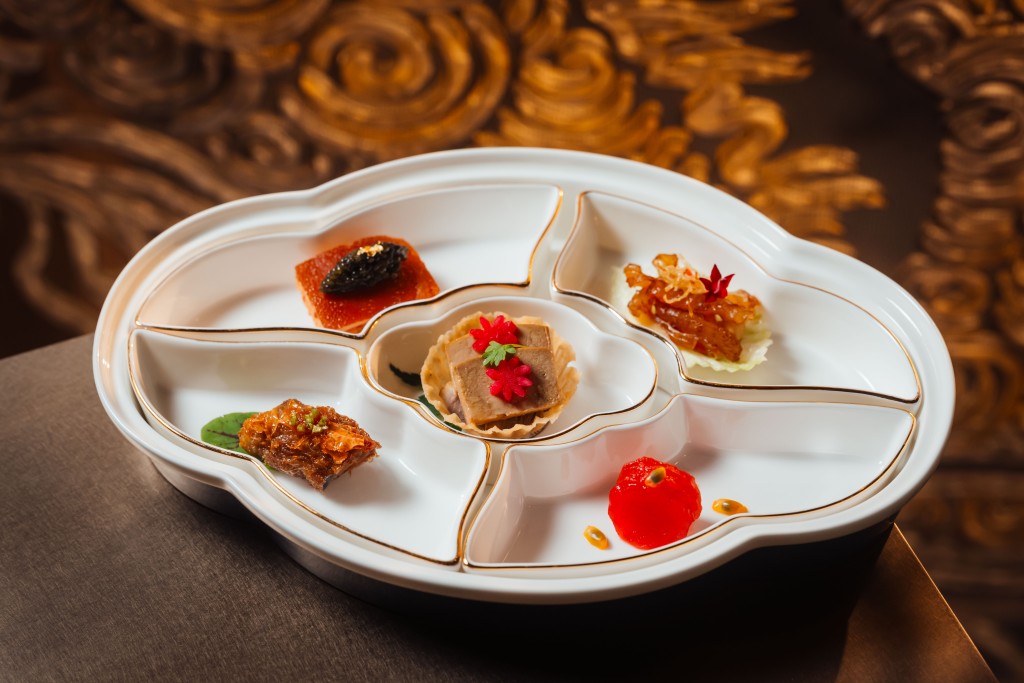
That common ground appeared first in an appetizer platter combining signatures from both kitchens. Pearl Dragon contributed tossed sturgeon tendon with vegetables, suckling pig with shrimp paste and Oscietra caviar, and a Chaozhou soy-braised goose liver tart, while FUMANLOU added a Hokkien pork and vegetable roll and marinated passion fruit.
Rather than forcing the dishes into a single style, the opening course allowed the differences to remain visible — crisp beside soft, savory beside tangy, refinement beside rusticity.
Appetizer Platter.
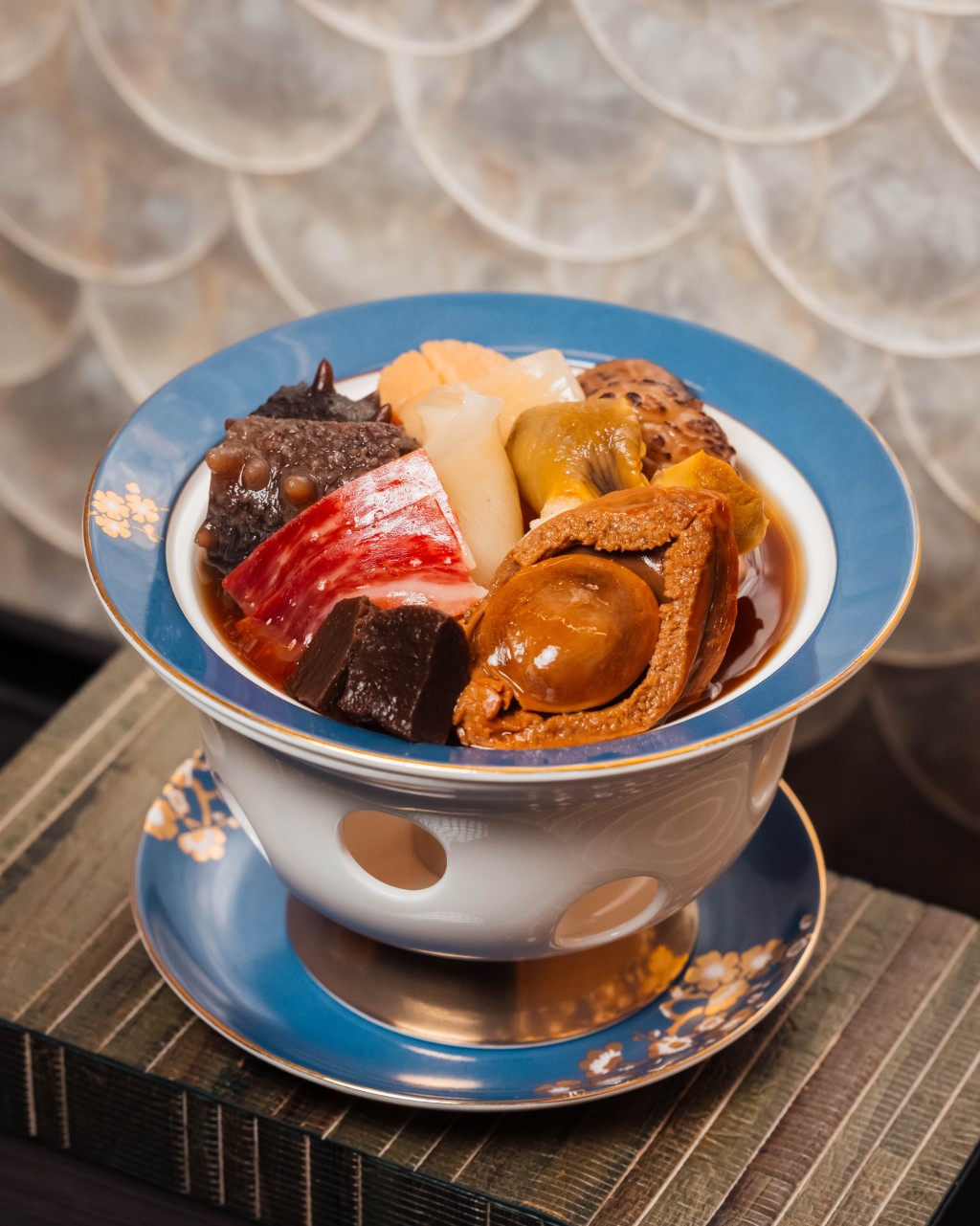
The collaboration became more explicit with Buddha Jumps Over the Wall with 15-Year-Aged Preserved Radish.
The familiar Hokkien banquet dish was slow-simmered for eight hours with sea cucumber, fish maw, abalone, dried scallops, ham and conch. Into that deeply layered broth went a distinctly Chaozhou accent: preserved radish aged for 15 years.
Wong said the starting point was to consider how Chaozhou flavor could sit naturally within the structure of a Hokkien classic.
“The traditional broth already has the freshness of seafood, the fragrance of Huadiao wine and the depth developed through long cooking,” he said. “We then added the umami of mushrooms and the aged aroma of 15-year Chaozhou preserved radish, giving the broth more dimension while naturally connecting the flavors of southern Fujian and Chaoshan.”
Buddha Jumps Over The Wall with 15 Years Aged Preserved Radish.
It was a useful example of what the dinner did best: instead of disguising one cuisine inside another, it used a familiar ingredient to create a bridge between them.
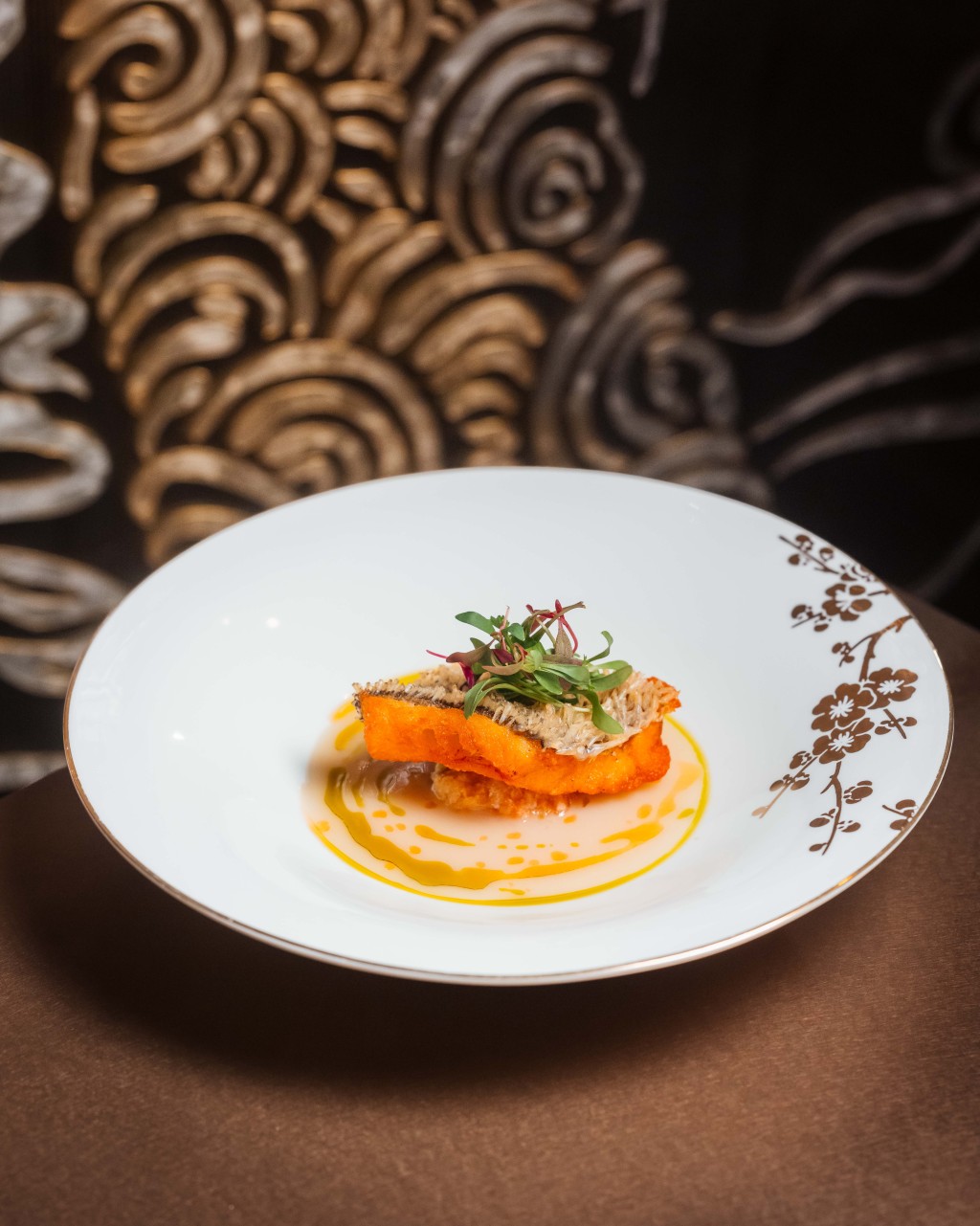
Pearl Dragon followed with Chaozhou Kirin Fish Fillet in Pepper Sauce, pairing wild marbled goby with preserved vegetables, white pepper, shrimp oil and basil oil. The fish was oil-poached with its scales intact, creating crispness against tender flesh and bringing the menu briefly back toward Wong’s own Cantonese-Chaozhou vocabulary.
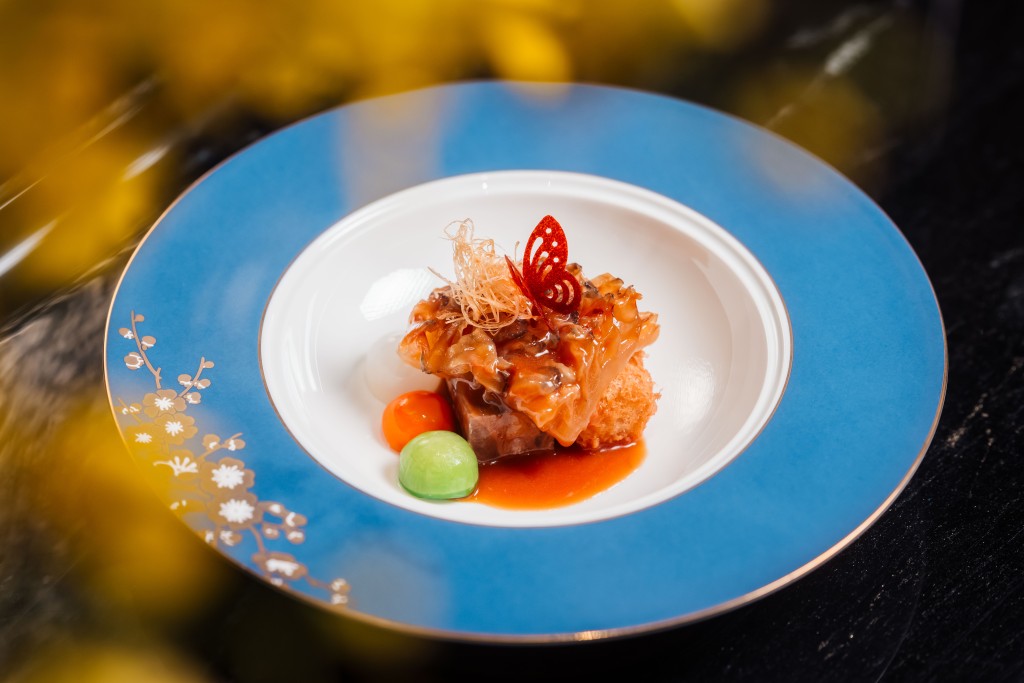
The second major collaboration, Braised Wagyu Cheek with Wild Grouper Skin and Taro, leaned more heavily into texture.
Its foundation came from the Hokkien preparation of taro with rich meat juices. Yang’s crispy taro was joined by slow-braised Wagyu cheek and giant grouper skin — an ingredient more closely associated with Cantonese banquet cooking.
Wong explained that the beef cheek was braised for four hours before being finished with the grouper skin and a concentrated Hokkien-style sauce. The taro, crisp outside and soft within, gave the dish another layer of contrast.
“We started with the Hokkien-style taro cooked with meat juices, then added giant grouper skin, a prized Cantonese ingredient, and Wagyu cheek,” Wong said. “The combination created more layers of texture while also responding to the dinner’s theme of bringing mountains and seas together.”
Braised Wagyu Cheek with Wild Grouper Skin and Taro.
Between courses, the theme extended beyond the kitchen. Double bass and harp accompanied the opening chapter, while a later performance paired silk fan dance with kung fu — softness against strength, sea against mountain. The staging could easily have overwhelmed the food, but at its best it provided rhythm between dishes rather than competing with them.
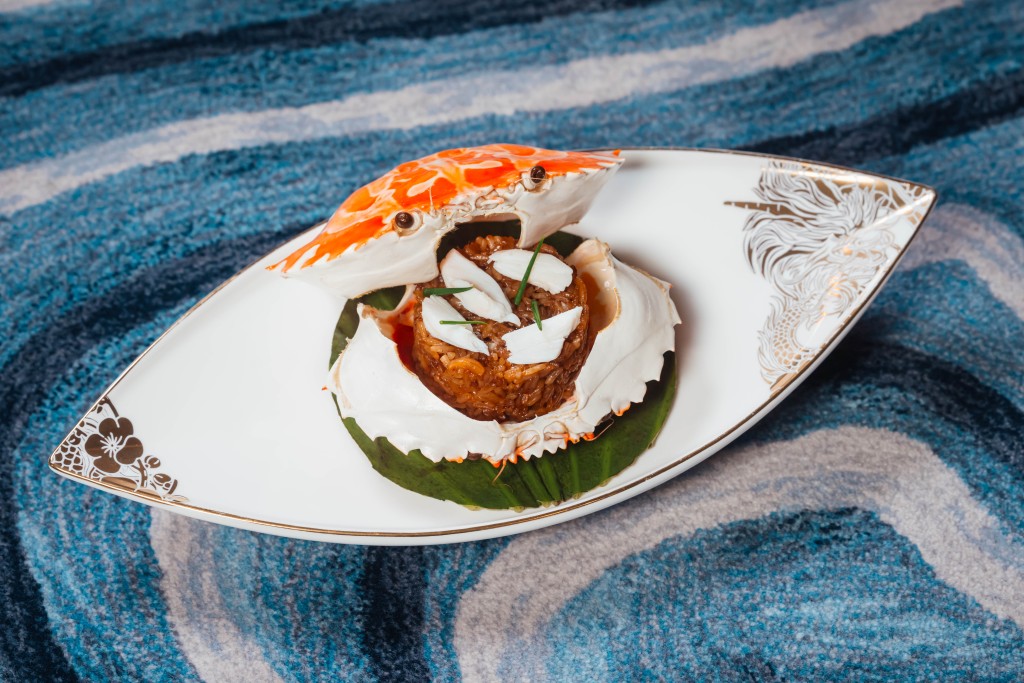
FUMANLOU then brought the dinner closer to home cooking with Steamed Glutinous Rice with Red Spanner Crab. The rice was first sautéed with shiitake mushrooms, dried scallops and dried shrimp before being steamed with crab under the fragrance of lotus leaf. Crab juices soaked into the grains while still allowing them to retain their shape — a comforting course after the richer meat and seafood combinations that preceded it.
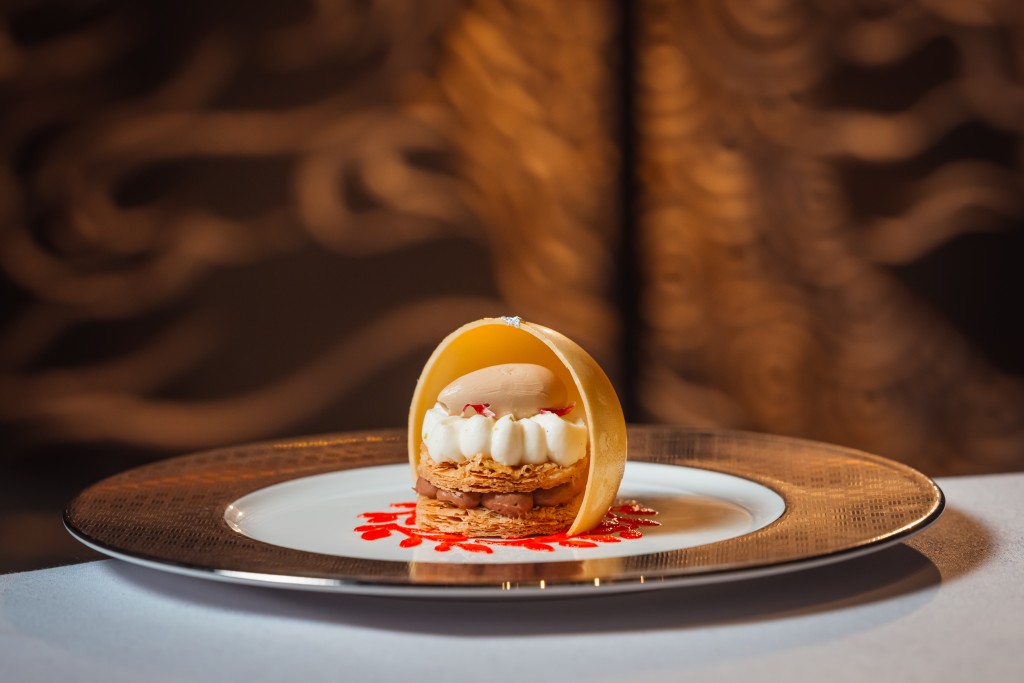
The finale returned to Chaozhou tea with Dan Cong Tea Sorbet with Lemon Mousse and Sea Moss, a jointly created dessert combining Phoenix Dan Cong, citrus and an ingredient associated with the coastal food traditions of both Fujian and Chaozhou. Its cleaner, brighter profile offered a deliberate reset after the deeper flavors of the savory courses.
Steamed Glutinous Rice with Red Spanner Crab.
Dan Cong Tea Sorbet with Lemon Mousse and Sea Moss.
For Wong, maintaining that sense of identity is precisely the point of collaborations such as this.
“Traditional dishes and regional cuisines are the foundation for the continued development of Chinese cuisine,” he said.
“When we plan a collaboration, we first respect and preserve the representative flavors, techniques and cultural context of each cuisine, then build on them with distinctive ingredients, contemporary techniques and more refined presentation.”
“The guest may see something new on the plate, but when they taste it, they should still be able to recognize the core flavors of regional Chinese cuisine.”
His conclusion neatly captures what made the dinner work beyond its theme.
“Innovation is not about changing tradition,” Wong said. “It is about continuing tradition in a contemporary way, so that more people can understand and appreciate it.”
marco.lam@singtaonewscorp.com