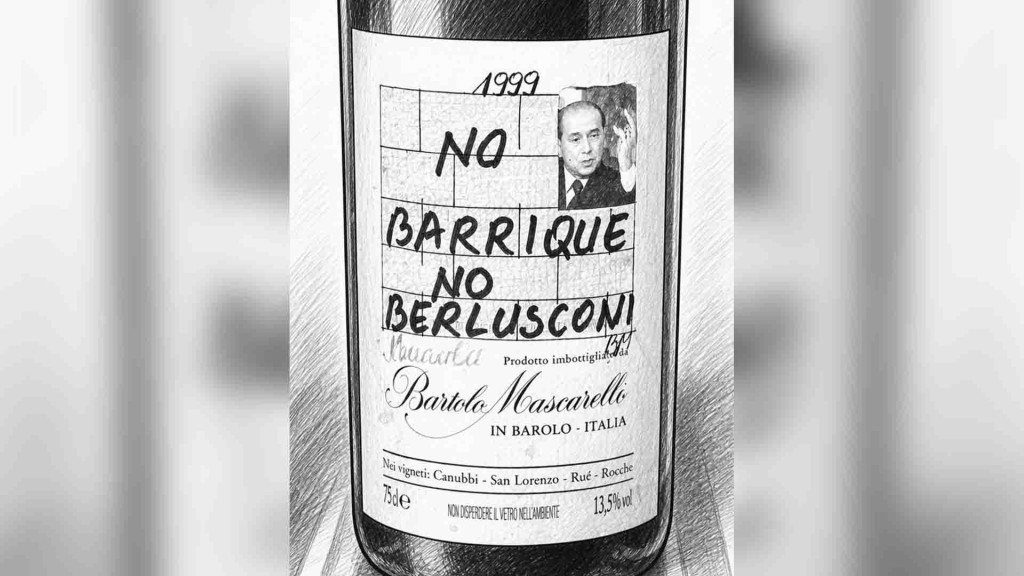
“No barrique, no Berlusconi” is the famous hand-painted wine label made by traditionalist Barolo producer Bartolo Mascarello in 2001, to show his strong opposition against the use of small and new French oak barriques favored by the modernists, as well as to voice his political view.
The bottle is one of the most frequently quoted examples highlighting the tension between Piemontese traditionalists and modernists in that era.
Along with the desire to “crown a new Barolo king” via modern winemaking approaches, the attempt was also viewed as a consumer-driven strategy to appeal to wine lovers who were more accustomed to French or American wines. Without any doubt, producers such as Luciano Sandrone and Elio Altare have gained worldwide recognition, with their wines successfully tapping into new markets.
However, by no means was that the end of the story. After several years of fierce debates, intense challenges, but also having the chance to understand the other camp, most producers have finally come around and began to respect each other’s work.
Some modernists have toned down their flamboyant styles, while several traditionalists have experimented with limited use of barrique in blending.
Collectively, the majority of Barolo winemakers have reflected on and learned from this battle. Today, the huge diversity of interesting wine styles in Piemonte have made Nebbiolo the true king.
Nevertheless, by no means was that the end of the story. The technique employed in the winery is only one fraction of the discussion on what makes the most representative Barolo. Barolo is more than just the grape variety. It is the land that expresses the beauty and fullest potential of Nebbiolo. The question on hand is – where in Barolo?
(To be continued)
Alice Wong is a certified wine educator based in Hong Kong