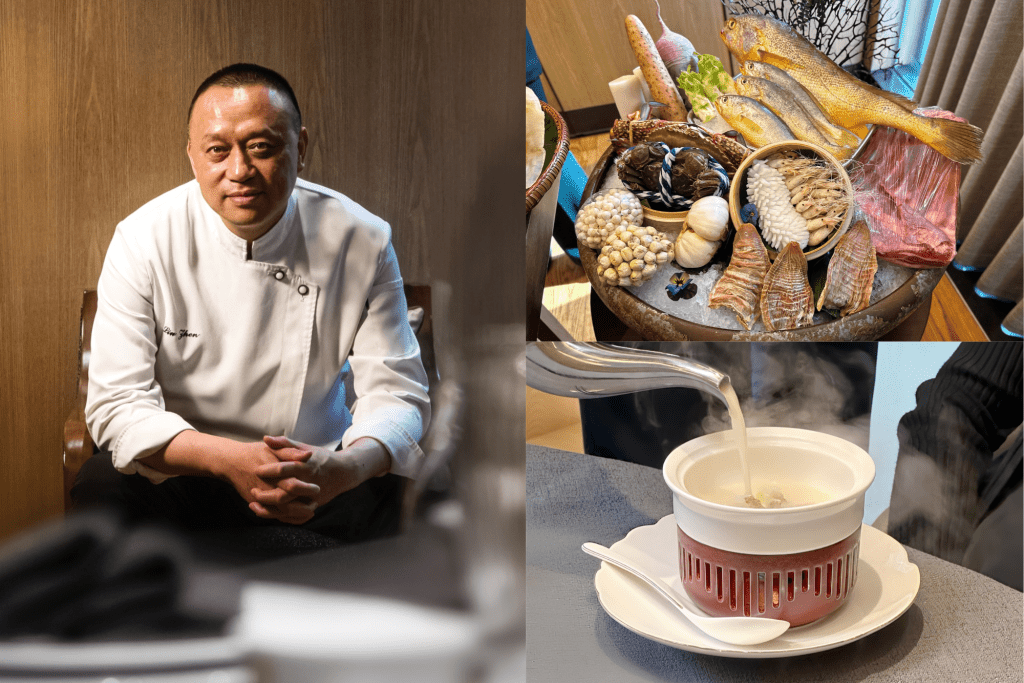
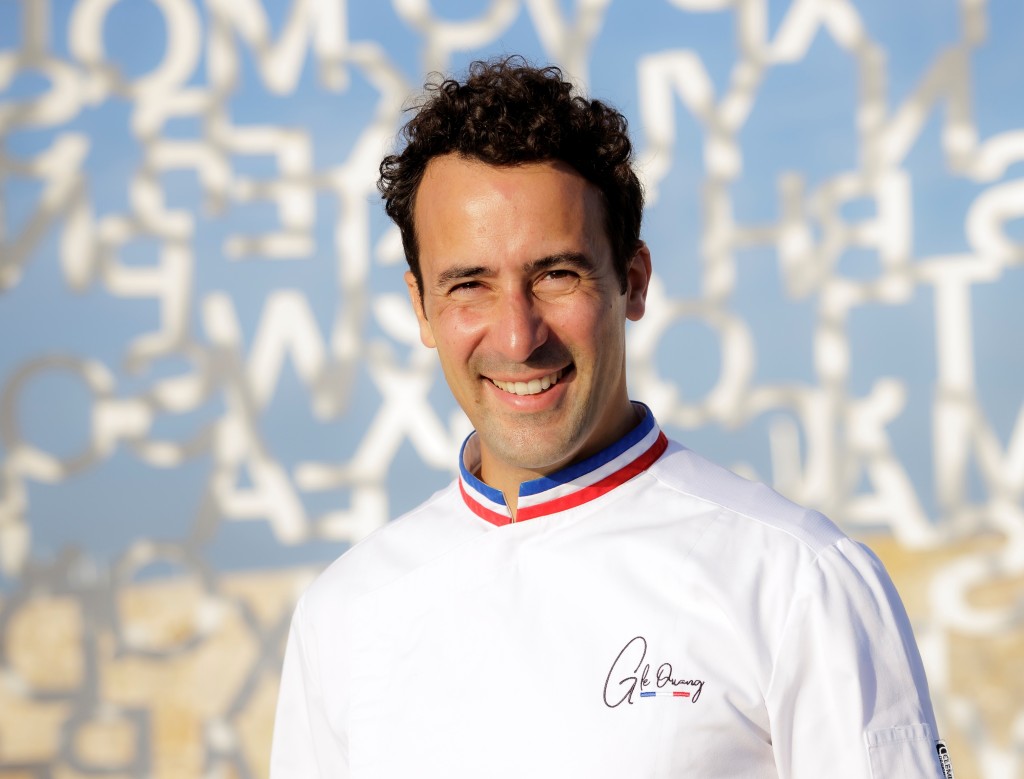
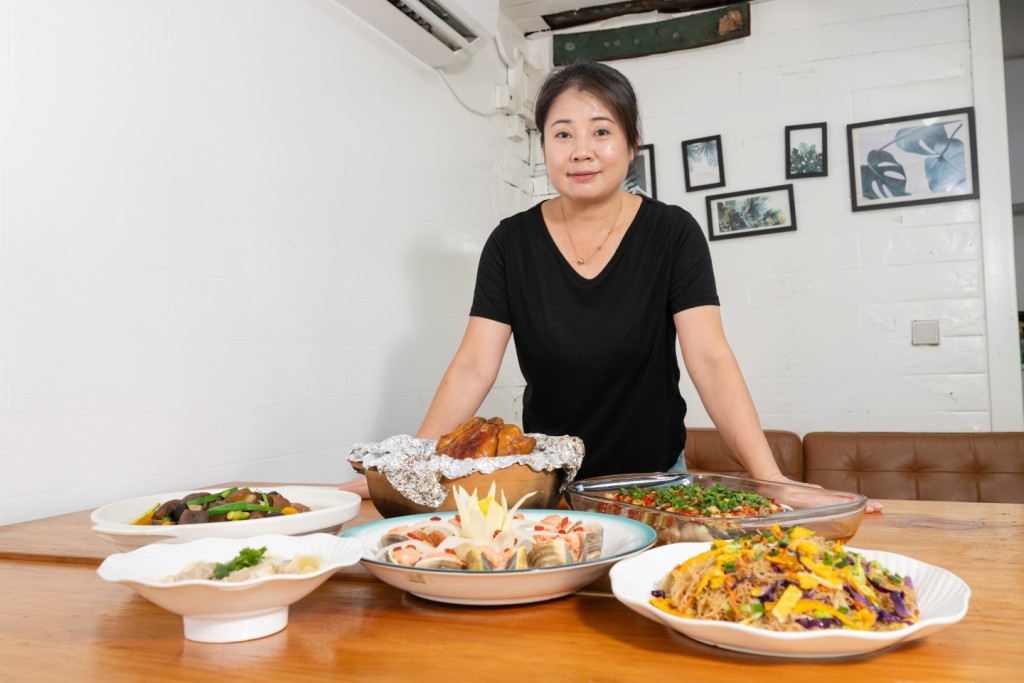
Executive chef Liu Zhen draws on East China Sea seafood, winter bamboo shoots, cured meats, fermented rice lees and other seasonal ingredients for his Start of Winter menu, capturing the deeper flavors of the season.
Hong Kong may not have its coats out just yet, but the first signs of winter are beginning to creep in. A dry northeast monsoon has brought cooler mornings and fresher northeasterly winds, with temperatures dipping to around 22 degrees Celsius — just as the traditional Chinese calendar turns toward winter.
ADVERTISEMENT
SCROLL TO CONTINUE WITH CONTENT
November 7 marked Start of Winter, or Lidong, the 19th of China’s 24 solar terms. At Yong Fu Hong Kong, the seasonal shift has made its way to the table with a new Start of Winter menu, completing executive chef Liu Zhen’s year-long series inspired by the four seasonal markers of spring, summer, autumn and winter.
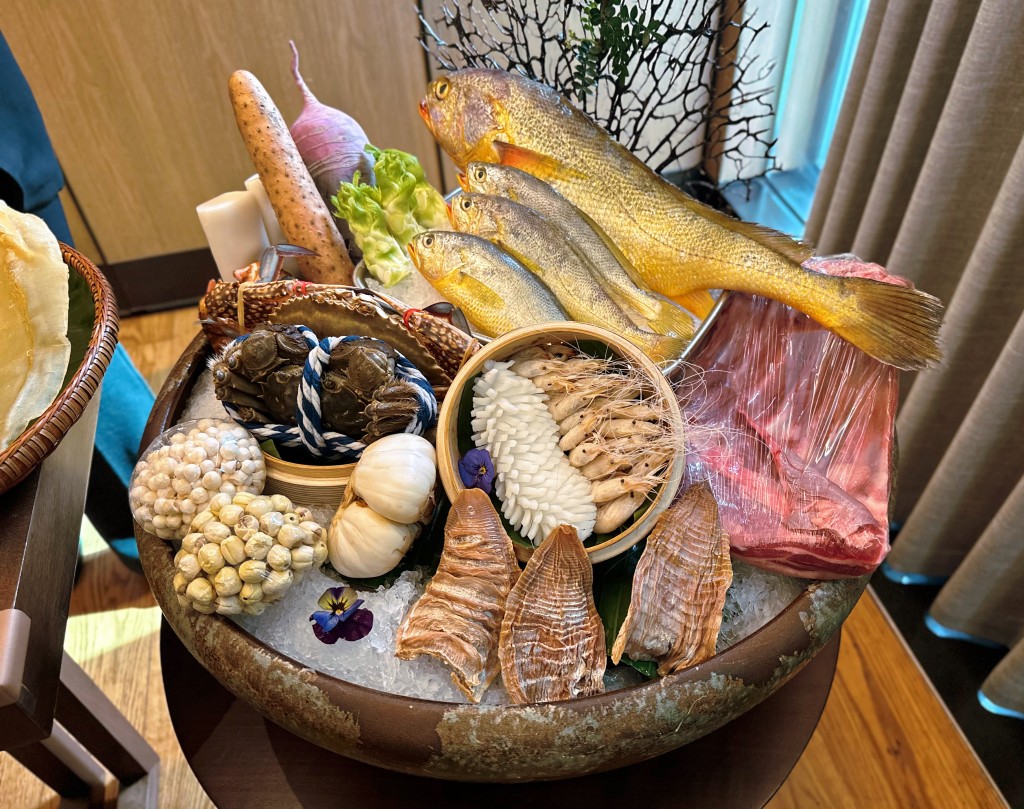
This final chapter takes its cue from the Chinese idea of dong cang — storing and preserving through winter. Rather than simply making everything heavier, Liu turns to ingredients that have gathered flavor over time: seafood from the East China Sea, winter bamboo shoots drawn from the earth, cured meats, fermented rice lees and dried produce.
Yong Fu executive chef Liu Zhen’s Start of Winter menu ooks to ingredients that have gathered flavor over time.
Yong Fu executive chef Liu Zhen’s Start of Winter menu ooks to ingredients that have gathered flavor over time.
The menu progresses from bright salinity to deeper, more rounded flavors before returning to the familiar comfort of rice and a gently sweetened soup.
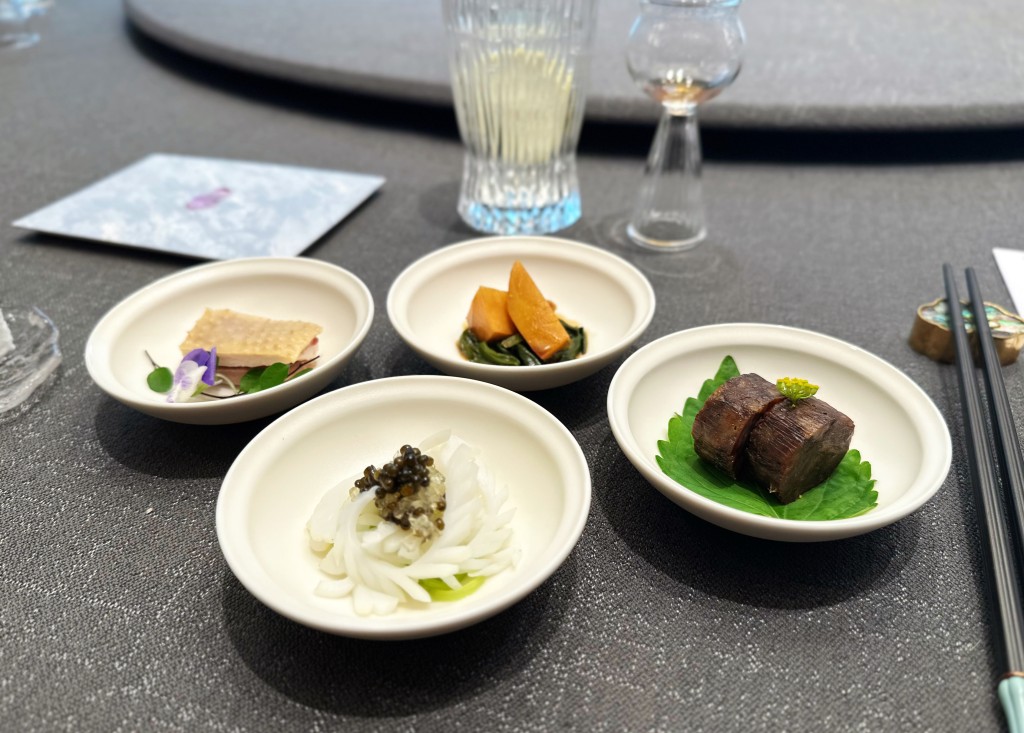
The opening plates set the rhythm. Lightly cured cuttlefish is paired with a clear caviar jelly, its clean salinity contrasting with the seafood’s springy texture. A Vietnamese-style drunken chicken, made with a 300-day free-range bird marinated in aged fermented rice lees, is lifted by the sweetness of seasonal figs.
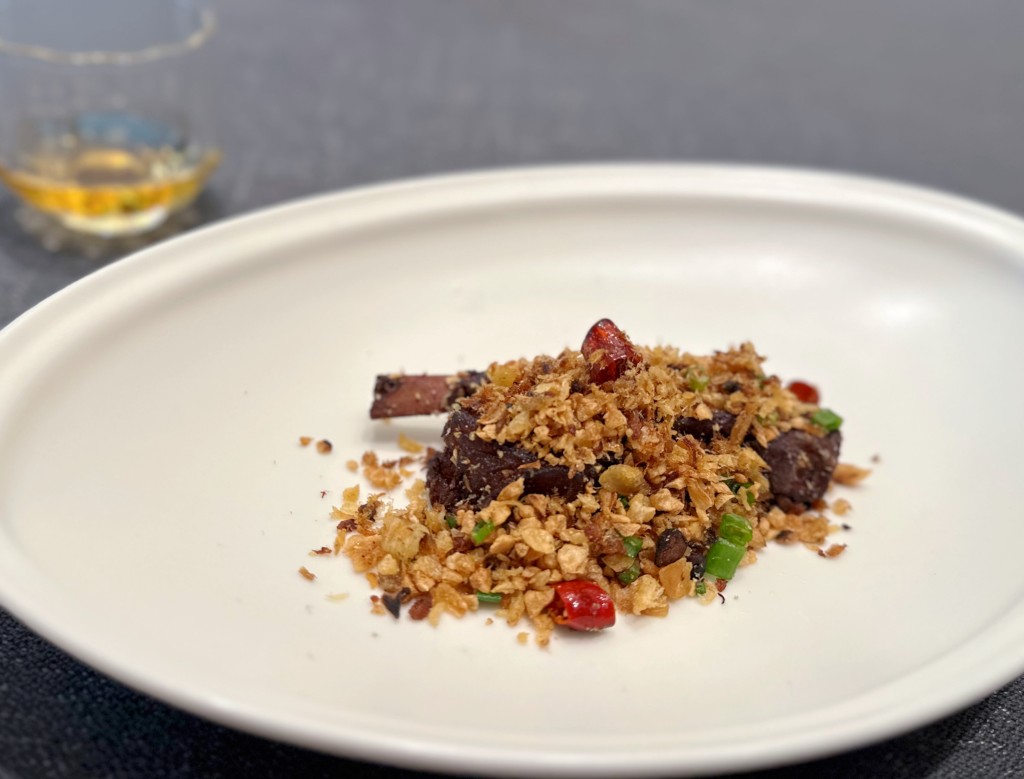
Winter bamboo shoots, meanwhile, are slowly cooked with Tibetan pork and scallion, absorbing their richness without losing their own delicate freshness. The appetizers conclude on a deeper note with Ningbo-style braised oxtail, finished over agarwood smoke for a lingering woody aroma.
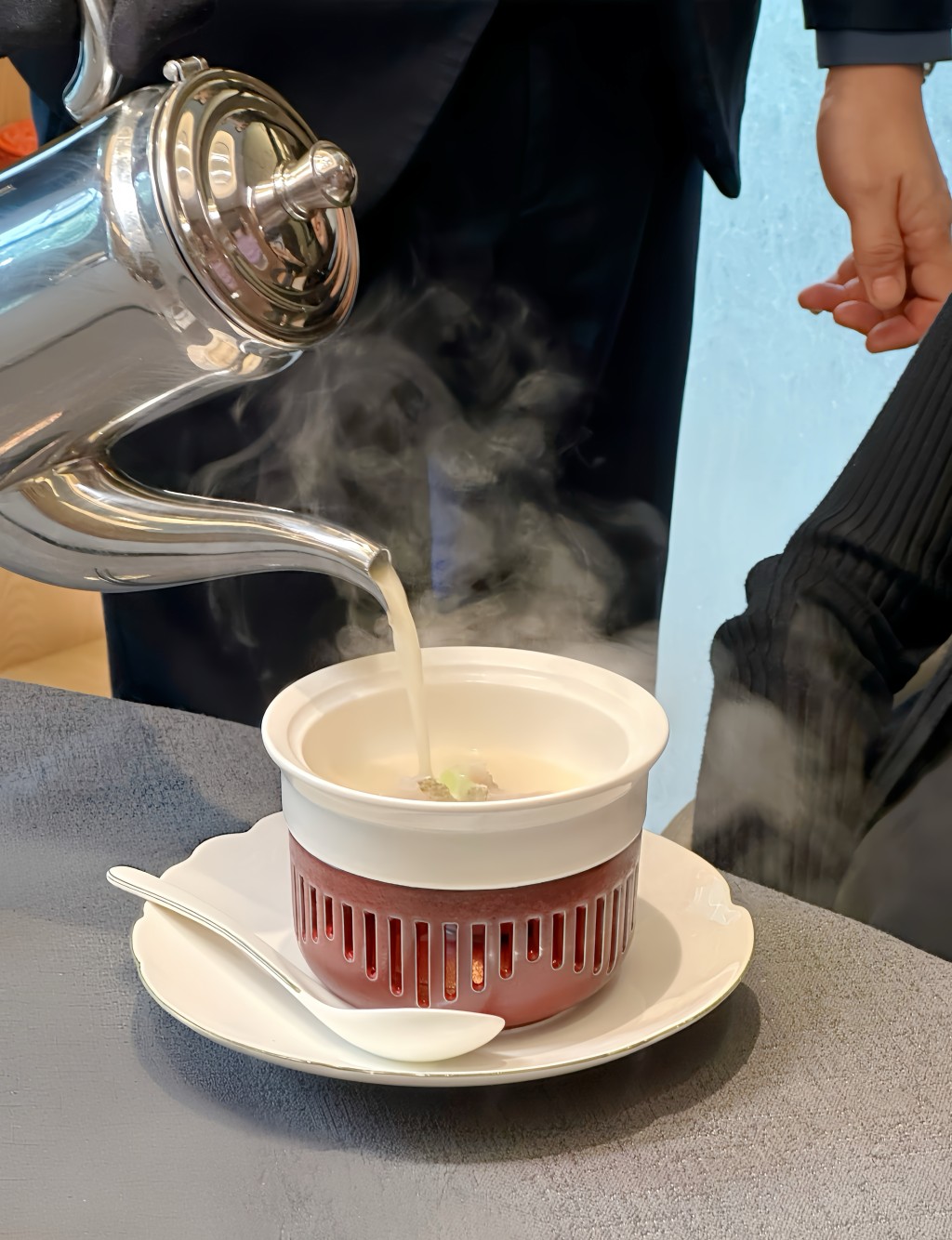
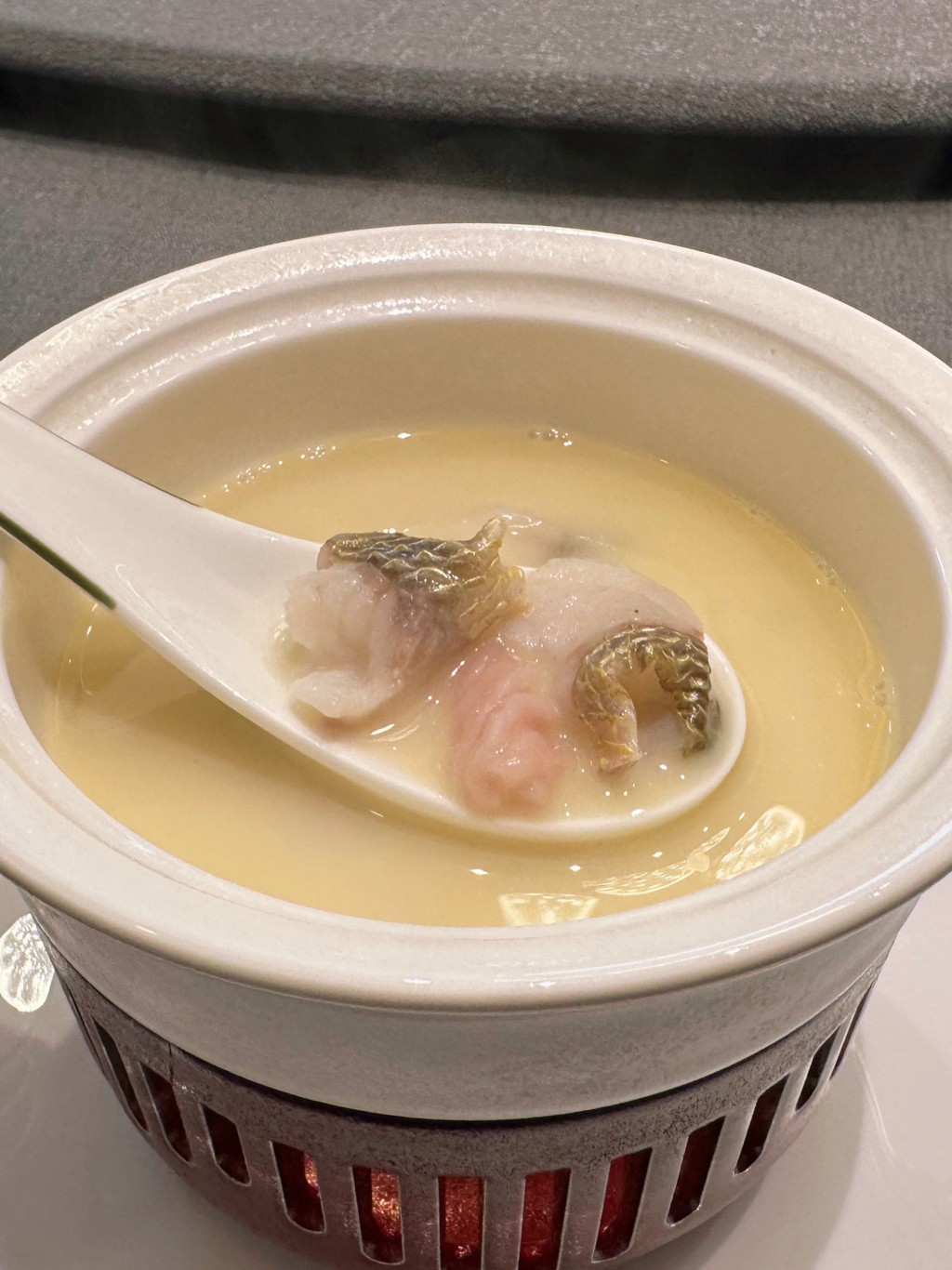
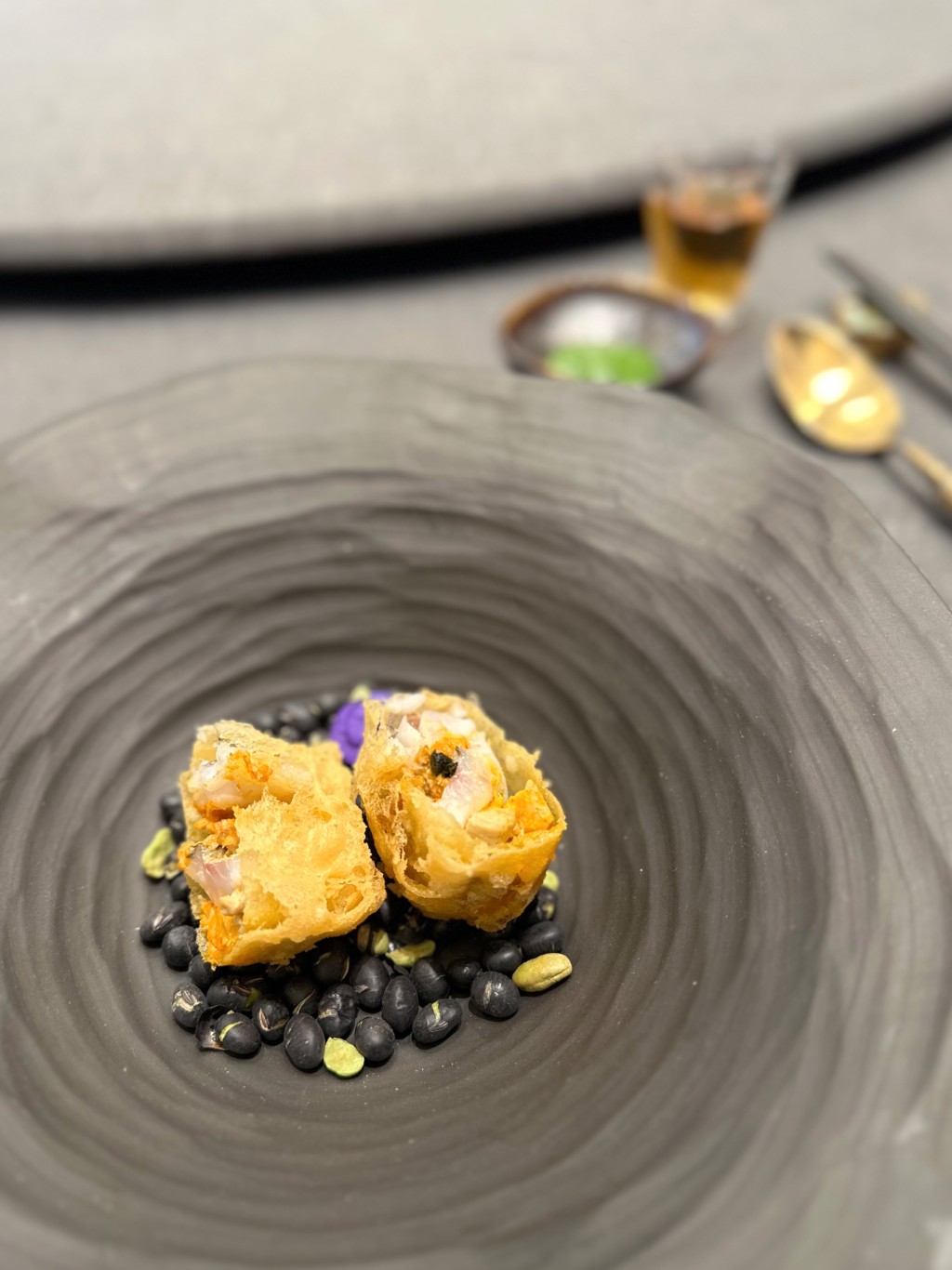
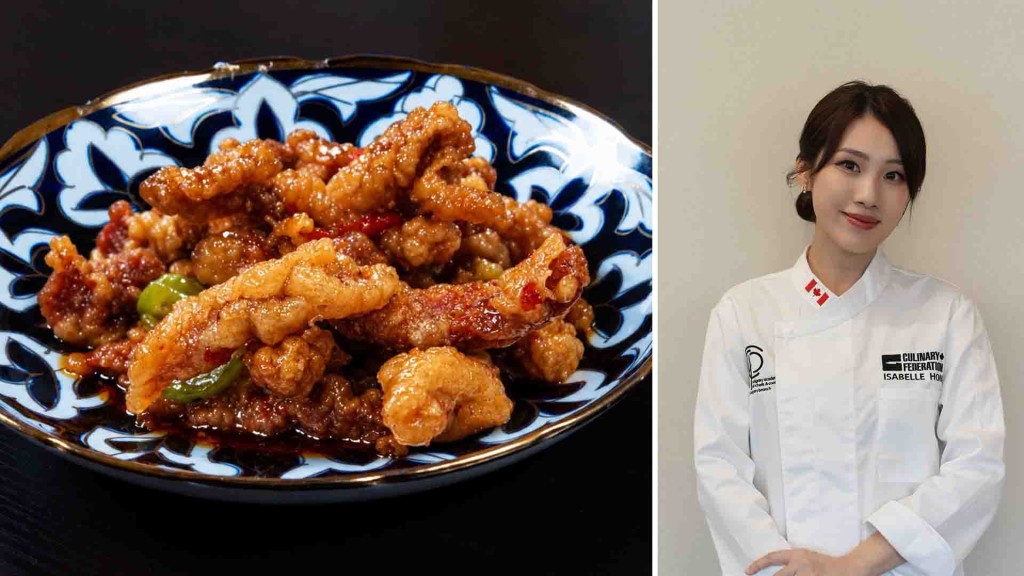
From there, the flavors gradually intensify. Yellow croaker arrives in a milky broth made from its bones, poured over delicate fish slices and left for 50 seconds before being served with yam “cat-ear” noodles and fresh bean curd sheets. Monkfish liver takes a richer turn, layered with octopus before being battered and fried until crisp outside and yielding within.
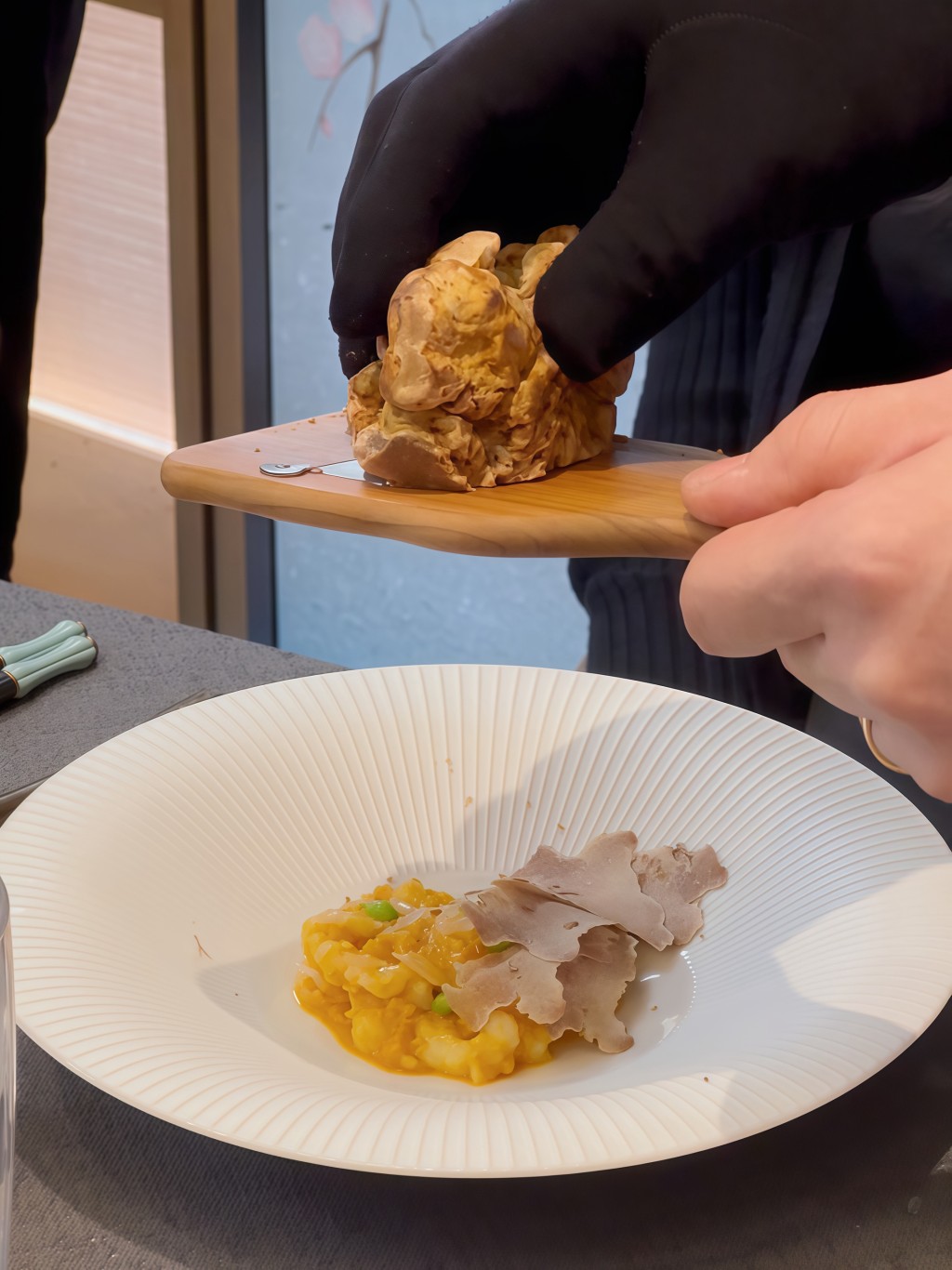
One of the most indulgent combinations brings together freshly peeled shrimp from Ningbo with tu huang you — the concentrated roe and fat of hairy crab — finished with seasonal Italian white truffle.
+1
Liu also reaches beyond Ningbo for inspiration. His typhoon shelter-style fish and lamb combines Ningbo red-braising with a familiar Cantonese technique: lamb from Yanchi is braised with crucian carp, while the fish is turned into floss and tossed with aromatics before meeting the lamb again.
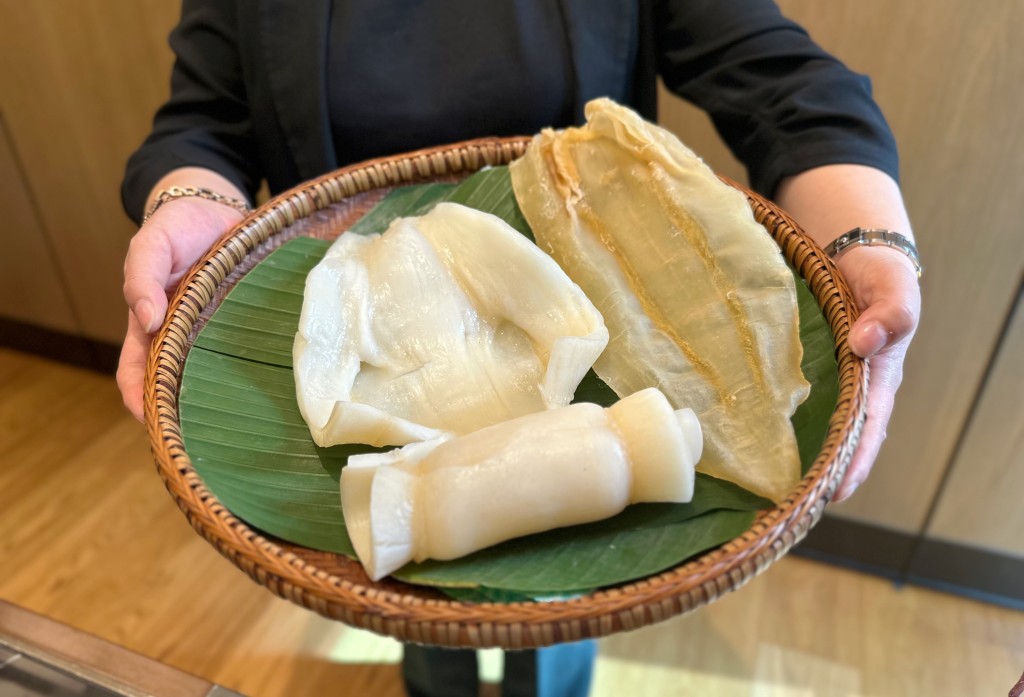
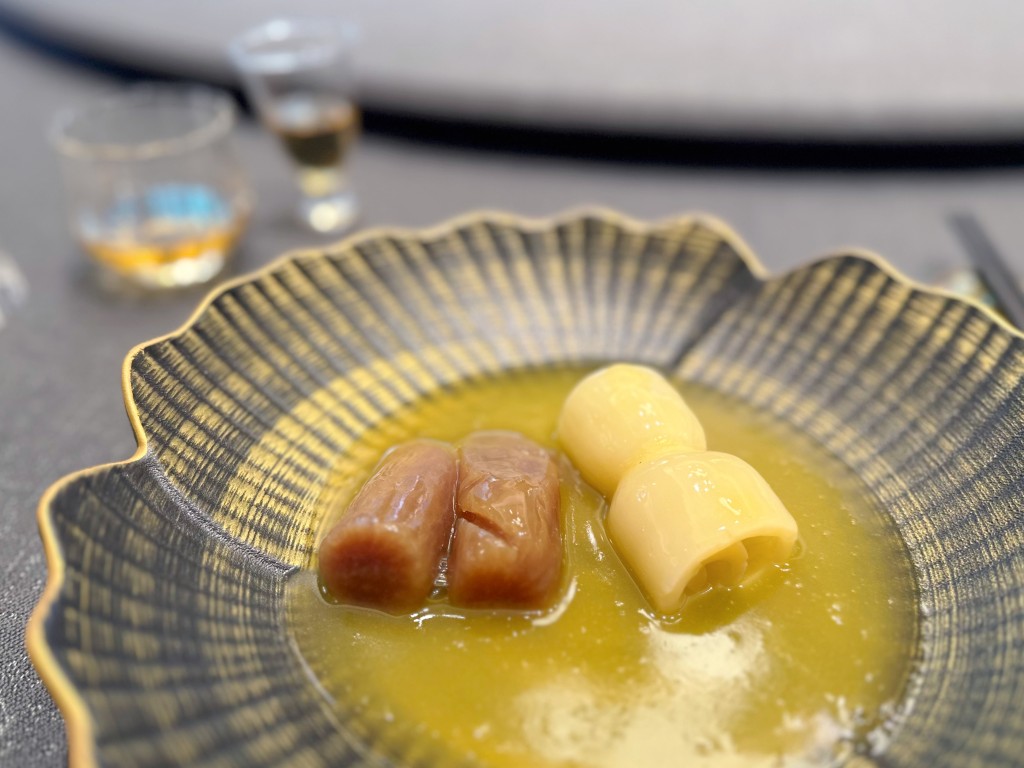
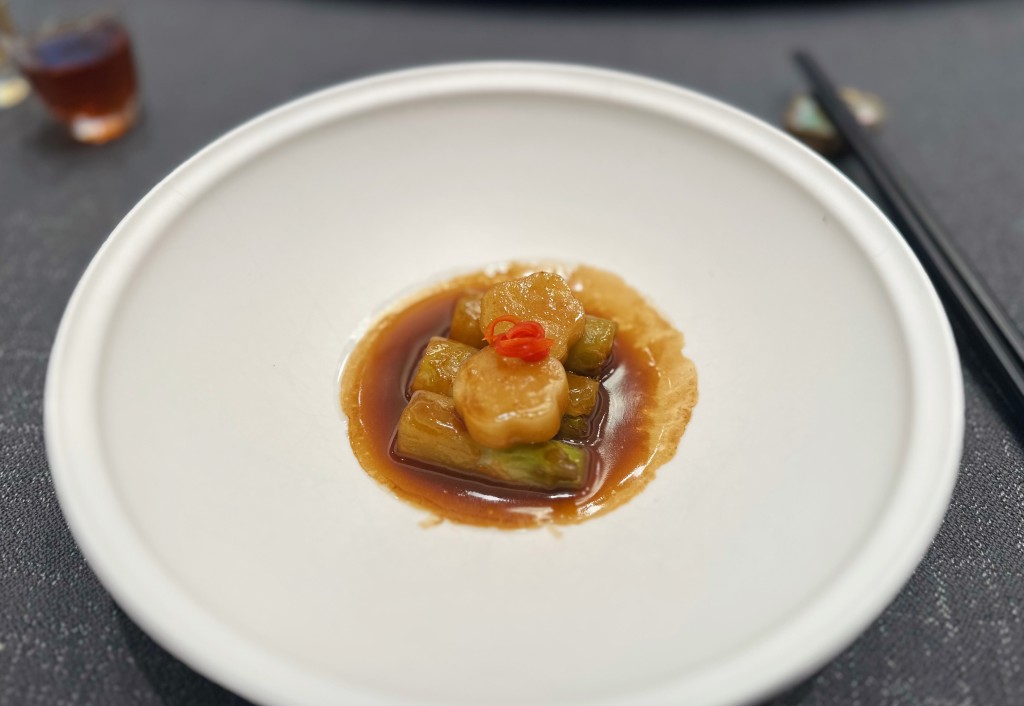
Fish maw braised with radish follows, its gelatinous richness balanced by the clean sweetness of Shandong purple-skinned radish.
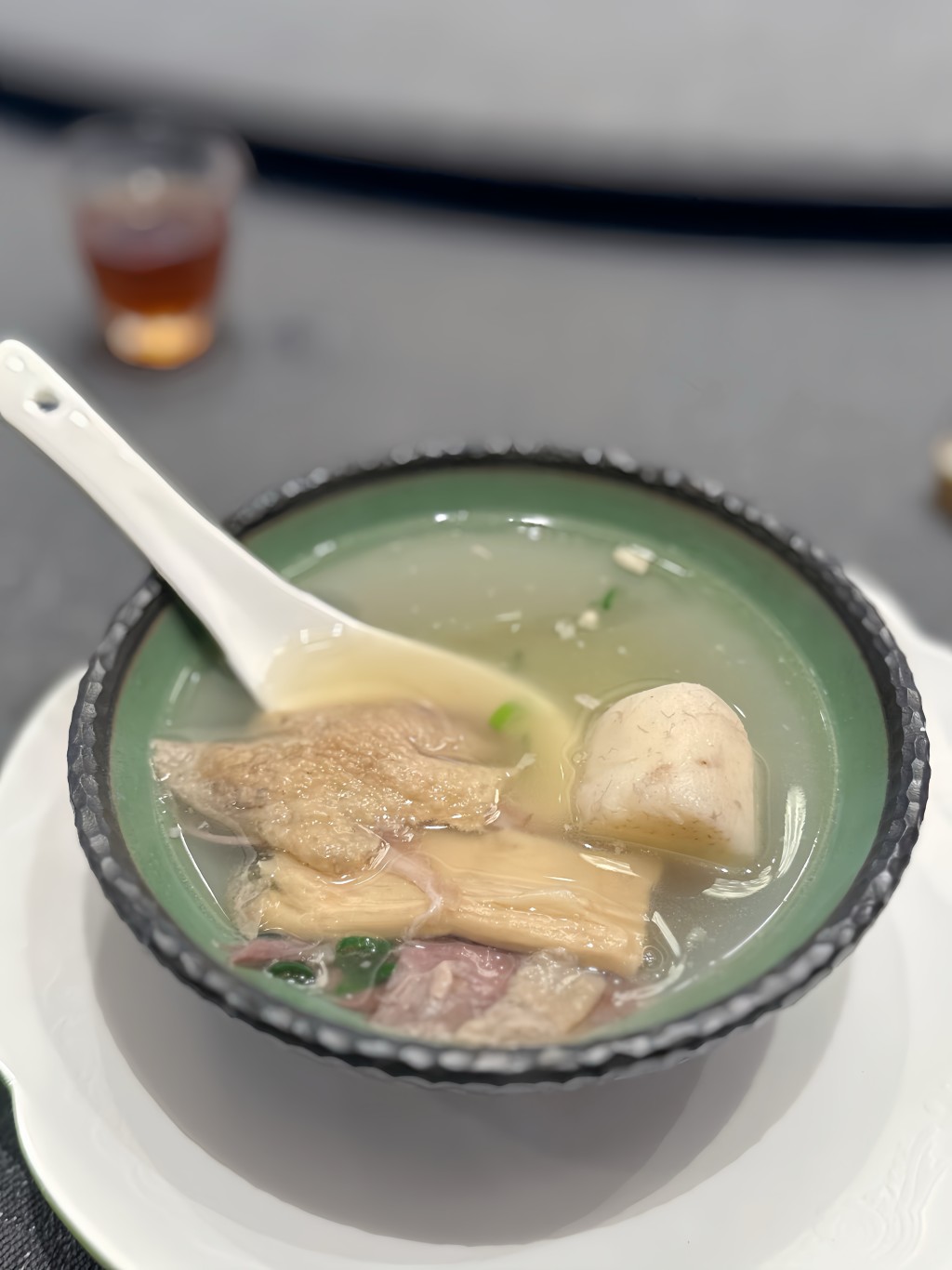
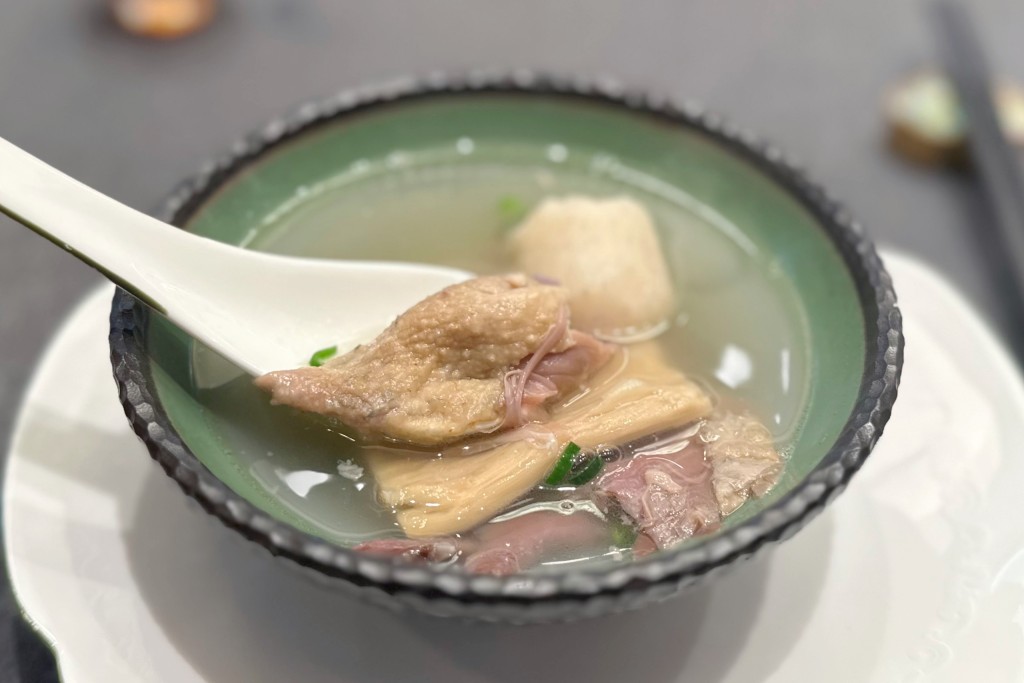
A warming soup of wind-dried wild duck is then gently simmered over charcoal with dried bamboo shoots and taro, allowing the duck’s concentrated savoriness to deepen the broth while the bamboo lends freshness and the taro adds a soft, creamy texture. A humbler plate of baby mustard greens cooked with hand-pounded Ningbo rice cakes brings the main courses back to the comfort of everyday winter cooking.
That homely thread carries through to the rice course. Blue swimming crab is pan-cooked to release its juices, while meat picked from the legs is stir-fried with rice, potato, beans and cured pork before the whole dish is baked together. The result is less ceremonial than comforting: grains of rice infused with the sweetness of crab and the savory depth of cured meat.
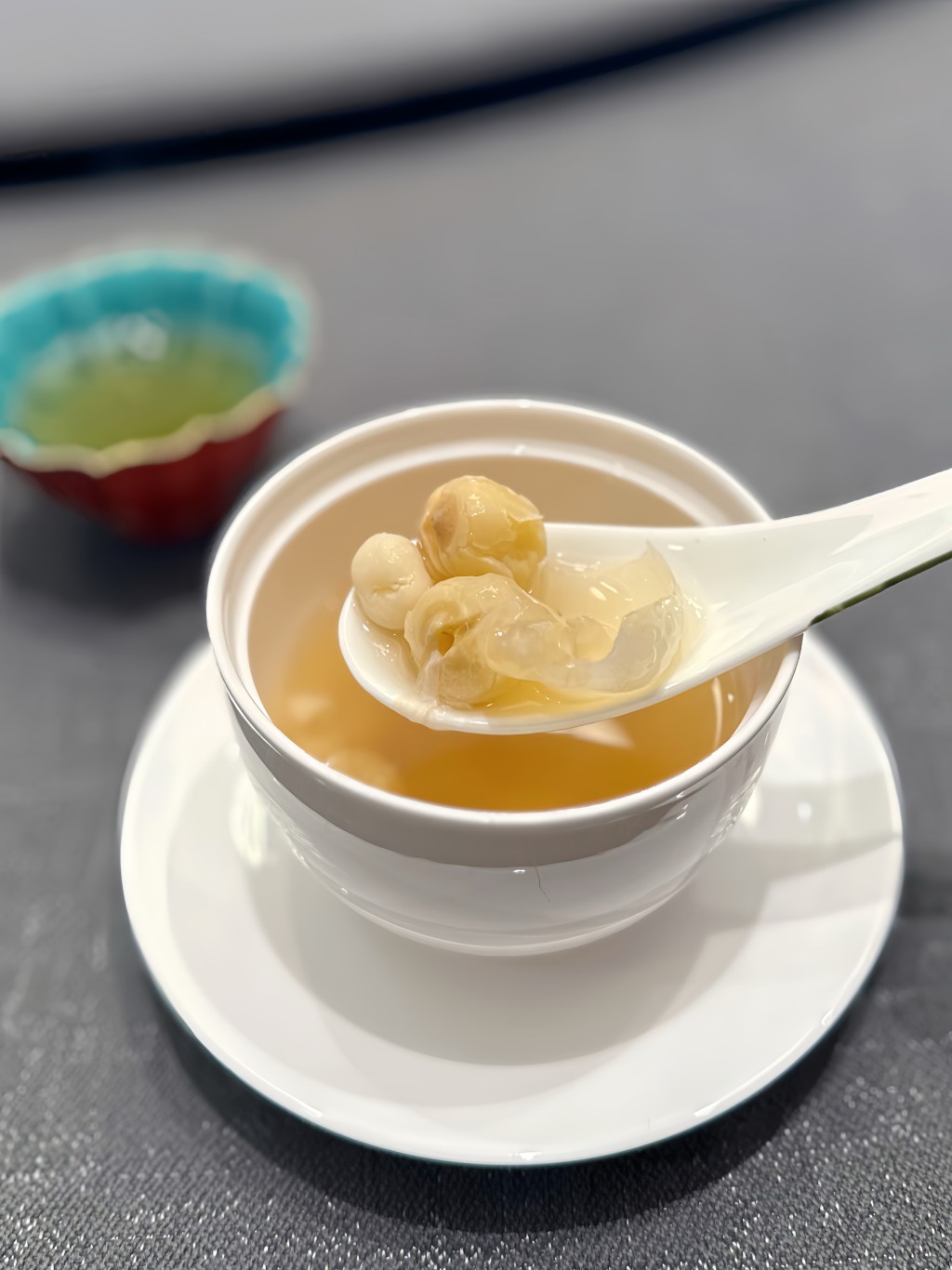
The meal ends quietly rather than extravagantly. The final sweet soup brings together nine-year lily bulbs, gorgon fruit, dried lotus seeds and sturgeon tendon, finished with the fragrance of osmanthus. Different textures — crisp, powdery, chewy and silky — take the place of heavy sweetness, leaving the meal on a softer note.
It is an appropriately restrained ending to a menu built around the idea of storing rather than displaying abundance. As temperatures begin their gradual descent, Yong Fu’s interpretation of Lidong finds warmth not simply in richness, but in ingredients given time to cure, dry, ferment, simmer and slowly reveal their flavor.
Yong Fu Hong Kong’s Start of Winter menu is available through December 8, priced at HK$2,888 per person plus 10 percent service charge, for a minimum of four diners.