There are many causes of sciatica, and piriformis syndrome is one of them. The piriformis muscle is located deep in the buttocks, and the sciatic nerve generally passes beneath it; when the piriformis muscle is overly tight, it may compress the nerve and trigger sciatica symptoms. Modern people often sit for hours at a time, and the piriformis muscle is under pressure for long periods, making it prone to tightness. Gentle stretching targeting the piriformis muscle can serve as a simple adjunctive method to relieve sciatica.
The Relationship Between Sciatica and the Piriformis Muscle
It is not easy to determine with 100% certainty whether the pain originates from the piriformis muscle. More importantly, it is whether the following two gentle stretching movements can make the body feel a little more comfortable. During practice, you should be guided by your own sensations; if the pain persists, intensifies, or extends to the legs, you should reduce the intensity and consult a doctor or physiotherapist as soon as possible.
Listen to your Body Before Practicing
The most important lesson in stretch therapy is learning to listen to your own body. No one knows better than you what is happening inside your body—even the best instructor cannot do this for you. In the early stages, it is better to do less than more, and progress gradually; never overdo it. The pulling sensation should be concentrated in the buttocks, and the intensity should be such that you can still breathe relaxedly and stay comfortable. If you cannot maintain your breathing, or feel the sensation extend to the legs, you should reduce the stretching intensity. Try to stay comfortable during practice—any distracting discomfort will make it difficult for the body to relax.
Movement 1: Seated Piriformis Stretch
This movement is suitable for beginners and can serve as an introductory practice for sciatica stretching. The movement is as follows:
-
Sit on a chair and place your left ankle on your right thigh near the knee.
-
Place both hands on your legs; inhale, lift your chest, and straighten your back.
-
Exhale and lean forward from the hip until you feel a pulling sensation in the left hip.
-
Keep your back straight throughout; once you round your back, the stretching effect weakens.
-
With each exhalation, relax your abdomen and feel whether the hip relaxes accordingly; if so, you can lean forward a little more.
-
Hold for 3 to 5 breaths, slowly return to the starting position, and then repeat on the other side.
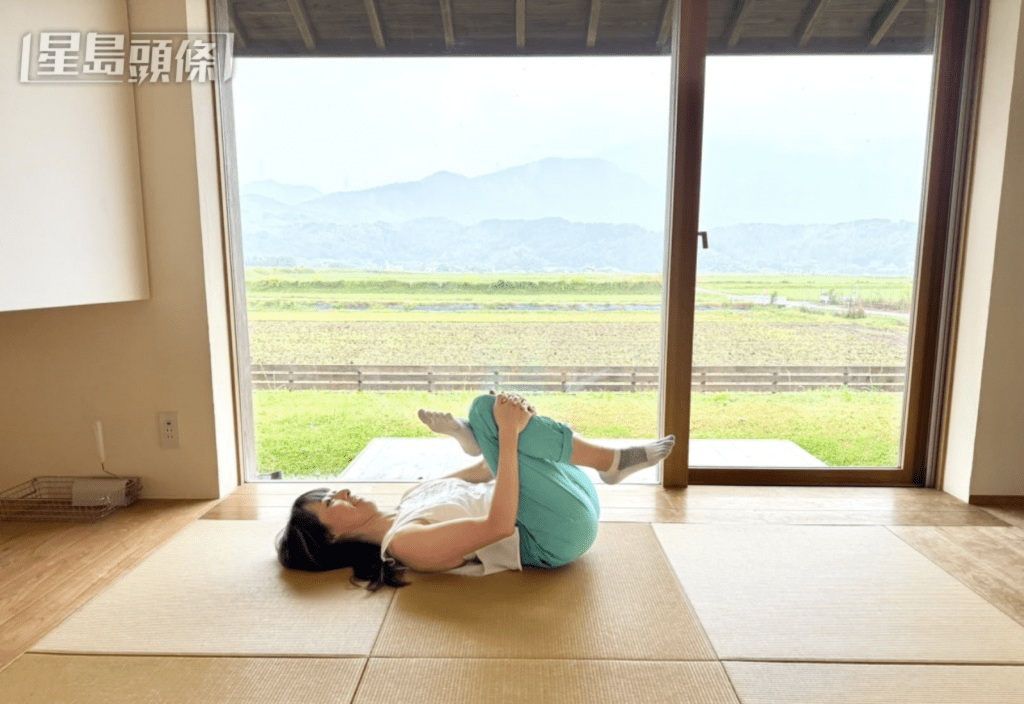
Movement 2: Supine Piriformis Stretch
If you also have lower back pain, this movement may be more comfortable because the entire back is supported by the ground.
-
Lie on your back, bend both knees, and place your left ankle on your right thigh near the knee.
-
Pass both hands between your legs and hold the front of your right lower leg; if you cannot reach, hold the back of your right thigh, or use a towel or strap for assistance.
-
Pull your right leg toward your chest until you feel a pulling sensation in the left hip, keeping your back flat on the ground.
-
With each exhalation, relax your abdomen; if the hip relaxes accordingly, you can pull the leg a little closer.
-
Hold for 3 to 5 breaths, and then repeat on the other side.
Sensation is More Important than Posture
In stretch therapy, there is no need to pursue an exact match with the demonstration. Many people think the harder you pull, the better—but in fact it is the opposite: if you use too much force, the body will only tense up in resistance, making it harder to relax. During practice, you might ask yourself three questions:
-
Do I feel a pulling sensation?
-
While pulling, can I still breathe relaxedly?
-
After stretching, has the painful area improved?
If the answer to all three is "yes," it means this stretching movement is suitable for you. Both sides should be practiced, but your body's sensations should be the guide.
In daily life, try to avoid prolonged sitting, get up and move around occasionally, and persist in practicing the above gentle stretches to help the piriformis muscle relax. Dealing with sciatica requires patience; progressing gradually and doing what you can is the way to long-term health.
*The content of this article is not medical advice and cannot replace a doctor's opinion.
Written by: Stretch Therapy Instructor Czon Wong