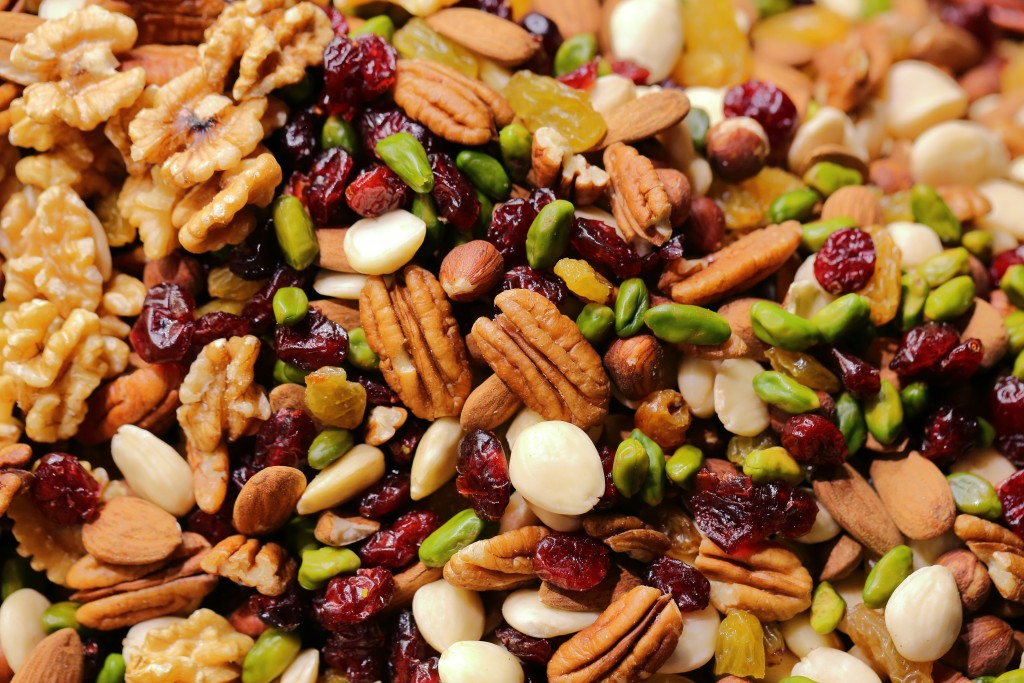
Dietitian Wang Yu-ching posted on her Facebook page that everyone knows "nuts are a good source of fat." When people want a small snack or want to supplement their body with high-quality fats, nuts are often the first choice. But do you also often grab a big handful at once, or prefer sweet amber walnuts or savory cashews? As a result, you may not get much good fat but instead swallow excessive sugar and sodium along with them. Although nuts are nutritious, their calories are not low, and each type of nut has very different nutritional strengths. She specifically compares the 6 most common everyday nuts:
Nutrition Comparison of 6 Common Nuts
1. Walnuts (about 65 kcal / protein 1.5g)
Walnuts contain relatively prominent Omega-3 (ALA) plant-based fatty acids. If you often eat out and eat little fish, walnuts are a very healthy nutritional supplement and garnish. But beware of commercially sold amber walnuts or honey walnuts, which have large amounts of refined sugar added and whose calories soar sharply.
2. Pumpkin Seeds (about 57 kcal / protein 3.0g)
Many people do not know that pumpkin seeds rank at the top of common nuts in protein content, and are also rich in minerals such as zinc, magnesium, and iron. They are very suitable for vegetarians and people who want to supplement plant-based protein and trace elements, but flavored pumpkin seeds often have the problem of relatively high sodium content.
3. Almonds (about 58 kcal / protein 2.1g)
Almonds are rich in monounsaturated fat and vitamin E, and their protein performance is also quite excellent. However, note that commercially available "almond tea/almond drinks" are not the same as directly eating whole almonds—their nutritional value is very different.
4. Cashews (about 55 kcal / protein 1.8g)
Cashews have a sweet taste and a relatively soft texture, and are highly accepted by the public. Commercially available cashews are very easily processed into flavored snacks such as honey-glazed, salted, or pepper-salt cashews. The flavors are so appetizing that people eat more and more, easily and unknowingly taking in too much sodium and refined sugar.
5. Macadamia Nuts (about 72 kcal / protein 0.8g)
Macadamia nuts have a rich milky aroma, high monounsaturated fat, and a premium texture. Macadamia nuts have the highest calories among all common nuts; eating just a few pieces accumulates an astonishing amount of calories, so portion size must be strictly controlled when eating them daily.
6. Pecans (about 69 kcal / protein 0.9g)
Pecans are rich in zinc, copper, and vitamin E. But pecans are often processed into brown sugar pecan tarts or pastry decorations. When eating such desserts, people often do not absorb the nutrition of the nuts themselves, but swallow them together with large amounts of sugar and butter.
Wang reminds that although nuts are an excellent source of good fat, "portion size is more important than type." Daily intake should be controlled to about 1 tablespoon (about a small handful) to appropriately supplement the nutrition the body needs without causing a calorie burden. When choosing, follow the principle of "original flavor, unseasoned, low-temperature roasted." Nuts should be treated as a nutritious bonus garnish on the plate, not as a snack to indulge in while binge-watching shows.