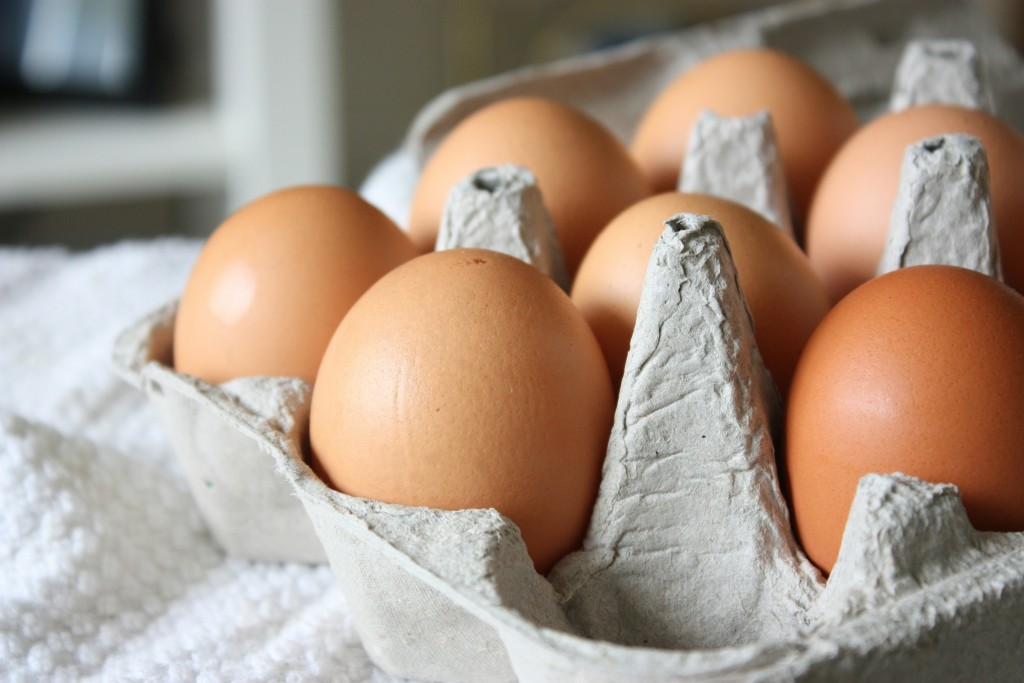
A netizen recently posted on social media that a box of eggs bought at a local supermarket had 3 moldy eggs after opening, even though the eggs still had one month before expiry. The incident drew attention and made many citizens worry about the egg transport and storage process. In fact, eggs spoiling is not necessarily related to expiration—the storage method is the key!
Netizen Shocked to Find Moldy Eggs - Complains: "Something Went Wrong Even Before Expiry"
The netizen shared on Threads that she bought a box of Japanese eggs at a supermarket last week. While cracking the eggs, she found as many as 3 moldy eggs in the box, with the egg liquid stuck to the inside of the shell and unable to be poured out. She checked the packaging and found there was still one month before expiry, and was greatly astonished. She called on other citizens who bought the same batch of eggs at that store to check as soon as possible. The incident reflects that even before the expiration date, eggs may still spoil if stored improperly.
Some netizens who bought eggs at the same supermarket reported encountering the same mold problem, so some people speculated that "the transport vehicle may not have refrigeration" or "the eggs were put in the fridge but the cooling was completely not turned on." Other netizens reminded that "Japanese eggs need refrigeration," explaining that because Japanese eggs have already had their natural antibacterial layer washed off at the factory, they must be refrigerated during transport, retail, and storage.
Why Eggs Spoil: Temperature and Humidity Are Key
Registered dietitian Kimberly Baker points out that eggs should not be left out of a refrigerated environment for more than two hours. If eggs are contaminated with Salmonella, the bacteria may rapidly multiply to high-risk levels at room temperature, and even heating to the recommended minimum internal temperature (63°C) may not completely eliminate all bacteria. Therefore, after buying them home from the supermarket, they should be put into the fridge as soon as possible.
In addition, the eggshell surface has pores that easily absorb odors and moisture. If the storage environment is humid or the temperature fluctuates greatly, mold easily grows, leading to moldiness. The moldy eggs found by the netizen may be related to temperature instability during transport or storage.
Correct Storage Method: Into the Fridge Within Two Hours
1. On the Way Home
-
If you will not go straight home or the weather is hot, it is recommended to put the eggs in an insulated bag.
-
Lay the eggs flat to reduce collision damage.
-
Put them into the fridge immediately after getting home.
2. Refrigerator Storage
-
Whole shell-on eggs should be stored on the middle shelf of the fridge, avoiding the upper corners or the fridge door racks, where temperature fluctuations are greatest.
-
Storage period: about 3 weeks.
-
It is advisable to store them in the original paper box to protect the eggs from breaking; the box also has the expiration date printed on it. If the paper box is lost, transfer them to a covered container to avoid absorbing odors, and label the date for easy management.
3. Frozen Storage
Raw eggs, egg whites, and egg yolks can actually be frozen, extending the storage period to one year, but they must be handled correctly:
-
Crack open the eggs and remove the shells.
-
The whites and yolks can be separated; if freezing yolks, add 1/8 to 1/2 teaspoon of sugar per four eggs to prevent the yolks from becoming thick.
-
Gently beat them, and put them into freezer-safe airtight containers.
-
Label the date and put them in the freezer.
Reminder: Do not put shell-on raw eggs in the freezer—the egg liquid will expand and cause the shells to crack.
Overview of Storage Periods for Various Types of Eggs
-
Whole shell-on eggs: Middle shelf of the fridge, about 3 weeks.
-
Shelled raw eggs: Refrigerate in a covered container; whole eggs or yolks at most 2 days; whites at most 4 days. After cracking, never expose them to air.
-
Cooked eggs: Cool after cooking, refrigerate in a covered container, and eat within 3 to 4 days; boiled eggs can be stored for about 1 week.
5 Tips for Safe Storage
-
Wash hands before and after handling: Hands are the most common medium of contamination.
-
Handle gently: Eggs are fragile, and cracks easily become breeding grounds for bacteria.
-
Avoid cracked eggs: Check the egg carton when purchasing; cracked eggs increase the risk of contaminants entering.
-
Never wash with water: Washing with water pushes bacteria into the inside of the shell. If there are stains, gently wipe with a dry cloth or paper towel.
-
Keep away from strongly odorous foods: Eggs have pores and easily absorb odors from onions, kimchi, fish, etc.
Freshness Test: Water Immersion Method and Light Method
Is there an immediate way to know whether an egg is fresh and suitable to continue eating? There are 2 methods:
1. Water Immersion Method: Put the egg into a bowl of cold water.
-
Egg lies flat at the bottom: Very fresh.
-
Egg tilts or stands upright at the bottom: It has been around for a while, but is still edible.
-
Egg floats: The air cell has enlarged, indicating aging, and further inspection is needed. Floating does not directly mean spoilage, but reminds you that you should crack it open and inspect it.
2. Light Method: Shine a light on the egg. The larger the air cell at the blunt end, the less fresh it is. The principle is the same as the water immersion method—when an egg is no longer fresh, the gas inside increases and the air cell becomes larger.
Source: Martha Stewart