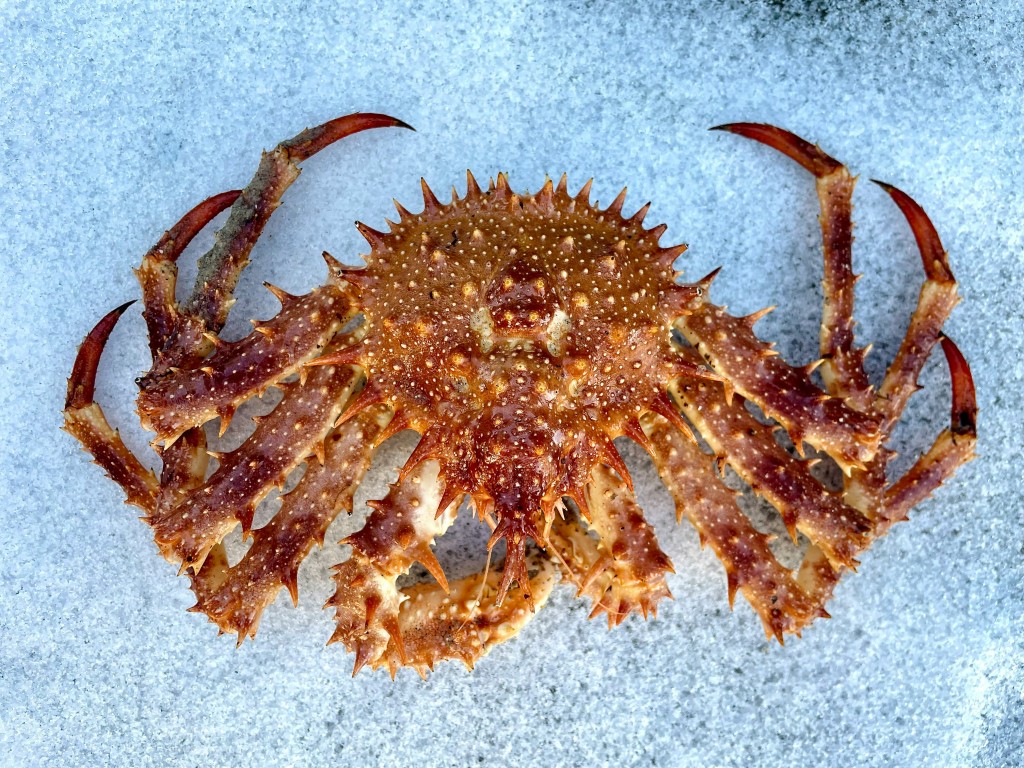
Crisp autumn air makes it the best season to enjoy hairy crabs. Hairy crabs are delicious, but many people often have doubts about their nutritional value, dietary taboos, and steaming methods. This article teaches you the 4 correct steps to steam hairy crabs, how to distinguish male from female, and which parts of the hairy crab cannot be eaten.
How to Distinguish Male from Female?
The Suzhou Yangcheng Lake Hairy Crab Industry Association points out that to distinguish male from female hairy crabs, the most important thing is to look at the crab's belly flap (crab apron).
1. Female Crab
Appearance: The crab apron is round or oval.
Best eating time: Suitable for the 9th lunar month, i.e., October in the Gregorian calendar.
Crab roe: Orange-yellow, also called red roe, with a firmer texture, resembling egg yolk.
2. Male Crab
Appearance: The crab apron is triangular or pointed.
Best eating time: Suitable for the 10th lunar month, i.e., November in the Gregorian calendar.
Crab paste: Turns milky white after cooking, hence also called white paste. It has a sticky sensation when eaten and is more savory than female crab.
Cai Qi, head of a 70-year-old hairy crab time-honored brand, says steaming hairy crabs involves the following steps:
4 Steps to Steaming Hairy Crabs to Perfection
1. Preparation Before Steaming
Cleaning: Fresh hairy crabs are aggressive, so never untie the crab rope—besides the risk of injury, the crabs may crawl around in the pot, causing all the crab roe and crab oil to be lost. As long as the crab itself is clean, simply use an old toothbrush or brush to gently clean the fuzzy parts on the hairy crab's claws.
Prepare steaming ingredients: A few slices of ginger and perilla leaves.
2. Put Ginger and Leaves in the Water to Disperse Cold
Place ginger slices and perilla leaves directly into the water in the steamer and bring to a boil together. Ginger and perilla leaves help disperse the "cold" energy of hairy crabs, penetrate into the crab meat through steam, and also achieve the effect of removing fishiness and enhancing freshness.
3. Steam "Belly Up," Reversed
After the water boils, place the hairy crabs belly up (shell down) on the steaming rack. Belly up prevents crab roe and crab oil from flowing out during steaming, ensuring the essence is locked inside the shell.
4. Control the Steaming Time
Cover with the lid and steam over high heat throughout:
-
Under 4 taels: Steam over high heat for about 12–15 minutes
-
5 to 6 taels: Steam over high heat for about 15–18 minutes
-
Over 6 taels: Steam over high heat for about 20 minutes
After steaming, turn off the heat and let it sit covered for another 2 minutes to make the meat firmer, then remove and cut the crab rope to enjoy. When eating, pairing with shredded ginger and aged vinegar also helps remove fishiness, cut richness, and balance the cold nature.
4 Extremely Dirty Parts—Do Not Eat
Celebrity chef Cheng Wai-hung, in an interview with Sing Tao Headline, points out that hairy crabs have 4 parts that are extremely dirty or extremely cooling, containing bacteria, microorganisms, or excrement. Remember to remove them and not eat them:
Crab intestine: Located on the lower abdomen of the crab (a black line connecting from the crab stomach to the crab navel), part of the digestive system, containing the crab's excrement—very dirty.
Crab stomach: Located in the middle of the crab roe/crab paste as a small bony sac (triangular bag shape), containing impurities and excrement the crab has eaten.
Crab gills: Located on both sides of the crab body as feather-like/strip-like soft tissue, the crab's respiratory organ, easily accumulating mud, sand, heavy metals, and bacteria from the water.
Crab heart: Located in the middle of the crab body as a white hexagonal thin slice. Chinese medicine considers the crab heart the coldest part of the whole crab, and accidental consumption very easily causes gastrointestinal discomfort or diarrhea.
High in Cholesterol? Can Elderly People Not Eat Them?
A registered dietitian from the Community Nutrition Service of the United Christian Nethersole Community Health Service once posted that hairy crabs are river crabs from China's rivers and lakes, with nutritional value comparable to other crabs and the advantages of both high protein and low fat. Calculated per 100 g of edible portion, the nutritional value of hairy crabs is as follows:
-
Calories: about 100 kcal
-
Protein: 17.5 g, equivalent to the amount provided by about 3 medium eggs
-
Fat: only 2.6 g, very low (low fat is defined as no more than 3 g of fat per 100 g of solid food), and low in saturated fat and trans fat
-
Minerals: calcium 126 mg; iron 2.9 mg; zinc 3.68 mg
-
Cholesterol: one 5–6 tael hairy crab has about 267 mg
Hairy crabs are a good source of high-quality protein and contain fairly rich iron, about 25% of the recommended daily intake for the elderly, which can effectively promote the production of hemoglobin and red blood cells, help transport oxygen to all parts of the body, and thereby prevent anemia, dizziness, and fatigue. In addition, if the iron in crab meat works together with zinc, it further helps maintain the normal operation of the immune system and reduces the risk of illness.
2 Types of People Not Suitable for Eating Hairy Crabs
Although hairy crabs are nutritious, they should still be eaten in moderation and never excessively. The following people are not suitable for eating hairy crabs:
People allergic to crustacean seafood: People allergic to crustaceans should completely avoid eating them to prevent allergic reactions.
Gout patients: Gout is caused by the body's inability to properly metabolize "purine," leading to elevated uric acid concentration in the blood and crystal deposits in the joints. Hairy crabs are high-purine foods and easily trigger gout.
Patients should strictly control their intake in daily life, with a maximum of once a week recommended, and should completely abstain during acute attacks.
Even without the above conditions, hairy crabs should not be eaten in excessive amounts at one time.
Safety Tips for Eating Hairy Crabs
According to information from the Centre for Food Safety, when purchasing, handling, and eating hairy crabs, citizens should note the following safety tips:
When Purchasing
-
Buy hairy crabs from reliable shops or restaurants.
-
Choose live hairy crabs with intact, glossy shells and no off-odors.
-
Do not buy dead hairy crabs, as dead crabs easily spoil.
When Handling
-
After purchase, handle and eat them as soon as possible.
-
If not eating immediately, wrap the hairy crabs properly, place them in a clean container, and put them in the fridge to preserve quality and avoid cross-contamination.
-
Before cooking, first clean the crab body, claws, and pincers with a brush and clean water.
-
Hairy crabs must be thoroughly cooked before eating.
When Eating
-
Pay attention to a balanced diet and avoid eating too many hairy crabs, especially the high-cholesterol crab roe or crab paste.
-
Hairy crabs should not be eaten raw. Seasonings such as salt, vinegar, wine, and Japanese mustard cannot remove bacteria and parasites that may be on the crabs.
-
Before eating hairy crabs, wash hands with soap and clean water.
-
Remove the internal organs of hairy crabs before eating.
Source: United Christian Nethersole Community Health Service, Centre for Food Safety