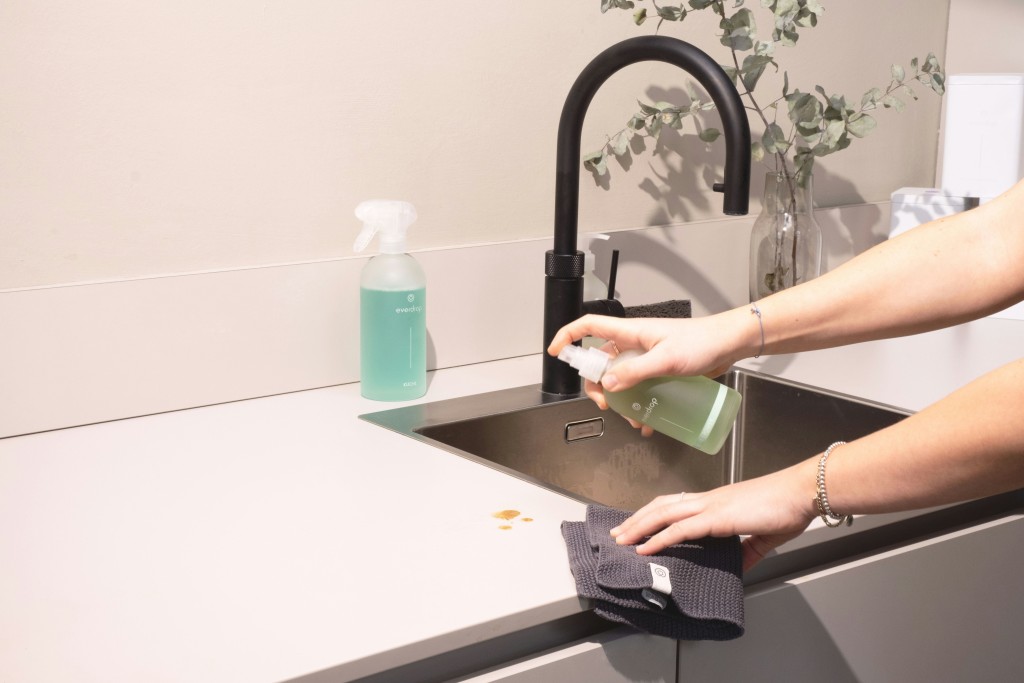
Do you clean your sink every day but it still turns yellow and harbours dirt? A cleaning expert points out that even a seemingly clean sink has 2 hidden spots that can trap years of stubborn yellow stains and bacteria. With affordable tools and a simple cleaning method, you can easily remove the grime and restore your sink to a shiny, like-new condition.
2 Hidden Sink Spots That Trap Years of Yellow Grime
According to Yahoo! JAPAN, cleaning expert Aidog notes that many people focus only on visible areas like the inside of the sink when cleaning, overlooking the details. Only upon closer inspection do they realize that a layer of brownish-yellow, years-old grime and limescale has accumulated around the base of the faucet and the small overflow hole on the side of the sink. The expert shares a simple cleaning tutorial for these two easily missed hygiene blind spots.
Essential Cleaning Supplies and Precautions
-
Tools: Neutral bathroom cleaner, soft sponge, cloth.
-
Precautions: Sinks and faucets vary in material and surface coating, so suitable cleaners and techniques differ. Check the product manual before cleaning.
Steps to Clean the 2 Hidden Sink Spots
1. Clean the Faucet Base
The edge where the bottom of the faucet meets the sink is the most commonly overlooked dirt-trapping spot. Apply an appropriate amount of neutral bathroom cleaner to a soft sponge, then gently scrub around the base of the faucet. Since this area mostly has limescale or other attached grime, avoid scrubbing too hard to prevent scratching the surface. After scrubbing clean, first wipe thoroughly with a damp cloth soaked in clean water to remove residual cleaner, then dry completely with a clean cloth.
2. Clean the Overflow Hole on the Side of the Sink
The second hygiene blind spot is the overflow hole on the side of the sink. Its main function is to prevent water from overflowing when the basin is too full, but because it's hidden and has a small opening, it's easily missed during routine cleaning. Use neutral bathroom cleaner with a soft sponge to carefully scrub around the entrance of the overflow hole. After scrubbing, rinse thoroughly with clean water or wipe clean with a damp cloth, ensuring no cleaner residue remains. Finally, dry completely with a dry cloth.
Aidog shares that the faucet base and overflow hole are not easily noticed day to day, but upon closer inspection, they often harbour large amounts of yellow grime. Using a gentle neutral cleaner with a soft sponge to wipe gently can easily break down years of dirt without strenuous scrubbing. Although it only takes a few extra minutes to clean these two small details, it restores the entire sink to a bright and clean condition.
Source: Yahoo! JAPAN