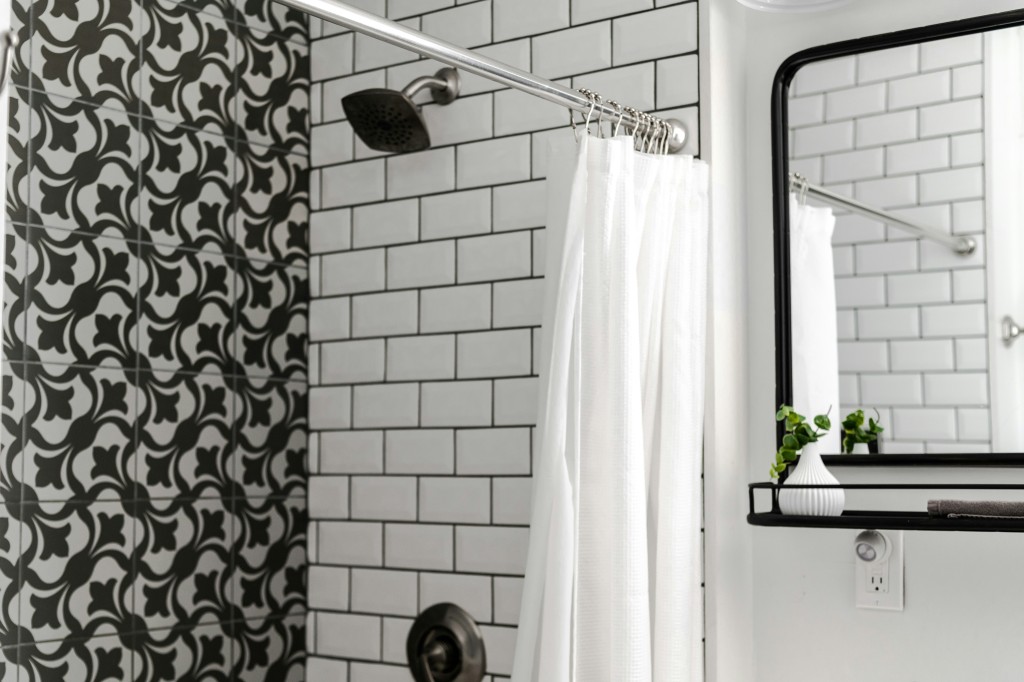
After a shower, do you pull the shower curtain open to ventilate, or casually push it to one side? Many believe pushing the curtain to one side helps disperse bathroom humidity and prevents mold and bacteria growth. But others point out that pulling it fully open is the right way to ventilate and avoid moisture buildup. So which is correct?
The Correct Method: Pull the Shower Curtain Fully Open
Alicia Sokolowski, president of a cleaning services company, points out that moisture is the biggest contributing factor to mold, mildew, and bacterial growth. When a damp shower curtain is bunched up on one side of the rod, the folds stay wet longer than when fully spread out, accelerating mold growth. She explains: "The key is to avoid stacking the shower curtain to one side while it's still wet. Otherwise, moisture gets trapped between the folds, staying damp for long periods, becoming a breeding ground for mold and bacteria."
Sokolowski recommends pulling the shower curtain fully open after showering—stretching it across the entire rod. Spreading it out exposes more surface area to air, allowing it to dry faster and more evenly. However, she also reminds: "While this is a simple way to reduce the chance of mold growth, it doesn't replace regular bathroom cleaning and maintenance."
Fabric Shower Curtains: Even More Important to Pull Open
If you use a fabric shower curtain, pulling it open after every shower is even more important, as fabric absorbs more water. If not thoroughly dried, it traps moisture and increases mold risk. Once the curtain is completely dry, you can then push it to one side.
Other Mold Prevention Tips After Showering
Beyond handling the shower curtain correctly, these measures help keep the bathroom dry and hygienic:
-
Turn on the exhaust fan or open windows: Turn on the exhaust fan during your shower and let it run for a while afterward to expel residual humid air. If the bathroom has a window, opening it for natural ventilation is even better.
-
Squeegee water droplets off walls and mirrors: If walls and mirrors stay damp for long periods after showering, quickly use a squeegee to remove droplets and reduce the moisture mold needs to grow.
-
Clean the bathroom regularly: Soap residue and body oils accumulate on shower walls and curtains over time. Without regular cleaning, they become nutrients for mold and bacteria. Regularly washing the shower curtain and cleaning bathroom surfaces is the most fundamental way to prevent mold.
For poorly ventilated areas prone to dirt buildup, rinse thoroughly with high-pressure hot water. Wipe dry afterward to speed drying. For mirrors, as with floors and walls, pour hot water over them and wipe—this prevents both mold and limescale buildup.
Bleach Mold Removal Method
The Macau Consumer Council previously shared the golden ratios for using bleach against mold. For larger areas of mold, use a 1:10 dilution of bleach (1 part bleach to 10 parts water). Always dilute with cold water—hot water decomposes sodium hypochlorite, rendering it ineffective. Apply to moldy areas with a cloth or spray bottle, let sit for 15–20 minutes, then wipe clean.
Bleach Golden Ratios:
| Dilution Ratio | Use | Application |
|---|
| 1:4 | Blood spill disinfection | Blood contamination |
| 1:10 | Mold removal | Larger areas of mold |
| 1:49 | Disinfecting contaminated items | Surfaces contaminated by vomit or excrement |
| 1:99 | General household cleaning | Daily environmental cleaning |
Precautions When Using Bleach:
-
Dilute and use in a well-ventilated area.
-
Wear appropriate protective gear: mask, gloves, eye protection, and plastic apron.
-
Avoid use on metal, wool, nylon, silk, colored fabrics, and painted surfaces.
-
If bleach splashes into eyes, rinse immediately with water for at least 15 minutes and seek medical attention.