Read More
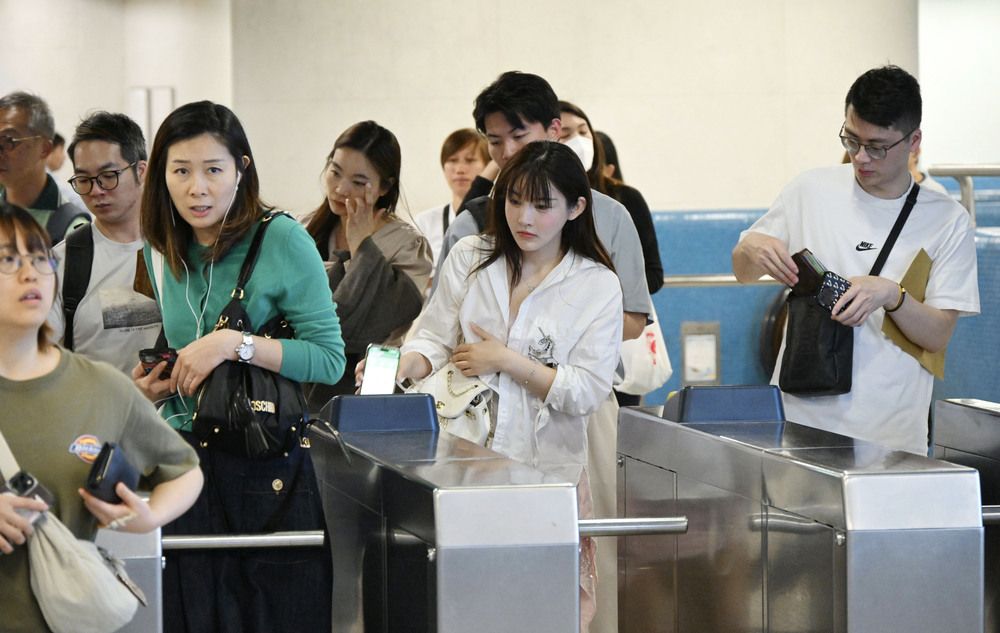
Hongkongers are poised to pay around 3 percent more in MTR fares from June, with the rail operator saying it has taken into account "public affordability."
ADVERTISEMENT
SCROLL TO CONTINUE WITH CONTENT
This came after the Census and Statistics Department released wage statistics, with the transport nominal wage index recording a 5.2 percent year-on-year increase in December last year.
The fare rise means passengers traveling from Tsuen Wan to Central, for example, are expected to pay around 40 HK cents more to HK$15.70, from the current HK$15.30, while those traveling from Sheung Shui to Admiralty will pay 60 HK cents more to HK$22.10, from HK$21.50.
MTR Corp said it will work out the actual changes to the fares and release a formal table and its effective date later after submitting two independent financial experts' certificates to the government.
The formula to calculate the fare rise depends on the transport nominal wage index and the year-on-year change in the composite consumer price index, with a subtraction of a "productivity factor" that links to the rail operator's profits in property development.
Based on the figures, the fare-adjustment rate comes to a 3.2 percent increase, MTRC said.
But the increase has been set at 3.09 percent due to an "affordability cap" - under which the effective fare increase should not be higher than the year-on-year change in the median monthly household income for the fourth quarter of last year to ensure public affordability.
"The 'cap' arrangement has taken effect this year in striking a balance between public affordability and the corporation's needs to maintain, upgrade and renew the railway system," said managing director of Hong Kong transport services Jeny Yeung Mei-chun.
"This year marks MTR's key milestone of 45 years since the commencement of railway services. With the purpose to 'Keep cities moving,' we are committed to providing reliable, efficient and high-quality railway services as always."
MTRC said the remaining 0.11 percent adjustment rate will be recouped in the subsequent two years - 0.06 percent in 2025-26 and 0.05 percent in 2026-27. The 1.85 percent deferred adjustment from last year will also be carried forward to 2025-26 for recoupment.
Some people said they are not happy about the fare rise.
"I don't think the MTR should increase fares as transport costs are already expensive," said a woman named Pang. "Hongkongers are under huge pressure and the high transport fare is one of the reasons."
"The fare rise is acceptable if MTRC can enhance its service quality," said a man named Tse. "If the quality remains unsatisfactory after the fare rises and the rail services still break down frequently, we'd rather they don't increase the fare."
Roundtable lawmaker Michael Tien Puk-sun, former chairman of the Kowloon-Canton Railway Corp, said it is unfair to link the fare rise with MTRC's property profits. Instead, the subtraction should be linked with MTRC's overall income.
"The only unfair part [of the mechanism] is that the subtraction of 'productivity factor' only links to part of the MTR's income that is sure to be miserable in the coming few years," he said. "There is not much property development [in the coming years] and the government is not seeing a good land sale revenue."
Lawmaker Gary Zhang Xinyu said he is disappointed that the formula is "too lenient" in favor of MTRC.
wallis.wang@singtaonewscorp.com