
Read More


Final stage of cargo plane removal operation underway after tragic crash
26-10-2025 16:36 HKT

Customs seizes $100m in smuggled endangered species hidden in vessel
12-11-2026 19:34 HKT
Hong Kong International Airport has introduced automatic painting robots to repaint runway markings that guide aircraft during takeoff and landing, becoming the world's first airport to apply the technology. Two types of robots — a dual-nozzle robot for straight lines and a single-nozzle robot for corners — began operating in September.
Steven Yiu, Chief Operating Officer of the Airport Authority, said the new technology aims to reduce frontline workload and ease manpower shortages. It cuts overall working hours by about two-thirds and saves about 40 per cent of paint each year. He believes automated painting will become a new industry standard, and the authority will continue raising automation levels to advance smart airport development.
The airport's three 3,800-metre runways have various markings including runway thresholds, aiming points, touchdown zones and centerlines. The centerline, frequently pressed by aircraft nose wheels on landing, must be repainted weekly, while other markings are repainted every two to six months.
Previously, more than 20 workers were needed for overnight outdoor work, facing harsh winter rain and a shortage of skilled staff. The Airport Authority partnered with Shenzhen firm FJ Dynamics to adapt sports-field line-marking technology for runways. The two painting robots underwent nine months of testing, met International Civil Aviation Organization standards and received Civil Aviation Department approval before starting operation in September.
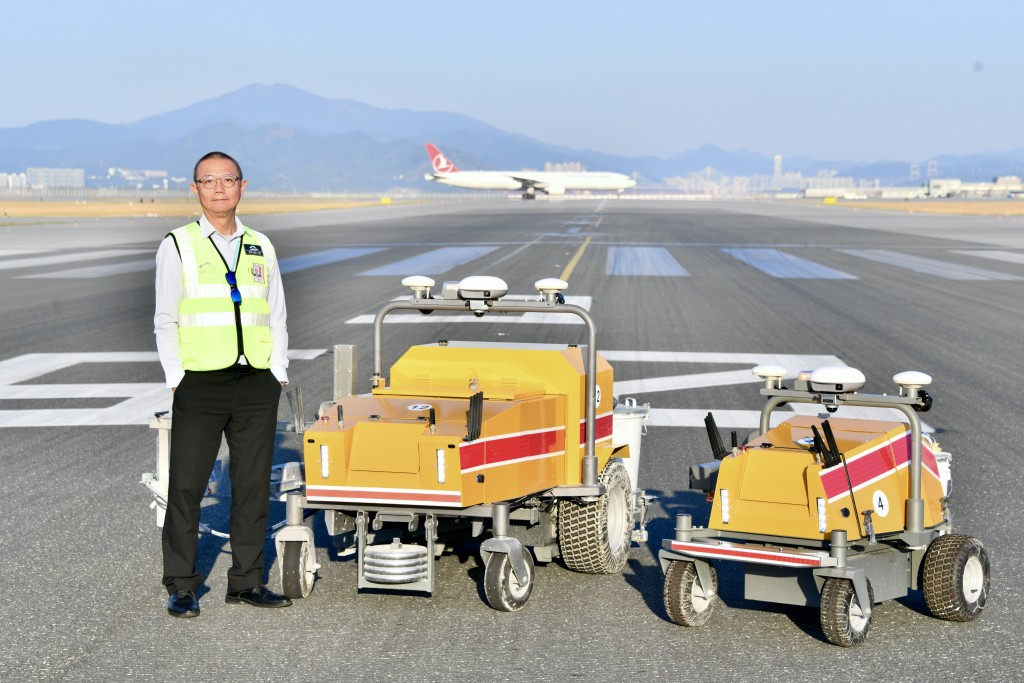
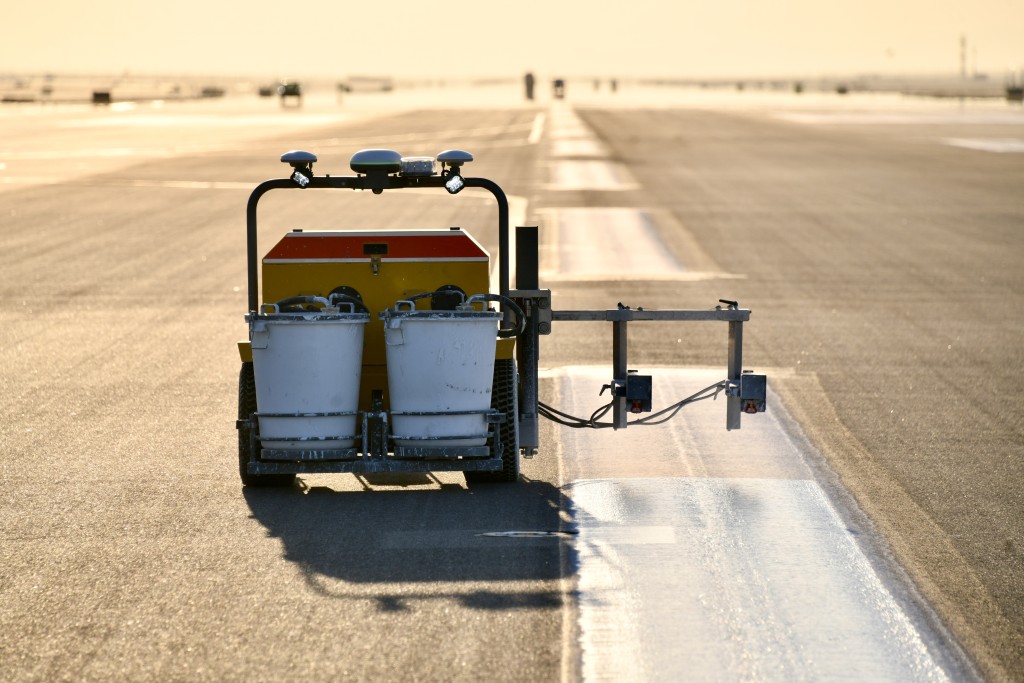
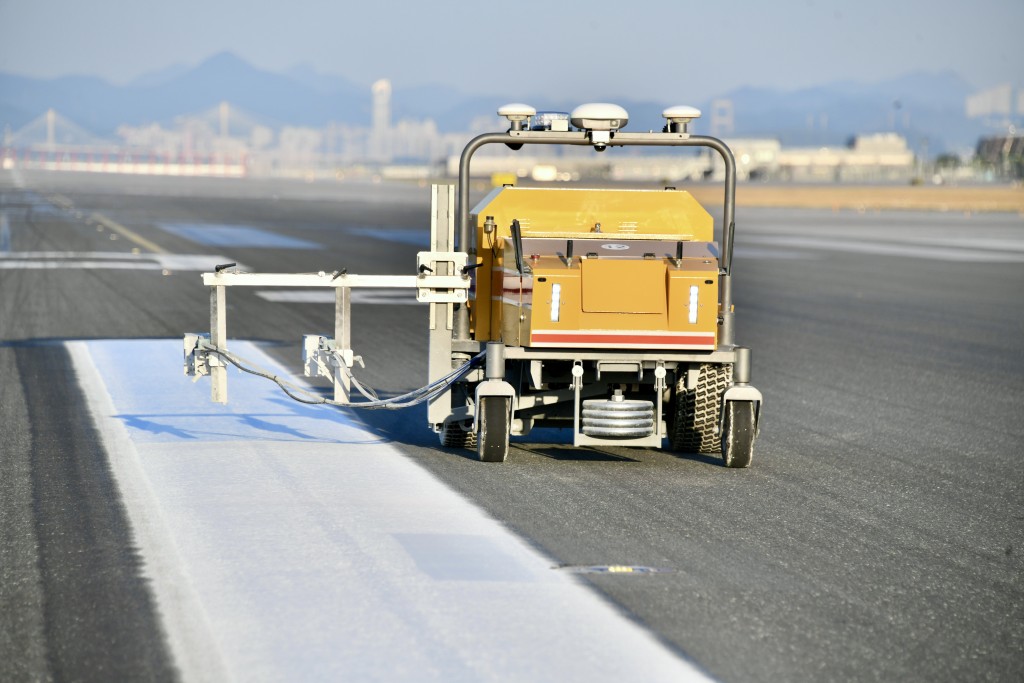
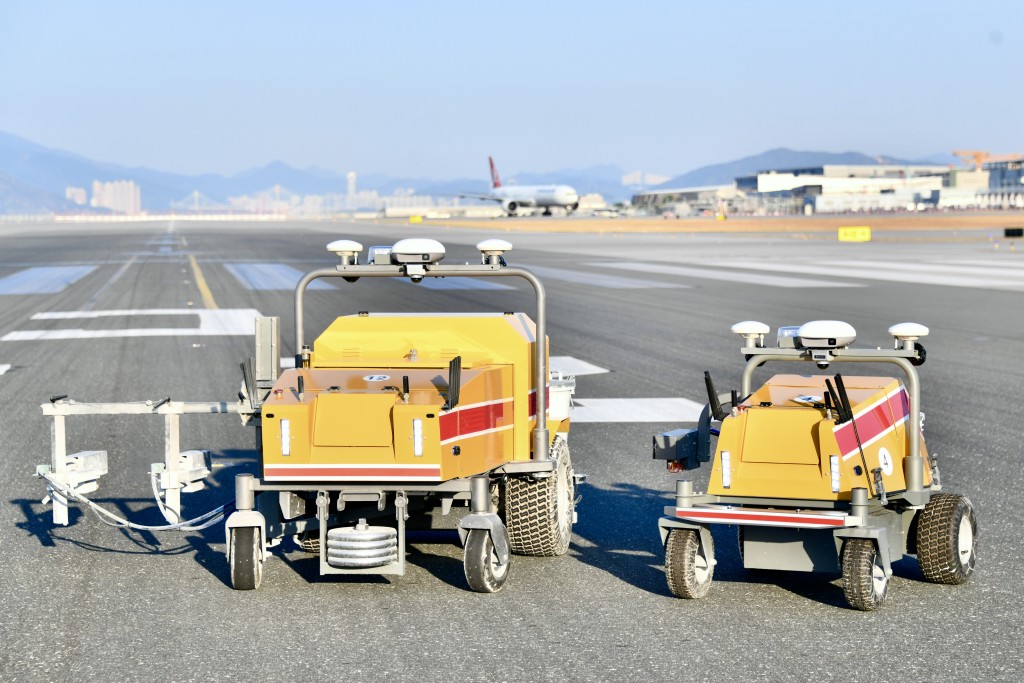
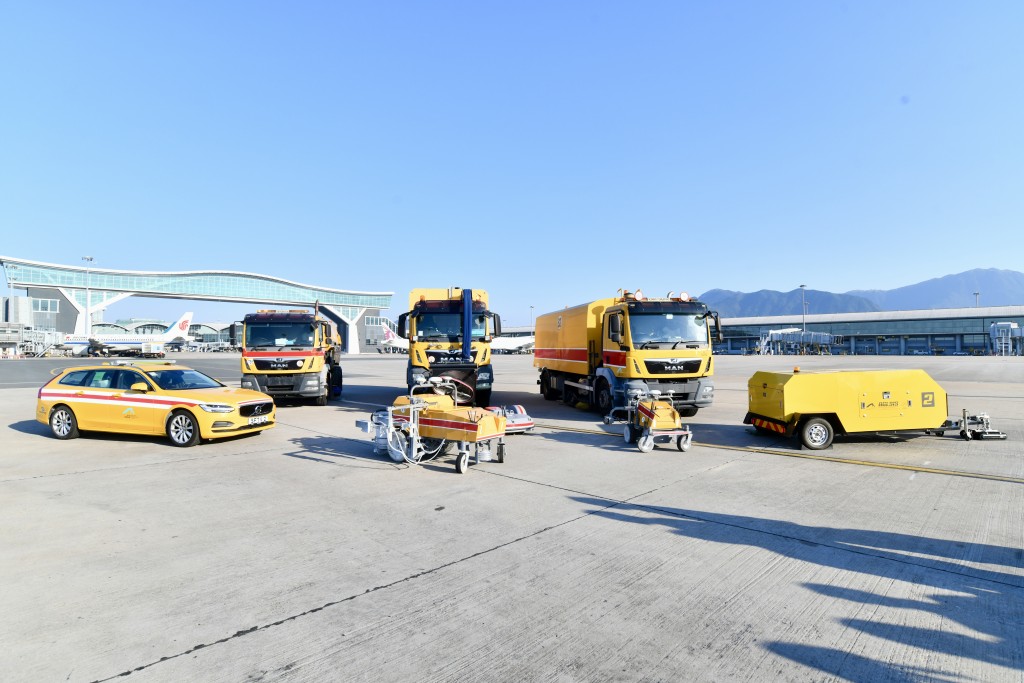
The robots receive signals from four global navigation satellite systems — US GPS, China's BeiDou, the EU's Galileo and Russia's GLONASS — and use real-time kinematic positioning with ground reference stations to improve accuracy to 1-2 centimeters. They lock onto the coordinates of line corners, drive to the positions and paint straight lines automatically, pausing between lines. Lidar scans for obstacles and pedestrians to ensure safety.
Yiu stressed the aim is not to fully replace staff but to assist them with high-precision, safety-critical work, reducing frontline workload and easing manpower shortages.
Painting a centerline manually took about three hours; a robot now does it in one, cutting overall working hours by about two-thirds. Precise spray control saves about 40 per cent of paint annually, with zero emissions.
More than half of the airport's regular, repetitive core marking work is now handled by robots, with special or curved areas still done manually. Yiu said frontline staff will gradually become robot operators and monitors, but runway maintenance will not be fully unmanned due to safety and emergency response considerations. The authority plans to expand the fleet to six robots.