Read More
Restaurants and stores should raise safety awareness when preparing "non-hot served" dishes such as foodie favorite Hainan chicken because undercooked chicken can be contaminated with potentially fatal bacteria, the Centre for Food Safety warns.
ADVERTISEMENT
SCROLL TO CONTINUE WITH CONTENT
"Non-hot served" dishes are probably prepared in advance and do not require reheating before consumption.
Still, the center said overall it was satisfied with the quality of "non-hot served" chicken dishes available.
The center collected 100 samples from restaurants and takeout operations from September to November last year. They included 40 shredded chicken dishes, 40 of chopped chicken, 15 dishes including shredded chicken and and five chicken salads.
All were at a satisfactory level in microbiological food safety tests for pathogenic bacteria such as salmonella, listeria monocytogenes and staphylococcus.
In tests for specific bacteria including escherichia coli, 97 samples were satisfactory while three had borderline bacteria level, including two with a high overall bacteria count and one with a higher amount of E coli.
But the bacteria count in the three samples was still in line with microbiological guidelines.
Food with a bacteria count higher than the center's standard may cause vomiting and diarrhea.
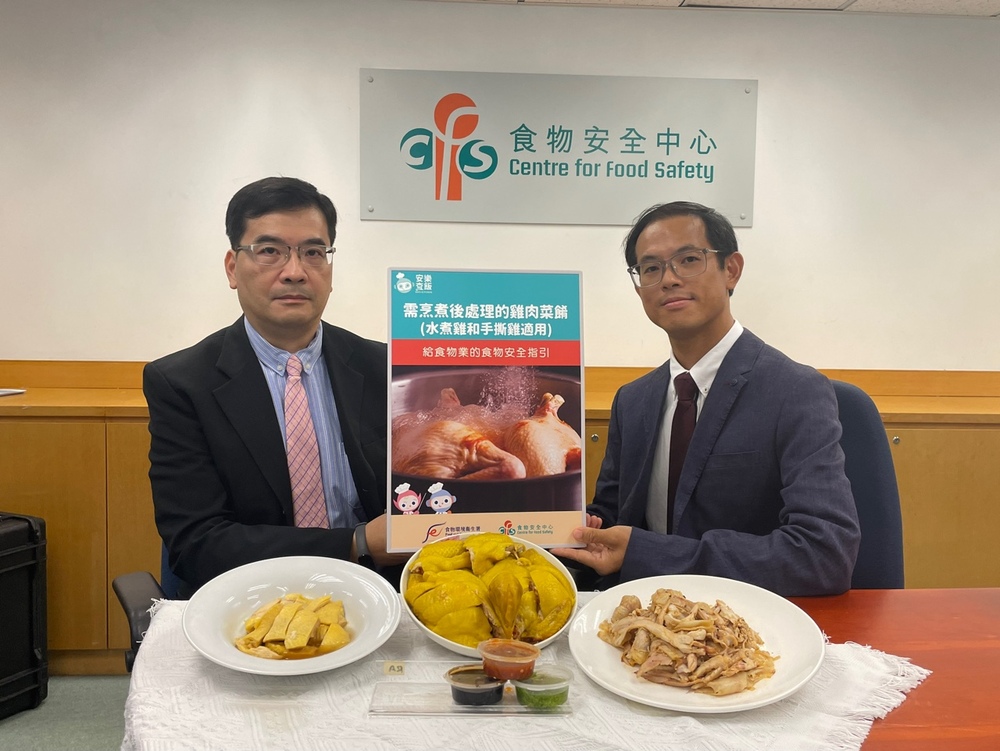
Speaking yesterday, the center's scientific officer for microbiology, Chong Tsz-kit, said the three eateries where the relatively worse samples were collected all improved after advice from the center.
"It takes time to make shredded chicken as restaurant staff have to tear the chicken apart," Chong said. "The chicken will be left there for a while before staff add sauces and other ingredients.
"The more complicated the procedures or the longer chicken is left at room temperature the higher the bacterial count. The center reminds restaurants to finish shredding the chicken within one to two hours and put the chicken in the refrigerator."
Chong also said many restaurants do not cook chicken under high enough heat as they want it to be tender. But the chicken may be undercooked if the restaurants boil many chickens at the same time.
Restaurants should also control the length of time chicken meat is left at room temperature to avoid contamination, he said, and they should maintain a clean environment.
Principal medical officer of risk assessment and communication Tony Chow Chor-yiu said restaurants should make sure chicken is defrosted thoroughly by putting it in a refrigerator for a day or washing it under a running tap for a long time.
They should also monitor the cooking temperature to ensure the chicken is fully cooked and control the cooling time within two hours, he said.
And cooked chicken left at room temperature for over four hours should be thrown away.
Chow said cold dishes with chicken could be contaminated by bacteria in hot weather.
The center has set guidelines for the catering sector, and Chow reminded people to eat non-hot, ready-to-eat dishes as soon as possible.
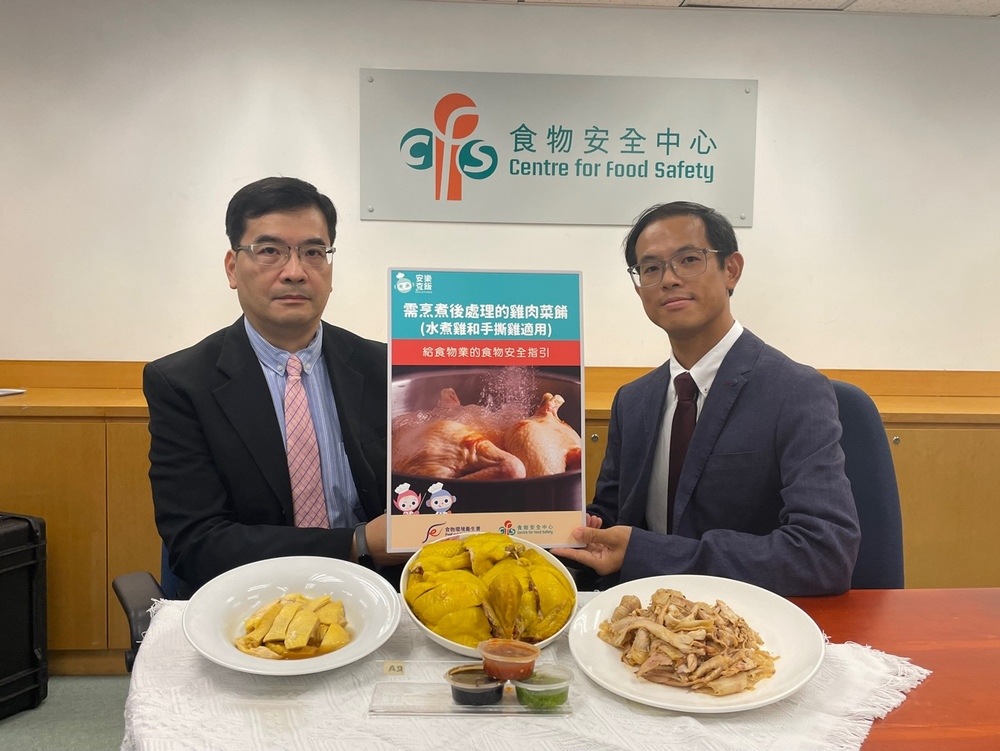
Tony Chow, left, and Chong Tsz-kit urge extra care in the preparation of chicken dishes served cold. SING TAO