Read More
The long hunt for extraterrestrials just got a big boost.The finding was based on a review of data collected by NASA's Cassini probe and published in the prestigious journal Nature.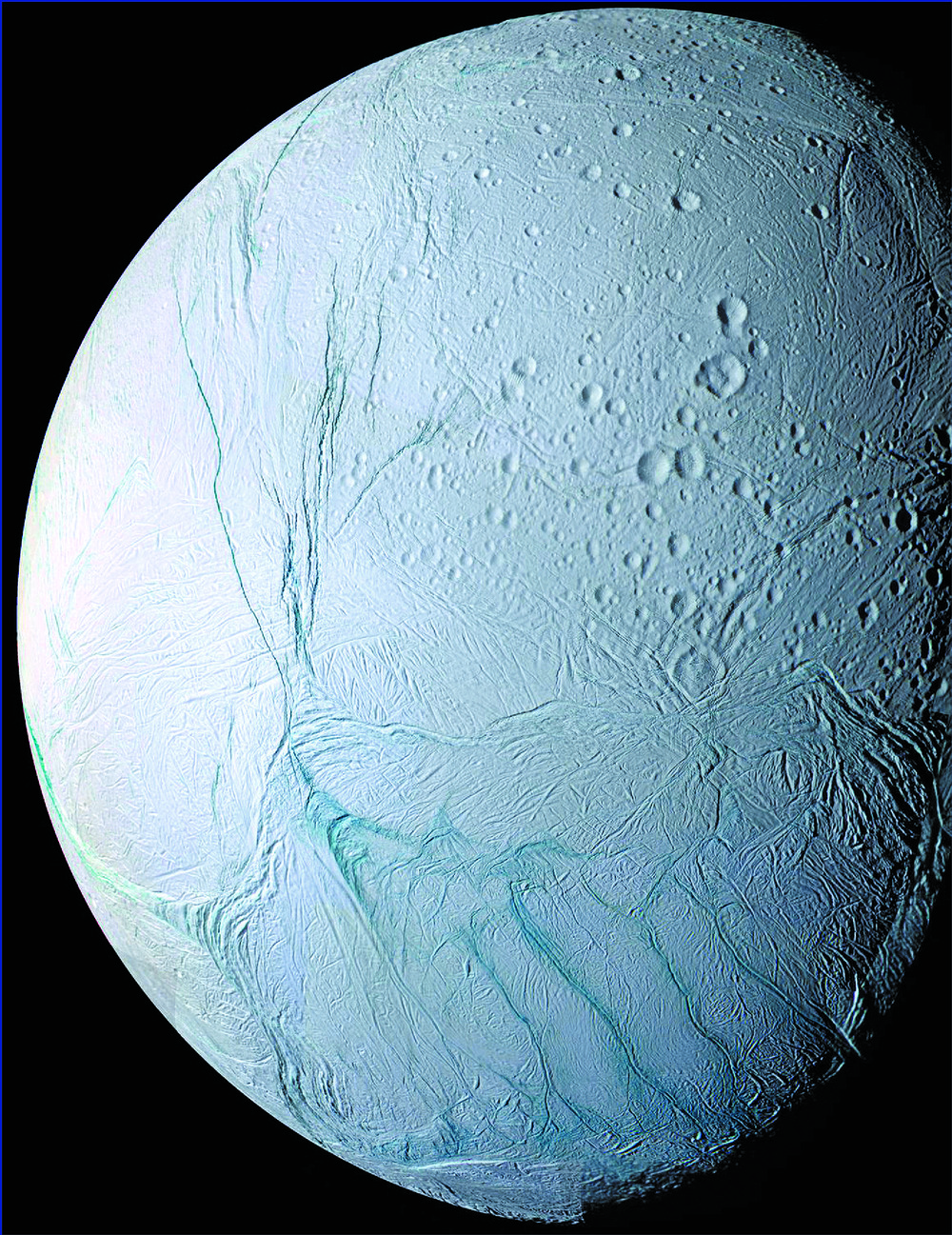
Scientists have discovered that phosphorus, a key building block of life, lies in the ocean beneath the icy surface of Saturn's moon Enceladus, pictured.
ADVERTISEMENT
SCROLL TO CONTINUE WITH CONTENT
Cassini started exploring Saturn and its rings and moons in 2004, before burning up in the gas giant's atmosphere when its mission ended in 2017.
"This is a stunning discovery for astrobiology," said Christopher Glein of the Southwest Research Institute, one of the paper's co-authors, adding: "We have found abundant phosphorus in plume ice samples spraying out of the subsurface ocean."
Phosphorus is an essential building block for DNA and RNA, and is also found in the bones and teeth of people, animals and even ocean plankton.
Simply put, life as we know it would not be possible without phosphorus.Glein said: "The next step is clear - we need to go back to Enceladus to see if the habitable ocean is actually inhabited."