Read More
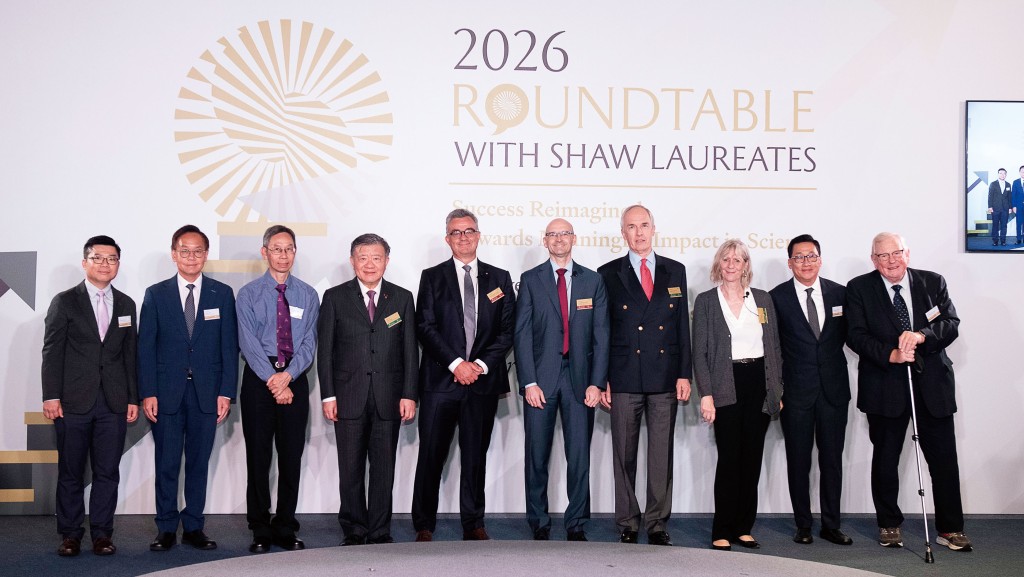
In the modern scientific landscape, public accounts of breakthroughs often highlight the final, successful outcomes of research. Yet behind every breakthrough lies a labyrinth of dead ends, unexpected turns, and hypotheses that demand years of relentless persistence, or even decades. “The 2026 Roundtable with Shaw Laureates – Success Reimagined: Towards Meaningful Impact in Science,” brought together five distinguished minds gathered to deconstruct the conventional metrics of achievement. Moving far beyond publication volume and citation metrics, the laureates offered profound reflections on their personal journeys, championing curiosity, cross-disciplinary collaboration, and structural resilience as the true bedrocks of scientific progress.
ADVERTISEMENT
SCROLL TO CONTINUE WITH CONTENT
Emmanuel Candès: embracing the unknown in mathematical exploration
For Professor Emmanuel Candès, Shaw Laureate in Mathematical Sciences from Stanford University, the genesis of a scientific career lies in the courage to venture beyond the familiar. Reflecting on his transition from an examination-focused student to an independent researcher, Professor Candès emphasised the vital need to move past predetermined academic scripts. “What a shame it would be to actually leave education without trying out something with my own hands and trying to create something on my own,” he remarked, describing his leap into independent research. Discussing his pioneering work in compressed sensing, which initially met with deep skepticism from medical professionals who mistook reconstructed MRI data for artificial phantoms, he highlighted how rigorous mathematical validation transforms doubt into discovery. Addressing the psychological reality of his field, Professor Candès noted that a mathematician’s daily routine is defined by encountering roadblocks, asserting: “Hurdles and situations in which you cannot actually do much are, in fact, maybe even the most interesting moments for a scientist.”
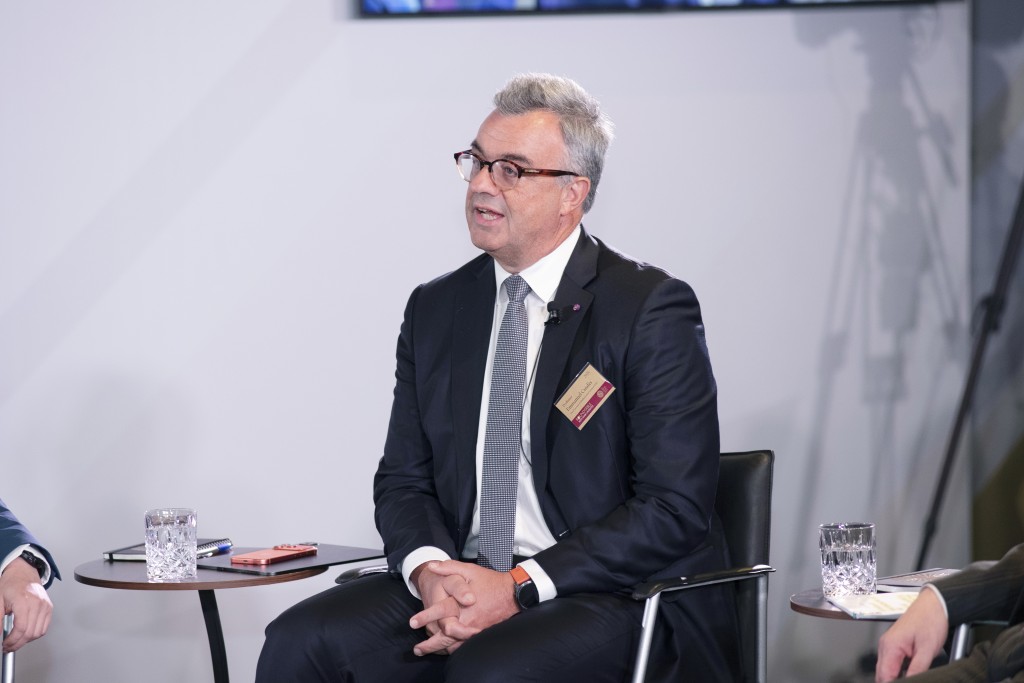
Professor Emmanuel Candès, Shaw Laureate in Mathematical Sciences.
Camillo De Lellis: navigating the tensions of long-term scientific commitment
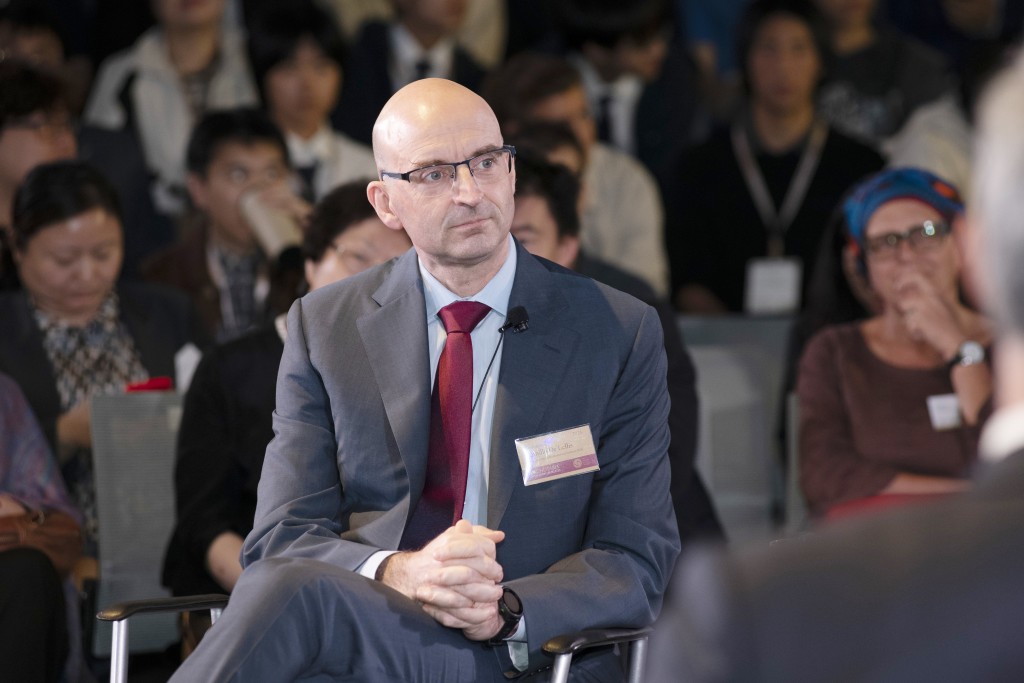
Professor Camillo De Lellis, Shaw Laureate in Mathematical Sciences.
For Professor Camillo De Lellis, Shaw Laureate in Mathematical Sciences from the Institute for Advanced Study, scientific breakthroughs require a delicate equilibrium between unyielding focus and creative flexibility. Reflecting on his path from early musical pursuits to fundamental research, Professor De Lellis discussed the grueling reality of spending years locked in complex, unresolved problems alongside collaborators. Rather than viewing professional stagnation as failure, he advocated for cultivating a balanced perspective that allows the mind to wander and re-engage with fresh eyes. “There is a tension between not giving up but also trying to give your mind space to be really creative,” he explained. Cautioning against obsessive isolation, he emphasised that true innovation is born when researchers maintain an open, unbiased approach, recognizing that unexpected side tracks often hold far greater significance than the original linear path.
Anne Dejean: trust, tenacity, and breaking boundaries in life sciences
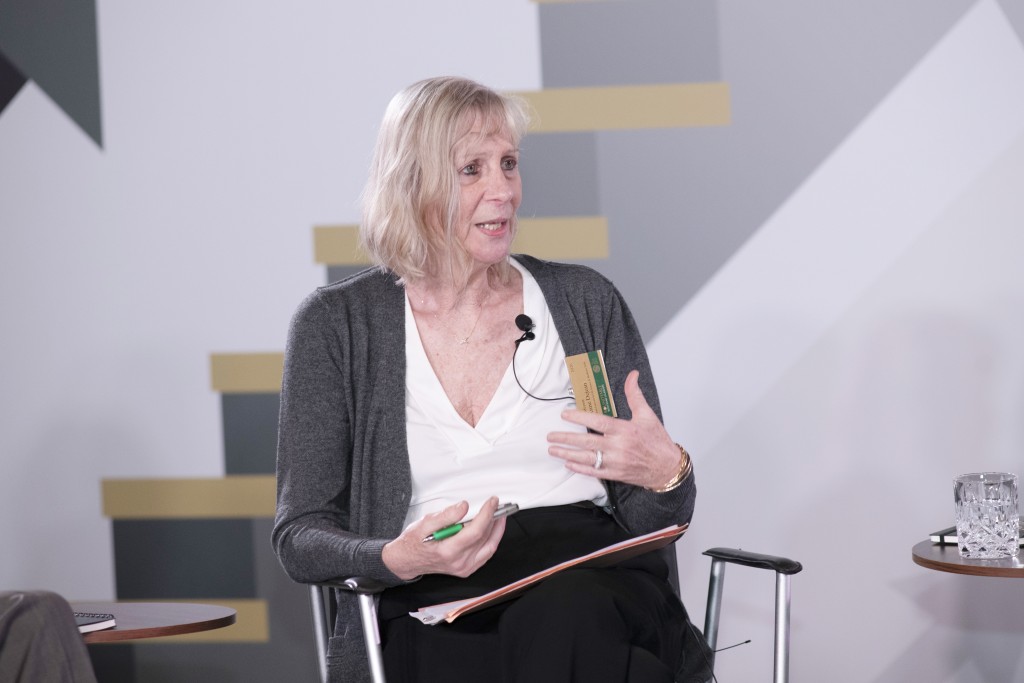
Professor Anne Dejean, Shaw Laureate in Life Science and Medicine.
Professor Anne Dejean, Shaw Laureate in Life Science and Medicine from the Institut Pasteur, France, turned the spotlight onto the delicate ecosystem of early-career momentum and institutional trust. Recalling how securing a permanent position at Institut Pasteur at the age of 29 shaped her trajectory, she credited her success to mentors who embraced her bold hypotheses. Yet she also addressed the personal and professional hurdles faced by female researchers navigating male-dominated spaces, sharing a powerful memory of balancing the demands of motherhood with high-stakes international presentations. When the scientific message is compelling, Professor Dejean noted, traditional barriers simply dissolve. Summing up the core philosophy of her journey, she reflected, “Success is about making the project your own, even if you were as long as the scientific message you deliver is compelling, frontiers vanish. The scientific message is the secret.”
Hugues de Thé: mentorship and the power of unconventional collaboration
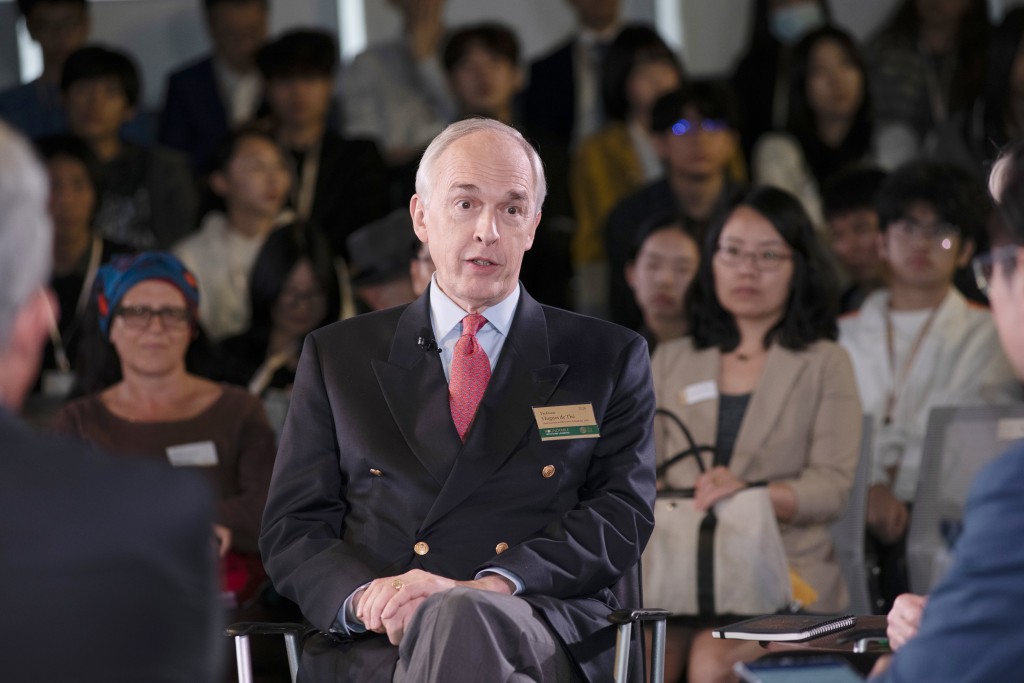
Professor Hugues de Thé, Shaw Laureate in Life Science and Medicine.
Professor Hugues de Thé, Shaw Laureate in Life Science and Medicine from the Collège de France, focused on the profound responsibility of nurturing the next generation of scientific leaders. Reflecting on his extensive collaborations, including his joint breakthroughs with Professor Zhu Chen in unraveling the molecular mechanisms of Acute Promyelocytic Leukemia (APL), he stressed that modern scientific advancement cannot thrive in silos. True mentorship, according to Professor de Thé, goes beyond merely handing students successful projects; it involves teaching young researchers how to recognize anomalies, question orthodoxies, and embrace the unpredictable nature of laboratory surprises. “You have to have an open mind, absolutely,” he noted, urging academic institutions to foster environments where cross-disciplinary dialogue and institutional stability shield researchers from short-term pressures, ultimately empowering them to pursue genuine, transformative impact.
Zhu Chen: from barefoot doctor to pioneering translational medicine
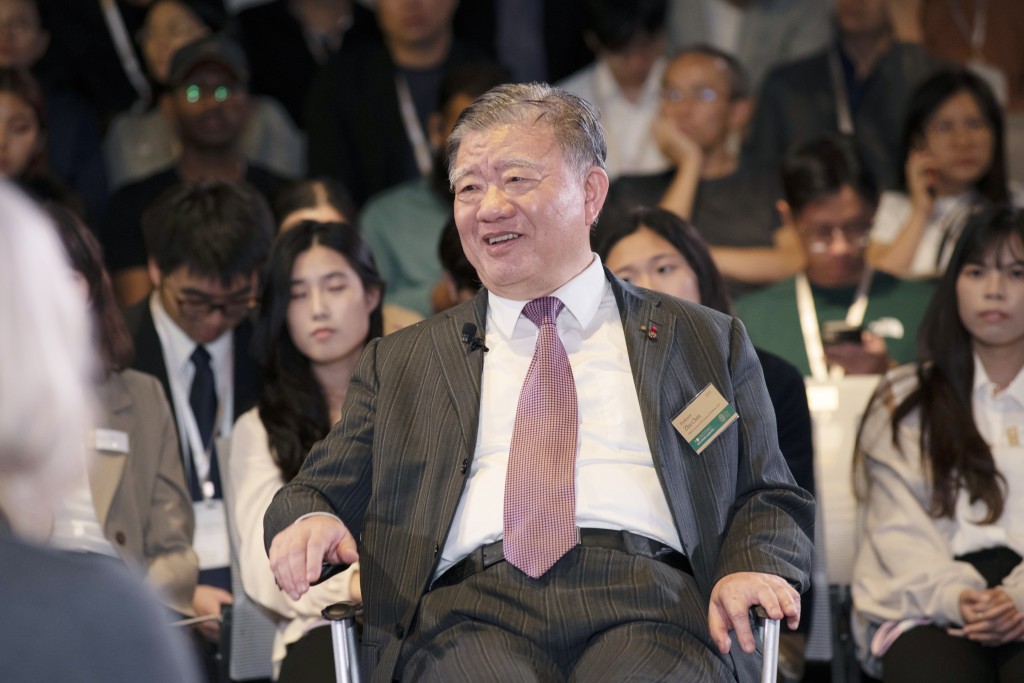
Professor Zhu Chen, Shaw Laureate in Life Science and Medicine.
Professor Zhu Chen, Shaw Laureate in Life Science and Medicine from Shanghai Jiao Tong University, shared his scientific journey, tracing his path from a rural barefoot doctor during the Cultural Revolution to a world-renowned translational hematologist. Drawing heavily on the guidance of his mentors and the foundational ethos instilled by his family, Professor Chen recounted the grueling yet transformative years spent tackling APL. He detailed how his team pioneered differentiation therapy using all-trans retinoic acid (ATRA), which was subsequently combined with arsenic trioxide—a historic convergence of traditional Chinese medicine and modern pharmacology that forged a powerful “East meets West” protocol. This groundbreaking combination turned what was once a universally fatal diagnosis into a curable disease. Quoting Louis Pasteur to encapsulate his unwavering commitment to his homeland and global scientific service, Professor Chen reminded the audience, “Science has no borders, but the scientists have a home.” He urged the academic ecosystem to look beyond superficial impact factors, championing seminal, patient-driven innovation above all else.