
Read More
The government has defended its goal to reduce the average concentration of PM2.5 fine suspended particulates to below 14 micrograms per cubic meter by 2030, calling it realistic yet challenging.
ADVERTISEMENT
SCROLL TO CONTINUE WITH CONTENT
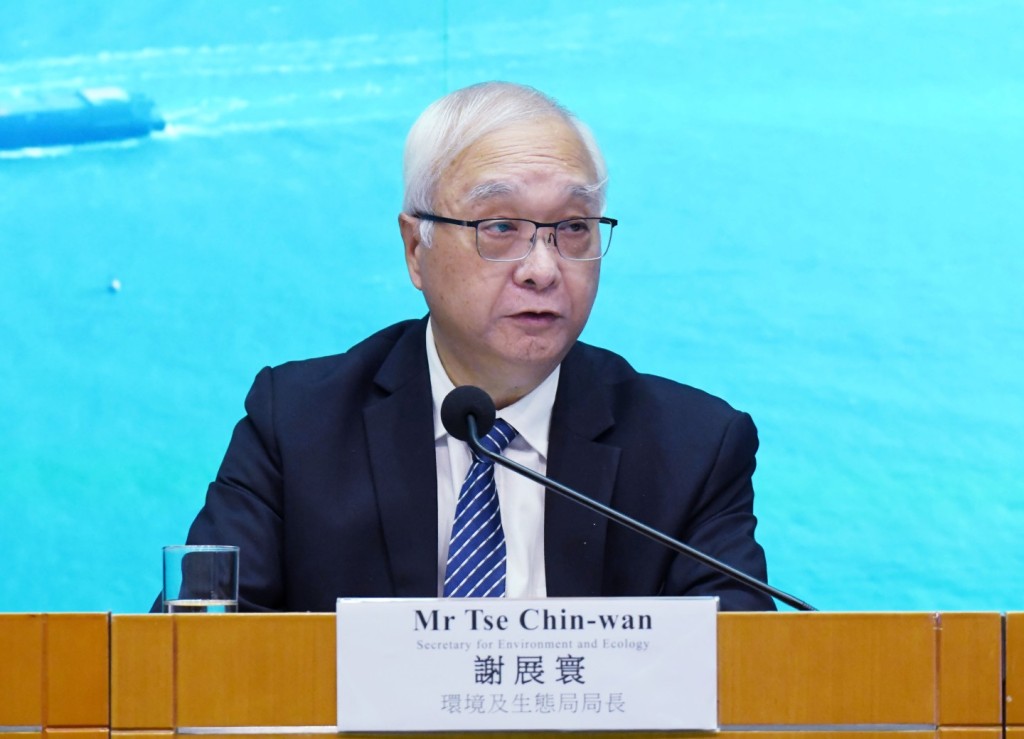
The target, outlined in Hong Kong's newly introduced first Five-Year Development Plan, was discussed by Secretary for Environment and Ecology Tse Chin-wan during a briefing with the Advisory Council on the Environment.
Tse explained that while Hong Kong’s current annual average PM2.5 levels are already comparable to the upper-middle tier of European regions, further reductions will be highly challenging due to regional environmental factors.
He emphasized that targets must remain practical rather than overly aggressive, though he expressed confidence that final outcomes would surpass current projections.
Multi-pronged approach to vehicle and vessel emissions
Tse noted that vehicle emissions remain the primary source of local air pollution but highlighted that the situation has improved significantly alongside the rising adoption of electric vehicles.
Beyond transport, the government has curbed power plant emissions by reducing coal burning and shifting to natural gas.
Looking ahead, the government plans to amend legislation next year to mandate tighter emission standards for marine vessels. It is also deepening regional cooperation with Guangdong province to tackle cross-boundary air pollution.
Under the Five-Year Plan, Hong Kong aims to cease new registrations of fuel-propelled and hybrid private cars by 2035. Tse emphasized that this deadline is strictly for private passenger vehicles, expressing high confidence in meeting the timeline.
Addressing challenges in the heavy vehicle sector—where global electric technology remains less mature—Tse revealed that a government task force has been collaborating with major manufacturers to produce electric light buses tailored to Hong Kong's unique terrain. He teased that "good news" regarding this initiative would be announced early next year.
Ecological balance in the Northern Metropolis
In response to concerns raised by advisory committee members about maintaining ecological balance during the massive development of the Northern Metropolis, Tse assured that green electricity would be integrated throughout the territory.
He stated that the planning of the Northern Metropolis specifically incorporates low-carbon development strategies.
Furthermore, the Civil Engineering and Development Department has already applied various nature-based solutions to ensure that infrastructure progress and environmental conservation coexist harmoniously.
Focusing hydrogen initiatives on construction sites
The government's latest Policy Address continues to promote hydrogen energy, aiming to establish Hong Kong as a demonstration hub for green technology while encouraging trials in transport and construction-site power generation.
Addressing committee questions regarding the high cost of hydrogen, Tse clarified that the government's current priority is laying the regulatory and infrastructural groundwork so the city is ready when global hydrogen adoption becomes widespread.
Tse dismissed the idea of large-scale hydrogen usage in standard commercial vehicles as currently impractical.
However, he pointed out that using hydrogen for power generation on construction sites is highly viable, as its cost is already comparable to traditional energy sources.
Currently, around 8 percent of the cost of utilizing hydrogen is tied up in transportation.
The government hopes to transition to liquid hydrogen transport in the near future, which is expected to cut transport expenses by 25 percent and make the green fuel far more competitive.