
Read More
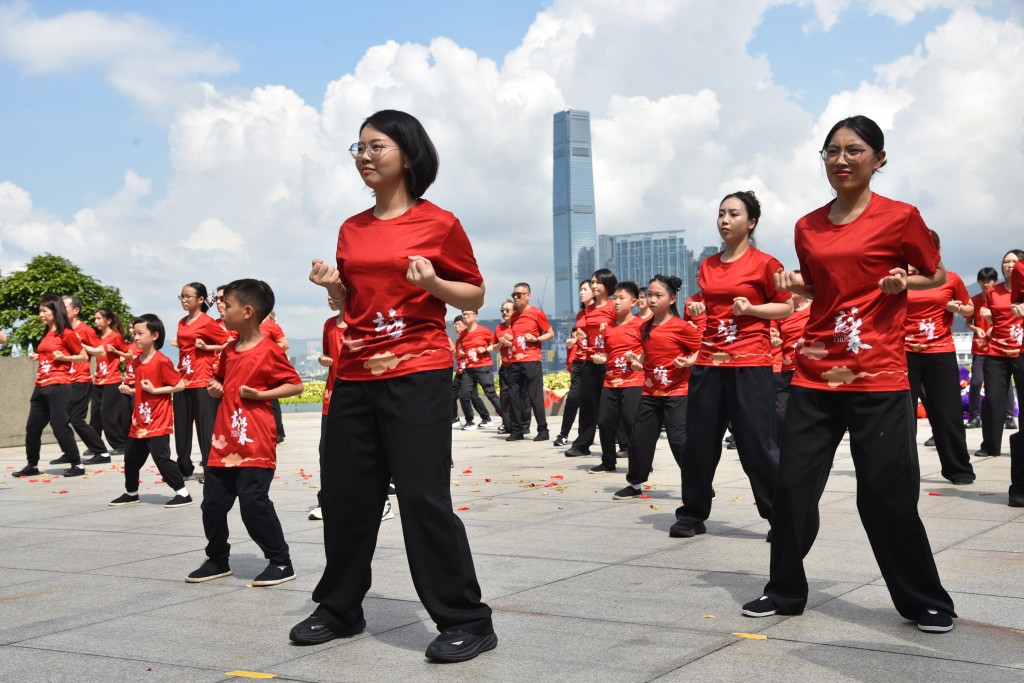
Seventy-seven Wing Chun practitioners aged six to 70 performed a series of traditional routines at Tamar Park on Sunday to celebrate the 77th anniversary of the founding of the People’s Republic of China and mark 77 years since Wing Chun was brought south to Hong Kong.
ADVERTISEMENT
SCROLL TO CONTINUE WITH CONTENT
Organized by the Leung Kam Tong Wing Chun Alumni Association and co-organized by the Luk Tei Wing Chun Martial Arts Association, the event featured performances of Siu Nim Tao, the “12 Forms,” wooden dummy techniques and chi sao, or “sticking hands.”
The number 77 formed the central theme of the event, linking the National Day anniversary with what organizers described as the 77th anniversary of Wing Chun’s transmission from Foshan to Hong Kong.
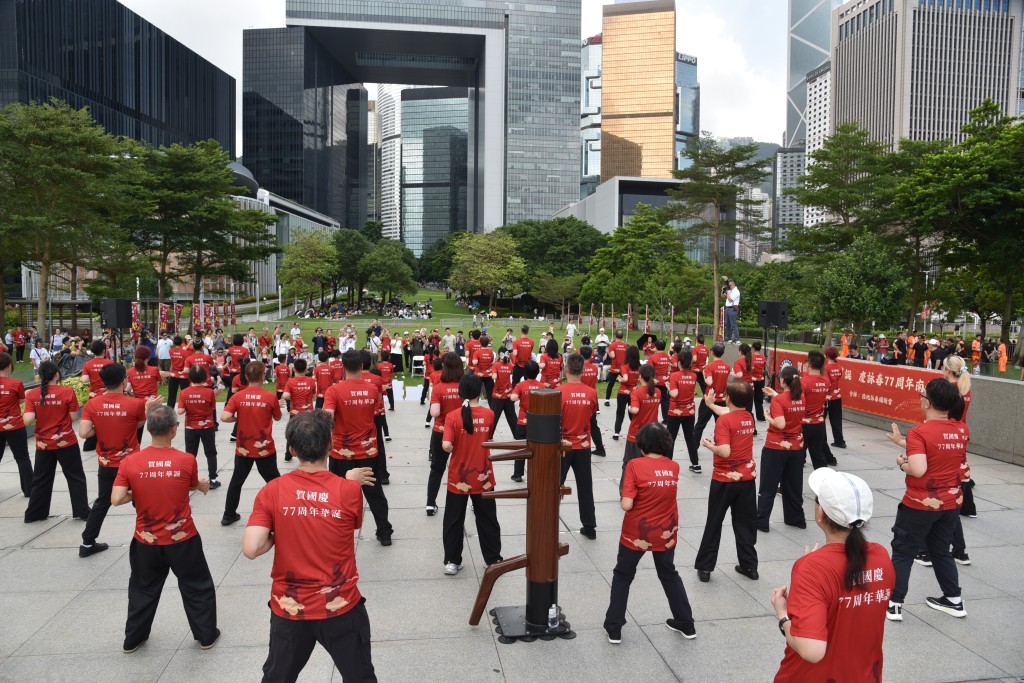
Wing Chun, a traditional Chinese martial art recognized as part of the country’s intangible cultural heritage, has been practiced in Hong Kong for more than seven decades and has developed a following around the world.
The event began at 10am with the national anthem, followed by lion dance performances by Siu Lum Hak Fu Mun Wong Cheung Martial Art Association and the Hong Chi Pinehill Hostel Lion Dance Team.
The 77 Wing Chun practitioners then performed on the lawn overlooking Victoria Harbour, while the program also included a dance performance by the Hong Kong Huacai Song and Dance Troupe.
Deputy Secretary for Constitutional and Mainland Affairs Clement Woo Kin-man and lawmaker Lam Chun-sing officiated at the launch ceremony, alongside guests from the martial arts and cultural sectors.
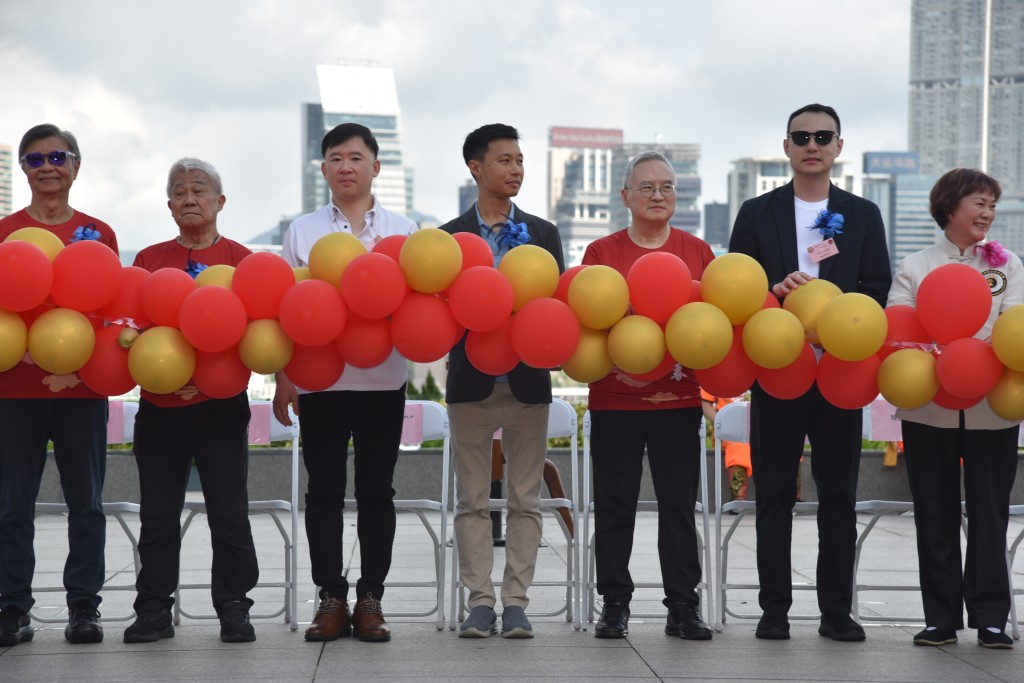
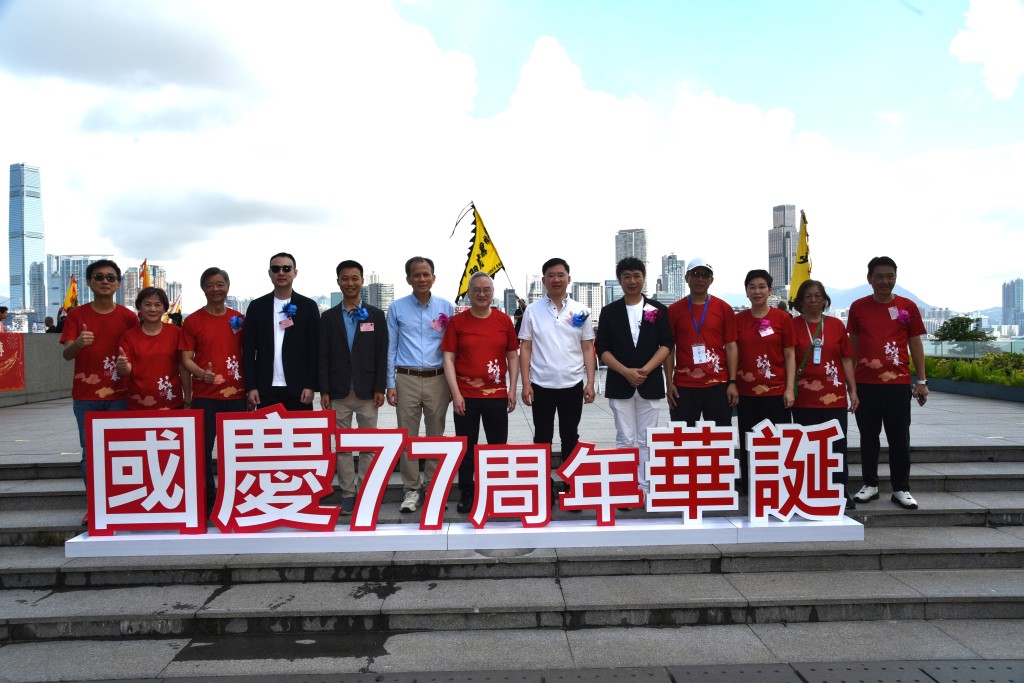
Woo said Hong Kong should continue to make use of its international advantages under “one country, two systems,” while working toward the city’s development goals and contributing to national development.
Lam said Wing Chun carried both historical and cultural significance as a traditional Chinese martial art, adding that Hong Kong could play a role in introducing it to wider audiences at home and overseas.
Leung Kam-tong, whose association organized the event, said the choice of Tamar Park was intended to give the gathering added symbolic significance.
“We hope that, in this place symbolizing Hong Kong’s prosperity and vitality, Wing Chun can serve as a cultural bridge to show the close ties between Hong Kong and the mainland to the world, while inspiring a deeper sense of love for the country and Hong Kong,” he said.
Leung added that Wing Chun was suitable for people of different ages and could serve not only as a form of self-defense, but also as a way to improve physical fitness.
Organizers said they hoped the event would encourage more people to learn about Wing Chun and help pass the traditional martial art on to younger generations.