Hong Kong will host the ABU Asia-Pacific Robot Contest after 14 years on Sunday, with University of Hong Kong (HKU) and Chinese University of Hong Kong (CUHK) teams carrying local hopes in “Kung Fu Quest.”
Co-organized by Radio Television Hong Kong (RTHK) and Hong Kong Science and Technology Parks Corporation (HKSTP), the contest turns Chinese martial arts into a test of engineering, programming and strategy.
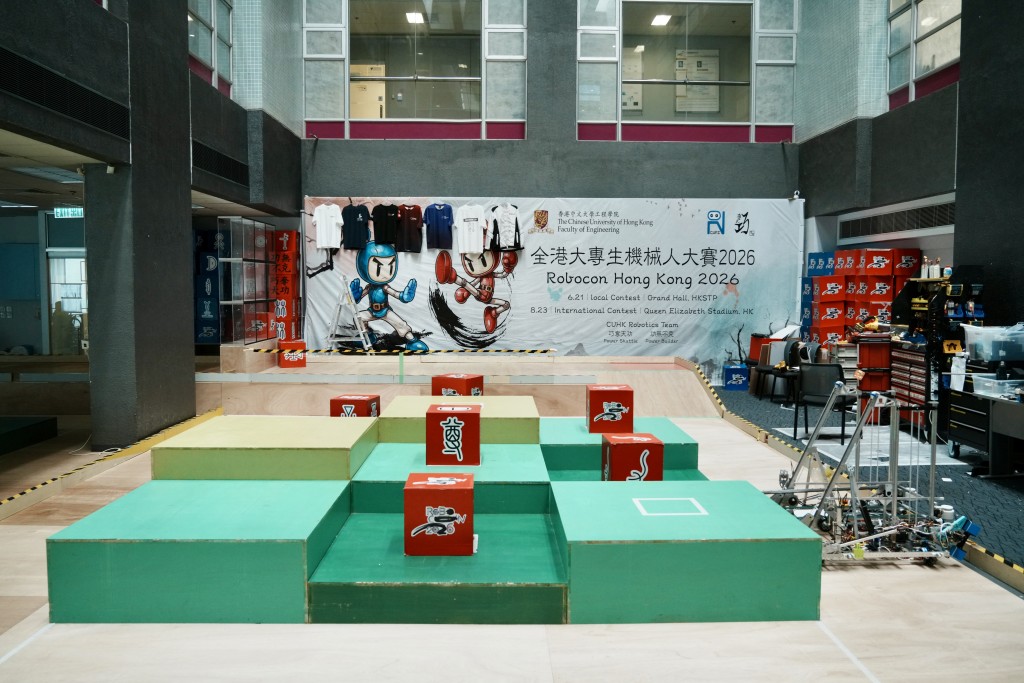
Sixteen teams from 15 countries and regions will compete at Queen Elizabeth Stadium on August 23, including China, Cambodia, Egypt, Fiji, India, Indonesia, Japan, Kazakhstan, Malaysia, Nepal, Thailand, Vietnam, Mongolia, Macao and Hong Kong.
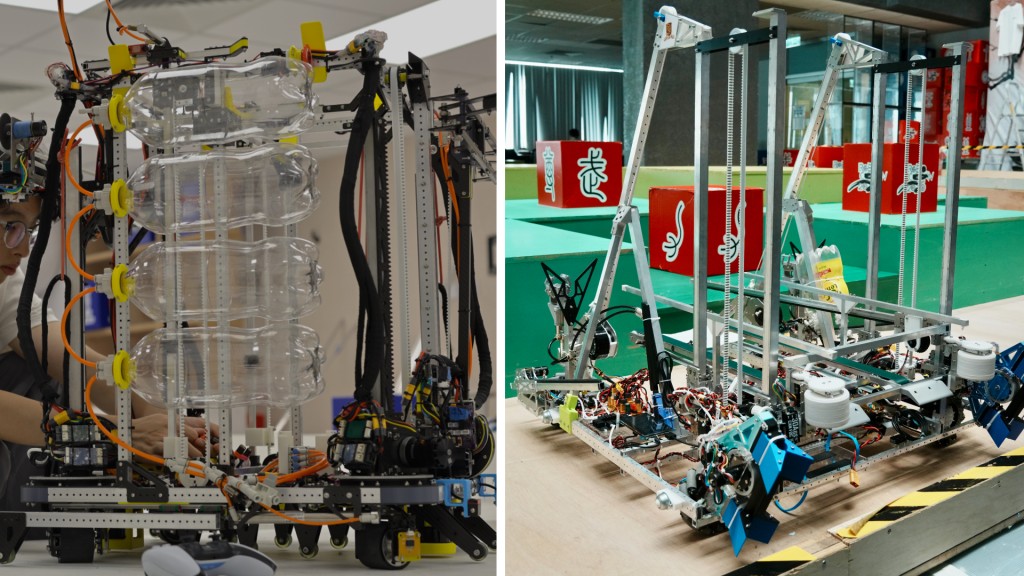
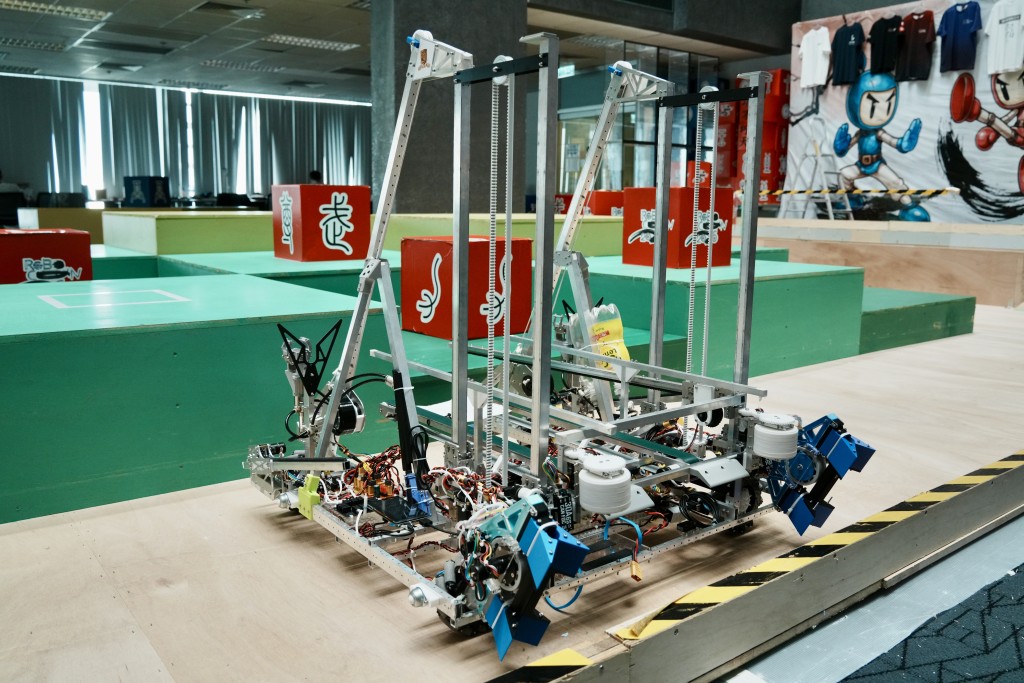
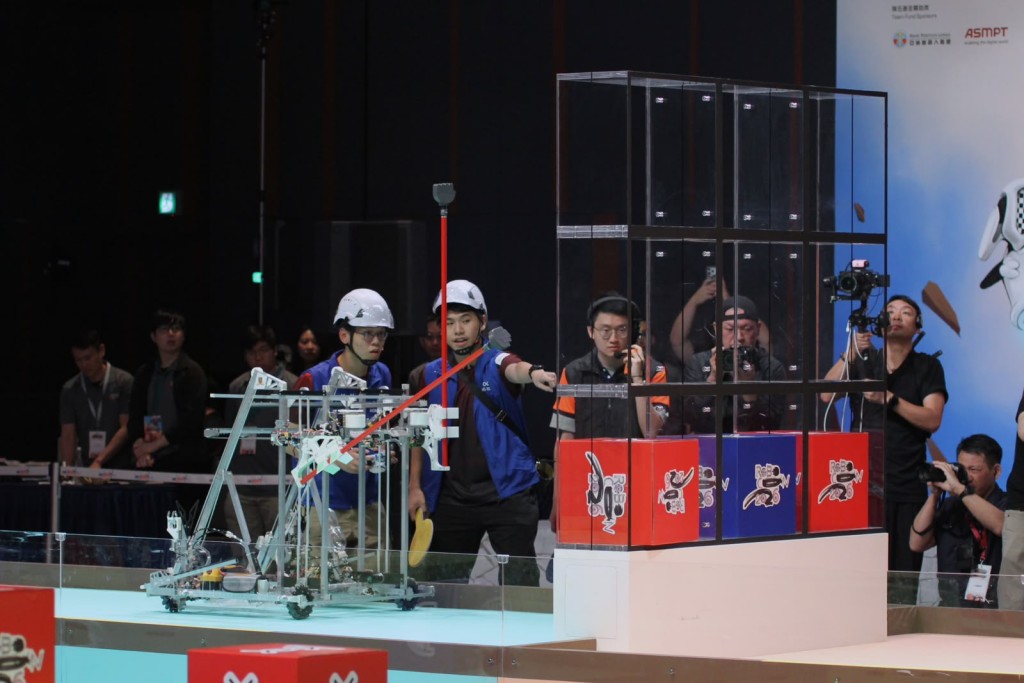
HKU's automatic robot
HKU’s Team Sapientia and CUHK’s Team Power Builder qualified through the local contest. Each must field a manual robot, R1, and an automatic robot, R2, to clear three stages within three minutes.
First, the robots collect and assemble components to forge Chinese-style weapons. In the “Meihua Forest Quest”, inspired by kung fu pole training, R2 must autonomously plot a route to retrieve matching scrolls. The finale is “Giant Tic-Tac-Toe”, where both robots place scrolls in designated positions, with the first to align three HKU’s automatic robot.
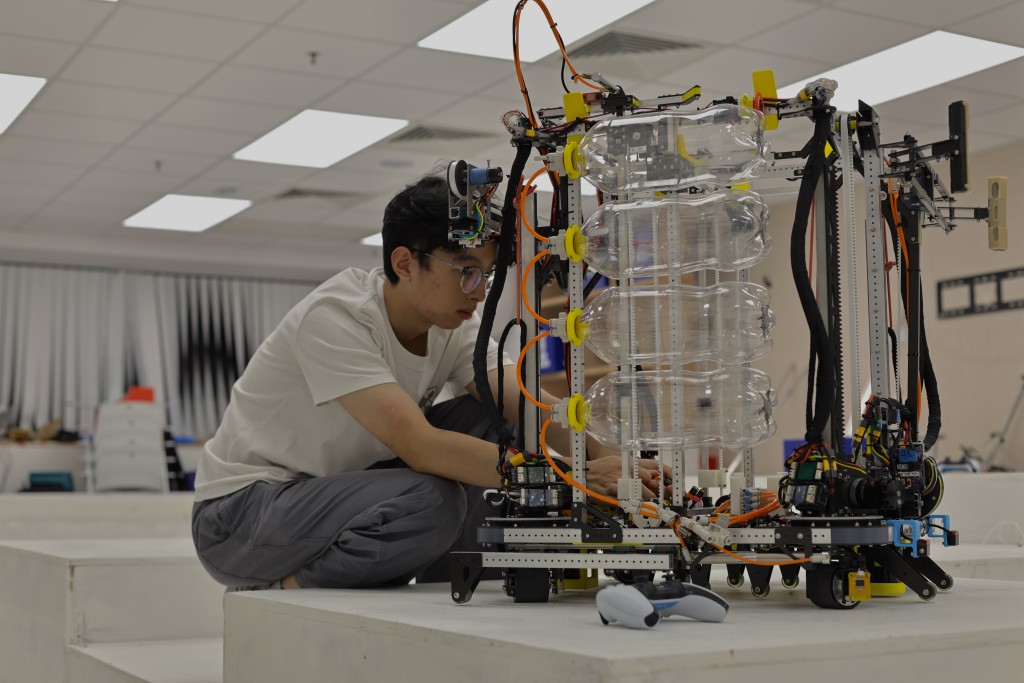
CUHK's automatic robot
HKU mentor Henry Lau Yin-heng said this is one of the most demanding editions in recent years. Unlike last year, when both robots were manually operated, this year’s automatic robot raises programming requirements, while each machine must perform several functions.
HKU enters after winning the local round. Lau sees China, Hong Kong, Vietnam and Japan among the stronger contenders.
He believes China’s design leaves less room for error, so disruption during the final challenge could break its rhythm. Against Vietnam, he sees HKU having an edge in agility and speed, making a steady passage into the decisive phase the priority.
The robots are already with organizers, so neither Hong Kong team plans major changes. The final days will focus on controls, start-up routines and fine-tuning.
For Lau, a mentor must also help students judge whether an improvement is worth the time and resources. “If you spend a month on something but it may only make you one second faster, that change may not be worth it,” he said.
Each team must deploy two robots to complete three highly challenging stages.
CUHK mentor Billy Yip Chun-wa described competing on home soil as a rare opportunity.
In past overseas contests, his team mainly went with a learning mindset. This time, while hoping to perform well at home, CUHK also wants to bring Hong Kong’s tradition of post-match exchanges and friendly contests to overseas teams.
Meanwhile, Yip has seen a clear change among local universities. “When we first started, once the competition was over, everyone would leave and there would be no next round. Now, as soon as a competition ends, teams immediately arrange a friendly,” he said.
He believes closer exchanges have created healthy competition and raised Hong Kong’s overall standard. His message to students is to look beyond the scoreboard. “There may be people on other teams who will walk with you later in life. See more and exchange more during the competition.”
CUHK’s robotics team advanced from the local contest in June.
Lau, who has been with HKU’s team for about a decade, had never seen it win the local title until this year. In the decisive round, he stayed off the floor and let the students compete on their own. They won. He plans to do the same on Sunday. “The most important thing is that they enjoy it,” he said, believing what students learn may ultimately matter more than the result.
The group stage will stream on RTHK’s YouTube channel from noon. The opening ceremony and championship rounds will air live on RTHK TV 31 from 3.30pm.
Mentors pass the Robocon torch to a new generation
Mechanical engineering students may be stereotyped as quiet and serious, but HKU robotics team mentor Henry Lau Yin-heng and his CUHK counterpart Billy Yip Chun-wa are anything but reserved when the conversation turns to robots.
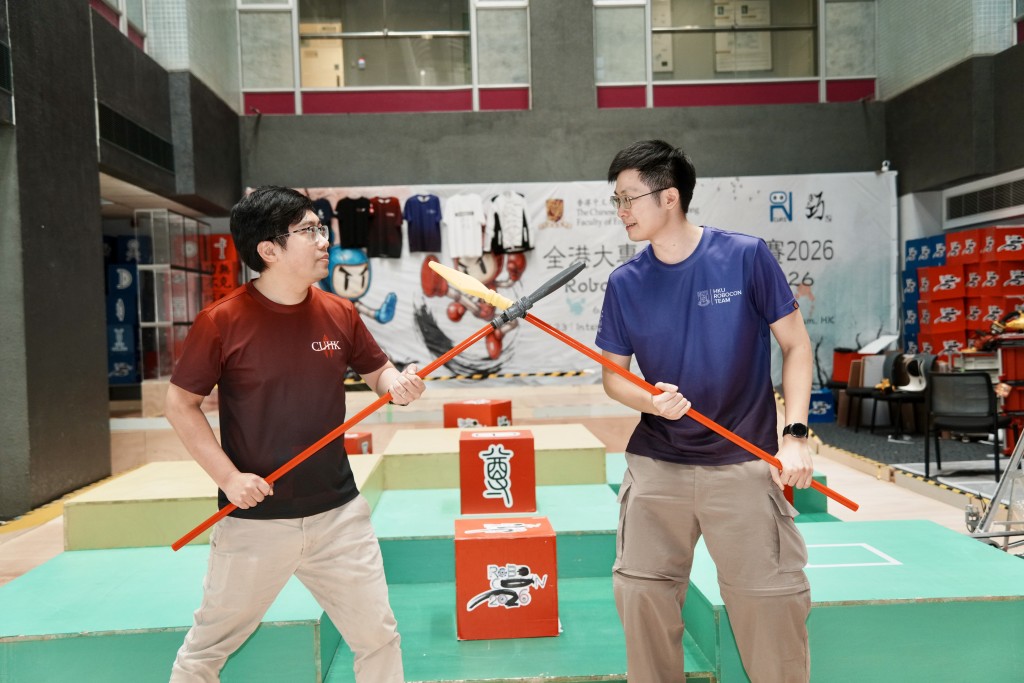
The two trade jokes as they look back on years of ABU Robocon, once as familiar faces on the competition circuit and now as mentors nurturing a new generation.
CUHK mentor Billy, left, and HKU mentor Henry, right, have crossed paths at ABU Robocon for years and are once again leading their teams into the competition this year.
Lau joined HKU’s robotics team in 2016. As a student, he balanced classes and competition while managing the team and communicating with professors, effectively serving as a project manager too.
After graduation, he had not planned to return. But the team later went through setbacks, facing manpower shortages and low morale. A sense of responsibility drew him back to help rebuild it. The team finished second at last year’s ABU Robocon and won this year’s local contest.
“The happiest thing about Robocon is working on the robot. The unhappiest thing is everything other than the robot,” Lau joked.
As a mentor, he now handles administrative work, people issues and resource coordination so students can focus on engineering and design. He tries not to dictate their design choices, preferring to let them experiment, make mistakes and learn.
Yip, the more experienced mentor, understands the commitment well. “It’s very tough and very intense. You only understand once you have led a team, but it is happy work,” he said. Both recalled that university teams were once often dominated by senior students, with ideas from newcomers sometimes dismissed when they conflicted with established views. As mentors, they now want younger members to speak up, test their ideas and find their own place in the team.
Yip said he understood why Lau chose to return to HKU. “Time is not something you simply have. Why must you come back to help? It is really because you care and want everyone to do the job well, and you don’t want the opportunity to go to waste.”
Lau sometimes jokes that he wants to retire from Robocon, but his reason for continuing is simple. “It’s love. It’s the love of robots,” he said. “Since Form Three, half of my life has been spent playing with robots. That’s it.”
Behind the laughter is a shared belief that Robocon is about more than building a winning machine. The mentors are also shaping a culture in which students learn to take responsibility, argue for an idea, recover from failure and pass what they have learned to those who come after them.