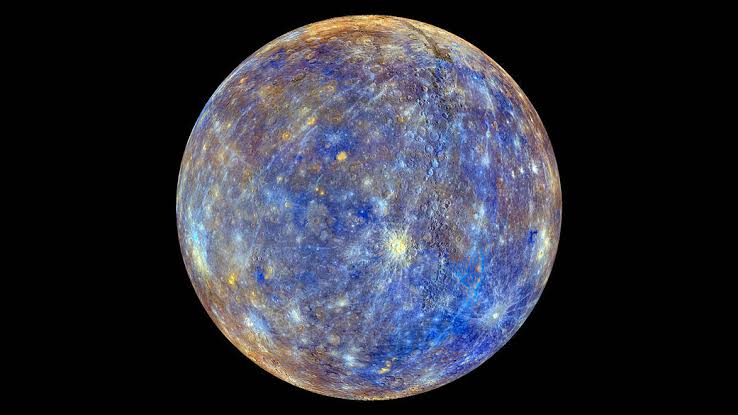
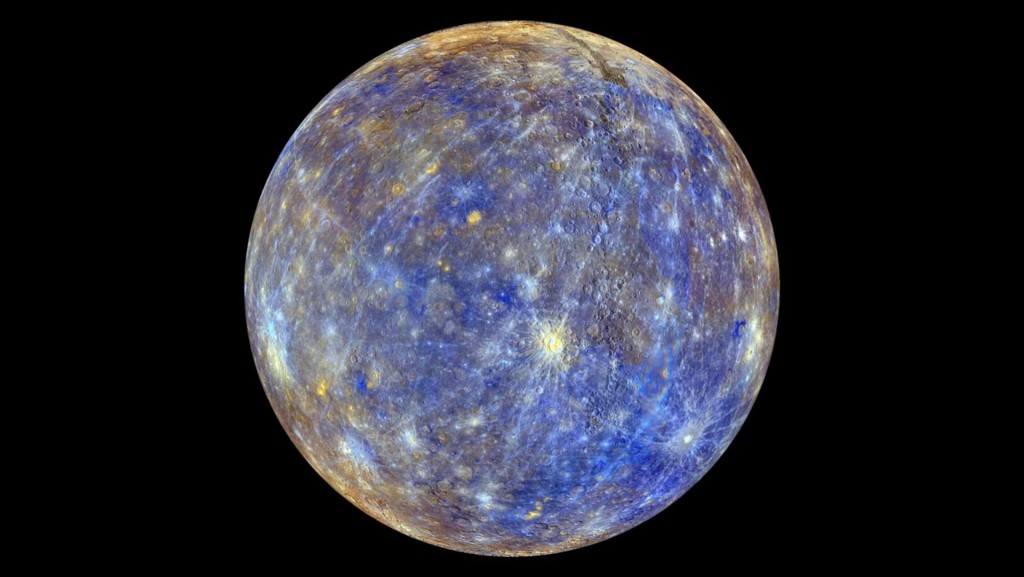
New evidence suggests Mercury’s interior stayed geologically active far longer than previously believed, according to a study led by researchers at the Chinese University of Hong Kong and published in the prestigious journal Nature Communications.
Scientists have primarily attributed Mercury’s landscape, marked by long cliffs and ridges, to a shrinking process: as the planet’s hot interior cooled over billions of years, its rocky outer shell contracted and buckled, much like other terrestrial planets. The new findings, however, complicate that picture.
The study focused on the Northern Smooth Plains, a vast volcanic region covering roughly seven percent of Mercury’s surface. Geologically young by the planet’s standards, the plains should have shown relatively little contractional deformation under existing theory, since most of Mercury’s shrinking was thought to have occurred before the region even formed. Instead, the researchers found it to be the most heavily wrinkled terrain on the planet.
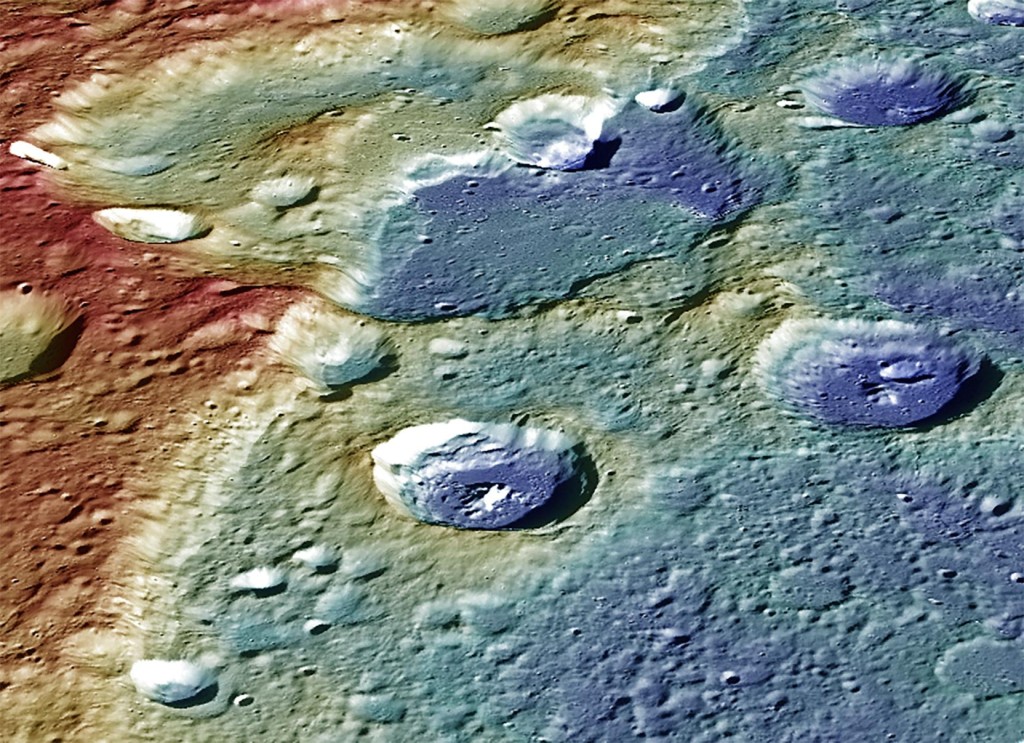
A cliff called Carnegie Rupes, almost 2 km tall, slices through a crater 105 km wide. (CUHK)
By combining gravity and surface height measurements with computer simulations of Mercury’s interior, the team traced the deformation to a plume of hot, buoyant rock that once rose from the deep mantle and spread beneath the planet’s crust. This upwelling pushed up a broad central bulge known as the Northern Rise, while compressing and wrinkling the plains around it.
Even after the rock cooled, residual stresses and slopes it left behind kept fracturing the surface over a very long period, which helps explain why some cliffs and cracks in the region appear remarkably fresh.
“It shows that the interior and the surface of Mercury stayed connected for far longer than we previously assumed,” said co-author Zhang Jian of the University of Hong Kong.
The researchers say their findings offer a new framework for interpreting tectonic features not just on Mercury but potentially on other rocky planets, such as Mars and Venus, where similar upwellings may have occurred. This suggests that, contrary to long-standing theories, localized heat from deep within the mantle can reactivate geological activity long after a planet’s thermal evolution has faded.
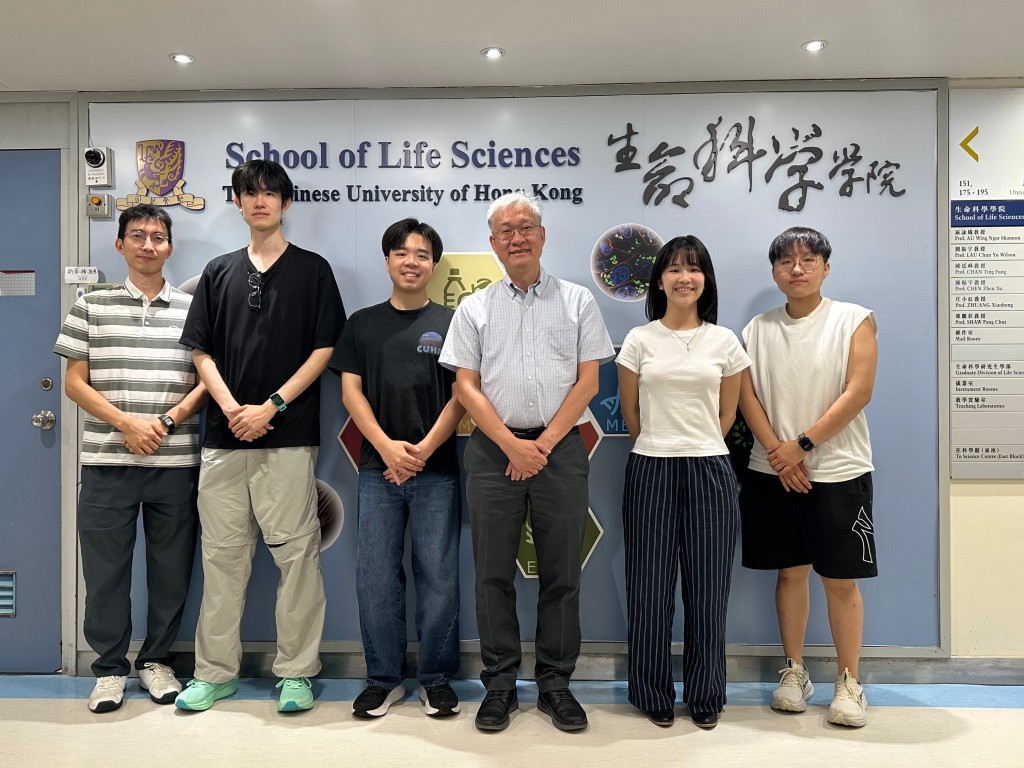
Xie Jingchun (left) and Zhan Yan discuss their Mercury research. (CUHK)