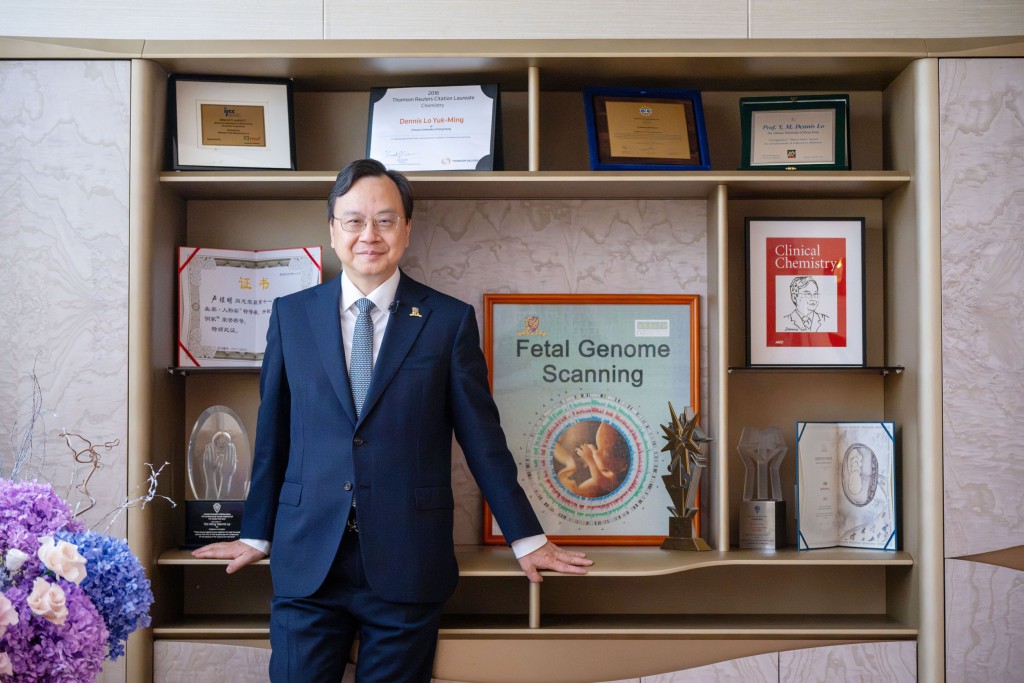
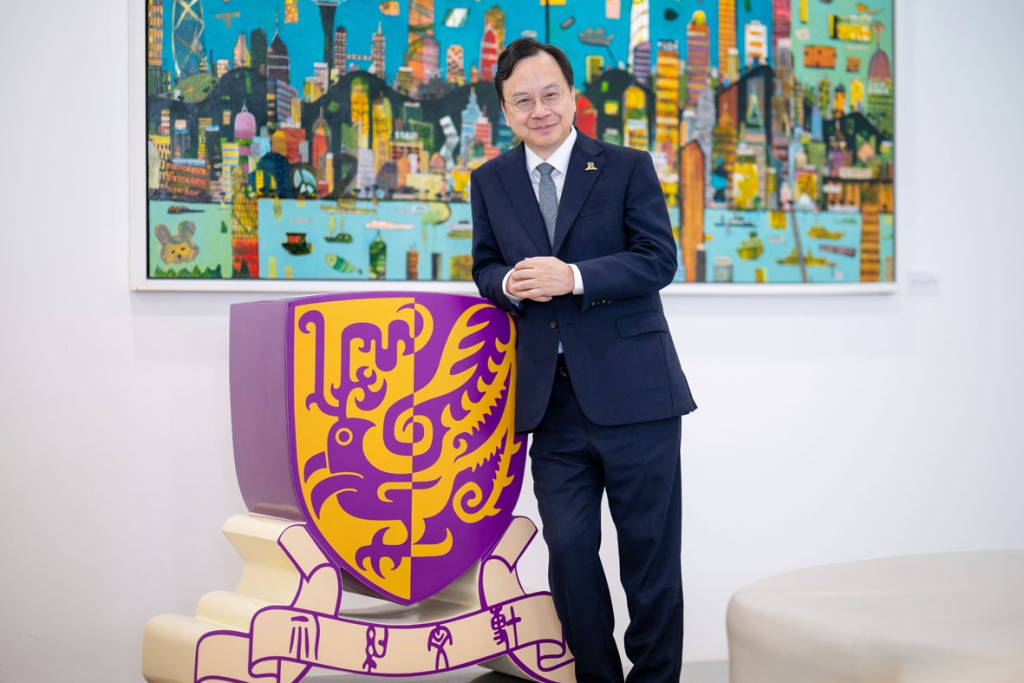
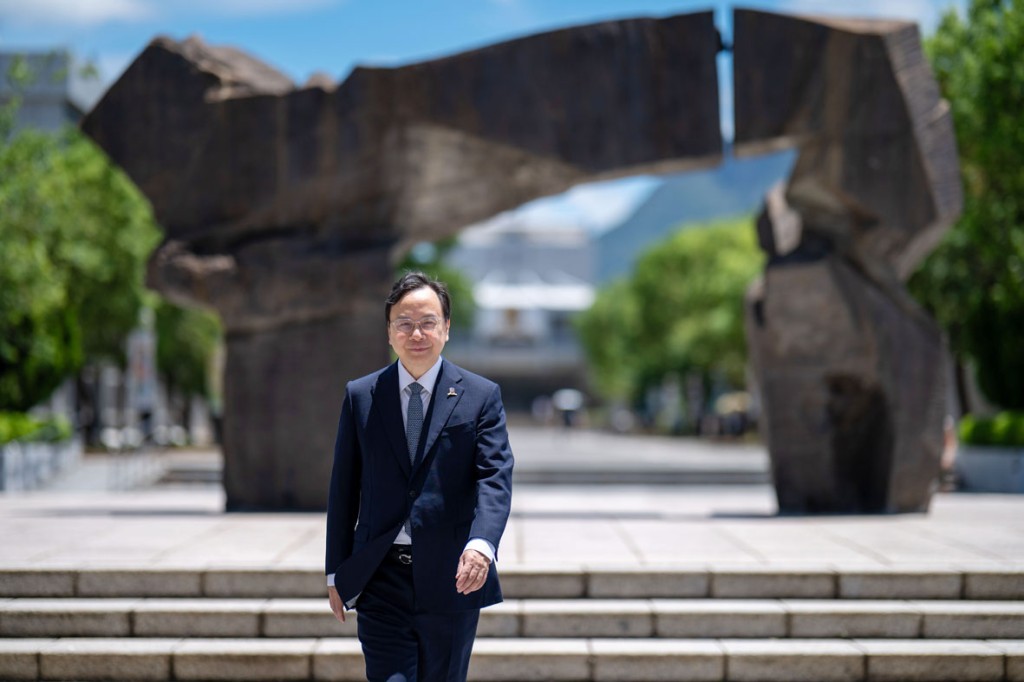
CUHK Vice-Chancellor and President Dennis Lo Yuk-ming
The Chinese University is moving full speed ahead to attract global talent under its first five-year plan, aiming to establish itself as a diverse academic hub while nurturing multidisciplinary students through its one brand, two campuses structure.
The CUHK 2026 to 2030 Strategic Plan, a forward-looking roadmap, has labeled Talent Attraction and Development as one of its five core priorities, establishing its 10th college for postgraduates serves as a key initiative under this category.
“I realized the collegiate system is actually excellent when I studied at both Oxford and Cambridge, which have dozens of colleges each,” said CUHK Vice-Chancellor and President Dennis Lo Yuk-ming, recalling his experience at a graduate college at the University of Oxford named Green Templeton College.
Located near the planned Pak Shek Kok MTR station, CUHK’s new college extends the university’s long-standing college system to the postgraduate community, aiming to create a vibrant and international environment for diverse dialogue and holistic development.
Lo shared that he specifically visited Cambridge to learn from their experience, visiting Darwin College to study how they run a college for postgraduate students.
“The college is a home away from home,” Lo said, explaining that it will gather students from different majors to spark cross-area ideas and forge lifelong connections.
Dennis Lo said CUHK will invest heavily in quantum science, highlighting the launch of the State Key Laboratory of Quantum Information Technologies and Materials in March.
The university’s 10th college also serves as an important approach for attracting overseas talent, as Lo noted that a large proportion of postgraduates are non-local students who will benefit from the system as they adapt to life in Hong Kong.
This year, applications from non-local students increased by about 20 percent compared with last year. Applications from regions outside the mainland rose even more significantly, by 75 percent, with most applicants coming from Southeast Asia and the Middle East.
Lo said the university welcomes the government relaxing the enrollment ceiling for non-local self-financing undergraduate students at public post-secondary institutions, which will rise from 40 percent to 50 percent starting in the 2026–2027 academic year.
Addressing the needs of international students, Lo said CUHK will provide non-local students with two years of guaranteed on-campus housing during their four-year studies, while also actively identifying new sites to build additional hostels.
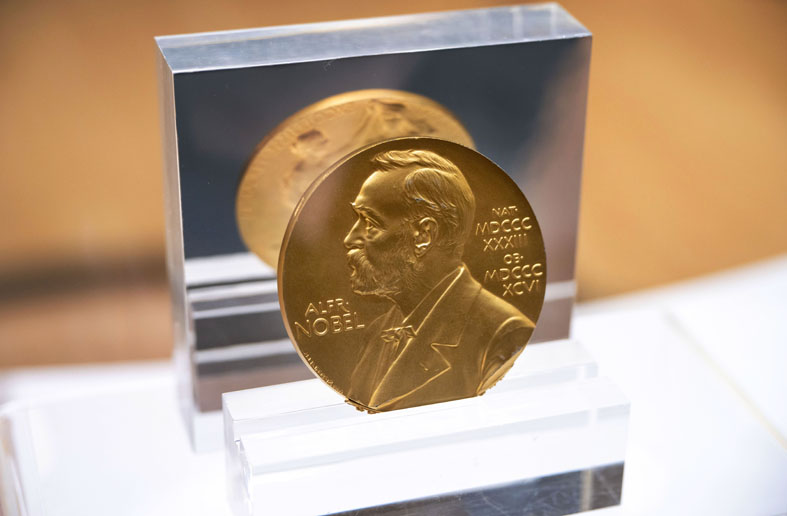
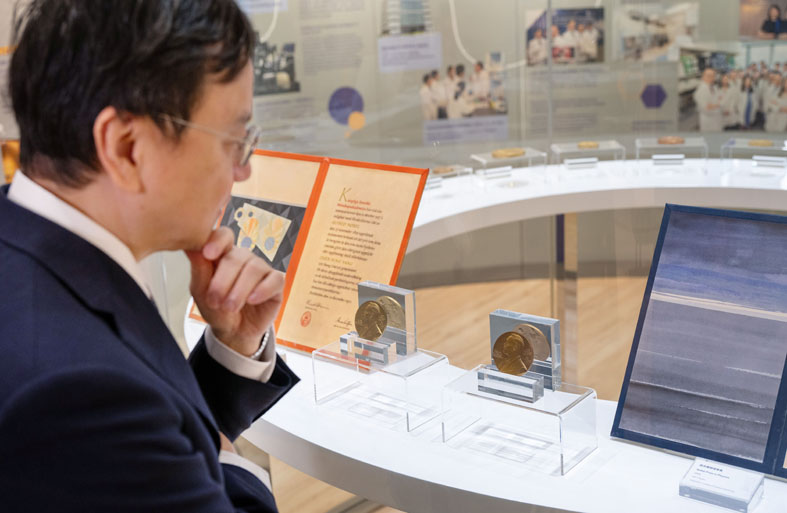
The CUHK History Gallery houses the 1957 Nobel Prize in Physics medal, top, awarded to professor Yang Chen-ning, one of the first two Chinese scientists to win a Nobel Prize.
The CUHK History Gallery houses the 1957 Nobel Prize in Physics medal, top, awarded to professor Yang Chen-ning, one of the first two Chinese scientists to win a Nobel Prize.
Meanwhile, the university is strengthening its talent recruitment through the Counsellor Fly-in Programme, in which the university sponsors counselors from top schools in selected countries or regions to travel to the campus and learn about its educational programs.
Regarding the new programs under the five-year blueprint, Lo highlighted CU Medicine Plus, which builds on the Global Physician-Leadership Stream to bring multidisciplinary exposure to more students.
“The future is multidisciplinary,” he said, emphasizing the direction of curriculum development. He revealed that some new programs would reflect this nature, covering data analytics, space technology, flight technology and earth analytics.
Furthermore, Lo stressed that the university would continue to utilize the strength of CUHK’s one brand, two campuses structure to develop programs where students spend two years in Hong Kong and two years in Shenzhen.
“In the coming five years, you will see more of these programs, more of this two plus two, and whatever subject plus X [another subject],” the university leader said, reaffirming his dedication to nurturing next-generation talent.
CUHK deepens health tech, AI, quantum science synergy in GBA
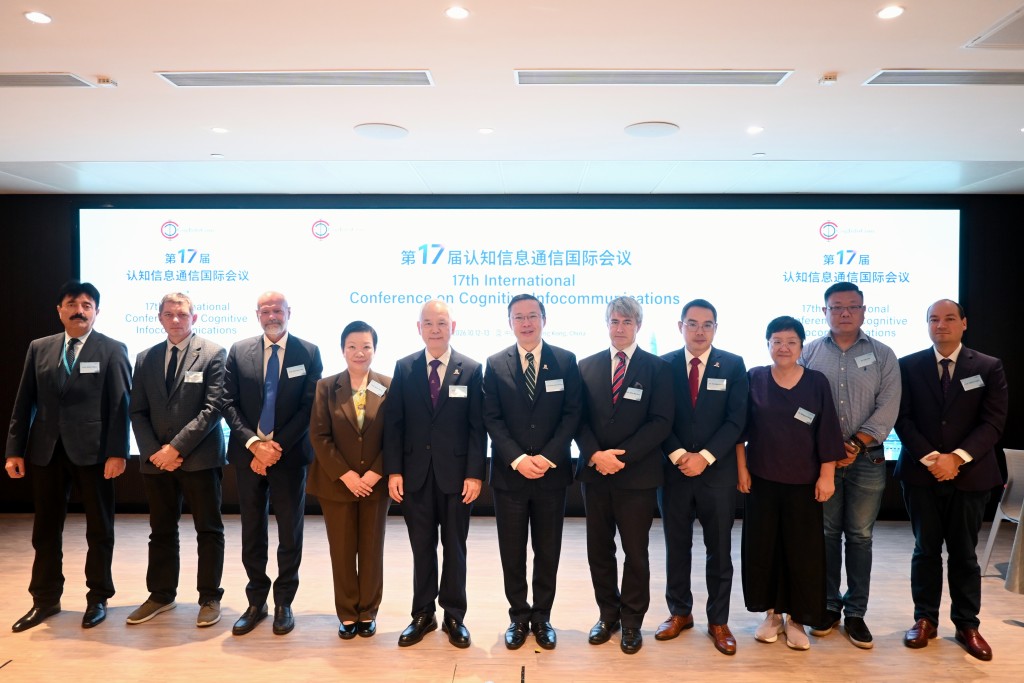
CUHK will continue to lead in its focus areas, including health technology, artificial intelligence and quantum science, to contribute to the national scientific research and innovation system over the next few years, said Dennis Lo.
“Quantum science is a frontier technology for the country and a highly strategic and important field,” Lo said.
He reaffirmed that the university will invest heavily in this area, highlighting CUHK’s launch of the new State Key Laboratory of Quantum Information Technologies and Materials last year.
He also pointed to the vast potential that the Northern Metropolis can provide to the university’s development in life sciences and the medical field.
Lo explained that one key factor in these fields is sample size, and extensive data is crucial for conducting large-scale health research. Cross-border cooperation at the Hetao Shenzhen Hong Kong Science and Technology Innovation Cooperation Zone will play an important role in this regard.
The CUHK Faculty of Medicine is currently participating in the establishment of a biobank in Hetao, he added.
“I believe that with the development of the Northern Metropolis, these initiatives will only continue to grow,” Lo said.
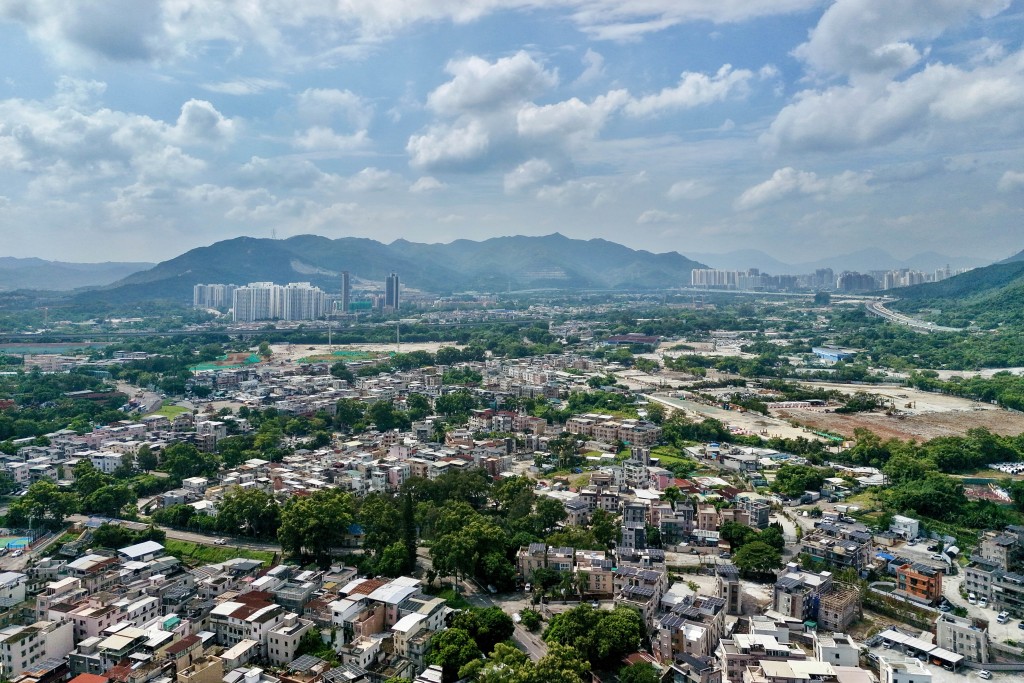
Lo further pointed out that the university will closely monitor the terms of the HK$10 billion loan fund for campus development in the upcoming Hung Shui Kiu and Ha Tsuen University Town, aiming to map out its long-term development plan in the area.
“The advantage of Hung Shui Kiu is that its future synergy with Qianhai will be highly attractive,” he said, adding that CUHK launched the InnoHub for New Quality Industries to strengthen industry-academia research collaboration in the Greater Bay Area in March.
Dennis Lo said the university will closely watch the development of the Northern Metropolis university town for its long-term expansion.
The creative world of Dennis Lo
Dennis Lo has established himself as a heavyweight in the scientific world after discovering fetal DNA in maternal blood in 1997, which he described as one of the most unforgettable memories of his career.
Despite dedicating himself to science, he also holds deep admiration for the art world, saying that he considers Leonardo da Vinci a particularly interesting figure.
Lo described da Vinci as a polymath who was both an artist and scientist. He noted that during a recent visit to the French Academy of Science in Paris, he saw some of da Vinci’s original work.
He was deeply impressed by his famous mirrored writings, noting they show “he is really an unparalleled genius.”
Interestingly, art was his answer when asked what he would like to study if he were a CUHK student today, adding that he would study either art or law.
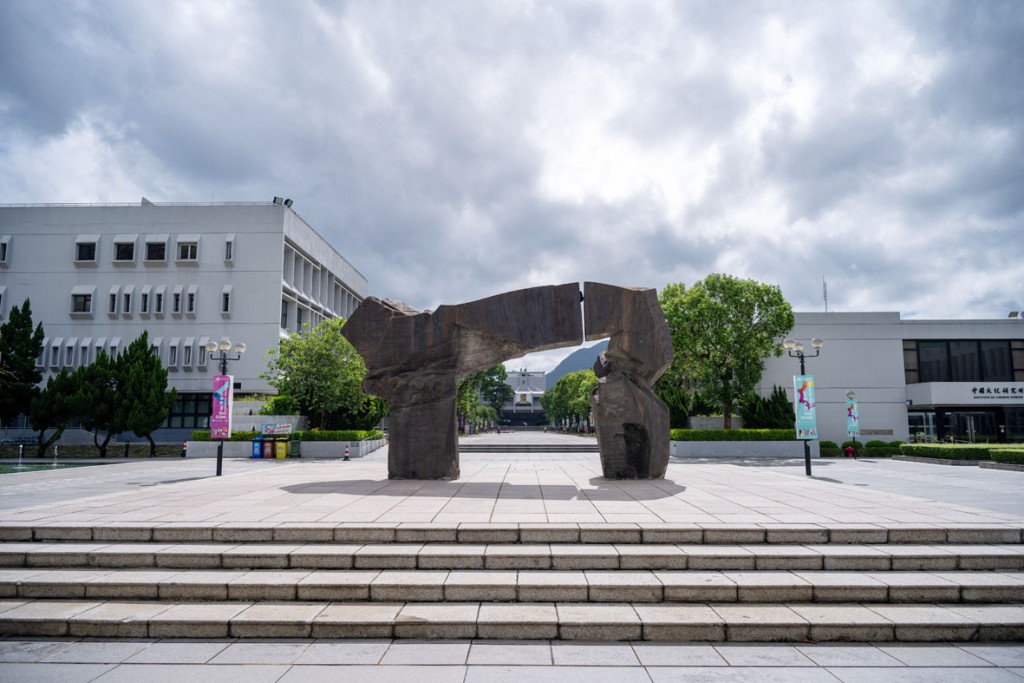
When stepping away from his scientific duties to appreciate the campus, Lo shared that his favorite location to relax is the Pavilion of Harmony up the hill, where he can look at the beautiful Tolo Harbour under blue skies on a nice sunny day.
“CUHK is a place that makes dreams come true,” he concluded, extending an invitation to students hoping to start their academic journey at the university.
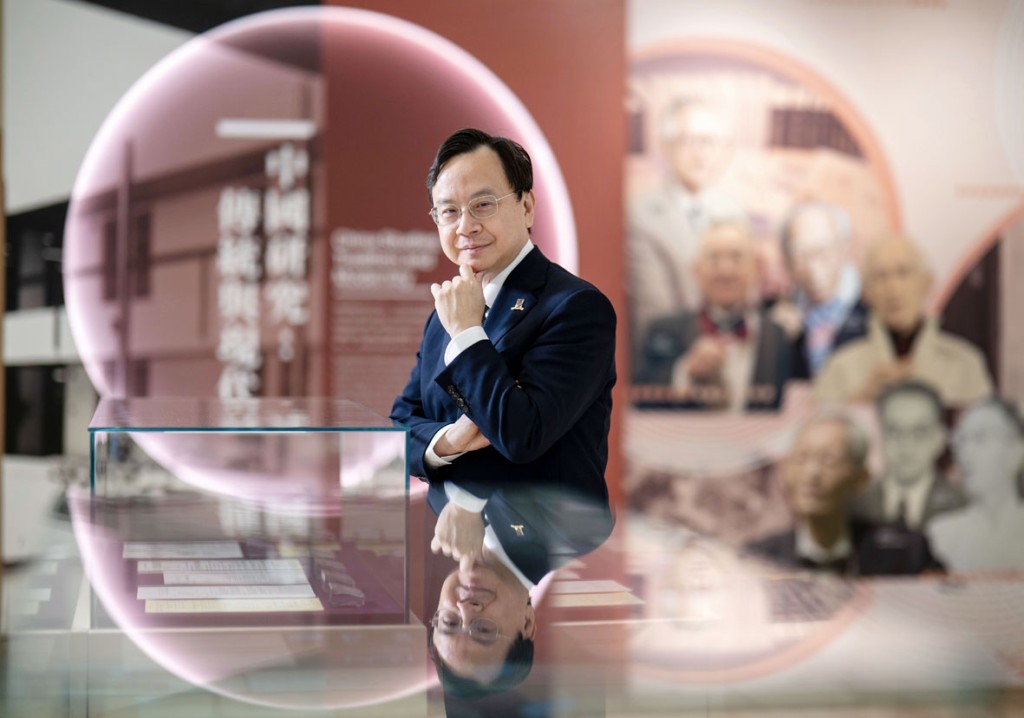
Despite dedicating himself to science, Dennis Lo also holds deep admiration for the art world.