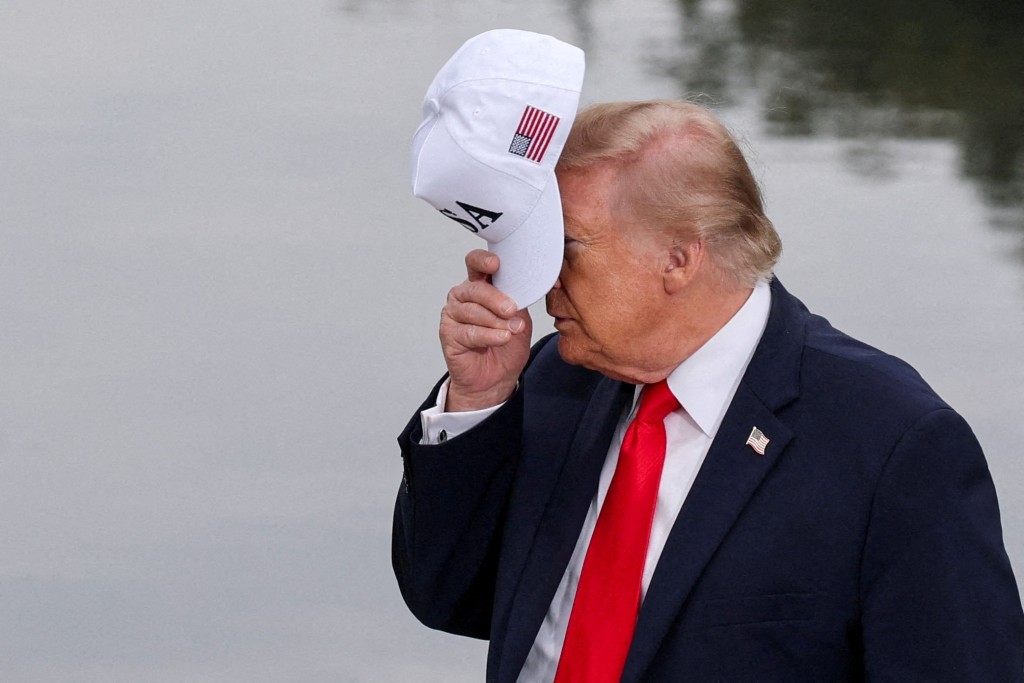
Due to China’s implementation of export controls on rare earth elements, US President Donald Trump stated on Friday that meeting with Chinese President Xi Jinping at Apec would seem meaningless. He also announced an additional 100 percent tariff on goods exported to China, effective November 1.
If outsiders have been solely captivated by the upward trend of the global stock markets over the past five months and have overlooked the implications of the continuous rise in gold prices, one would naturally be surprised by the sudden shift in US-China relations. One reason for the rising gold price is China’s gradual reduction of US Treasury holdings in its foreign exchange reserves, coupled with increased gold purchases.
This reflects China’s rather unenthusiastic attitude toward repairing relations with the United States.
In fact, beyond the trend in gold prices offering some insight into US-China relations, China’s accelerated development of advanced AI chips to reduce dependence on American companies, as well as the United State’s intensified efforts to domestically mine and produce rare earth elements to minimize the reliance on Chinese imports, both signify that the two countries have been actively seeking ways to distance themselves from each other over recent times.
Therefore, the United States and China are inevitably moving toward a Cold War-like state. Ultimately, the question of who will prevail depends on whether the US economy will first collapse due to losing China’s supply of rare earths and low-cost manufacturing capabilities, or whether China’s economy will face a severe crisis after losing access to US high-tech chips and its massive import market.
Alternatively, both economies might eventually find new paths through other means. However, anyone hoping for the United States and China to reconcile and restore relations to the era of Presidents Clinton and Jiang Zemin is indulging in an unrealistic and overly optimistic expectation.
Andrew Wong is a veteran independent commentator