Read More


Defying the demographic cliff: restoring hope
06-10-2026 04:56 HKT
Credit card fraud hits foldable iPhone Duo launch
17-10-2026 12:23 HKT
Three arrested over missing fire door frames in public estate lift overhaul
16-10-2026 20:10 HKT
It might have been a cheeky act by some playful mainland social media celebrities to denigrate Hong Kong as an “international financial center relic.” But, unless dispelled in time, it could develop into a self-fulfilling prophecy,
Secretary for Financial Services and the Treasury Christopher Hui Ching-yu was rather slow to refute the claim that first emerged in the mainland in September.
He should have made the rebuttal much earlier.
The city faces a sophisticated situation but Hui tried to dismiss the mainland assertion with a few sets of simple figures.
First, the total value of the local securities market stood at HK$30.8 trillion at the end of October – that was 17 percent up from a year ago.
That was a spot-on statement by Hui: during the period, the Hang Seng Index rose about 16.5 percent from 14,687 at the end of October 2022 to 17,112 at the end of October 2023.
Then, Hui went on to say that the total deposits with authorized institutions grew 2.3 percent in the first nine months, dismissing claims that capital had been flowing out of the local financial system.
That was also a factual assertion.
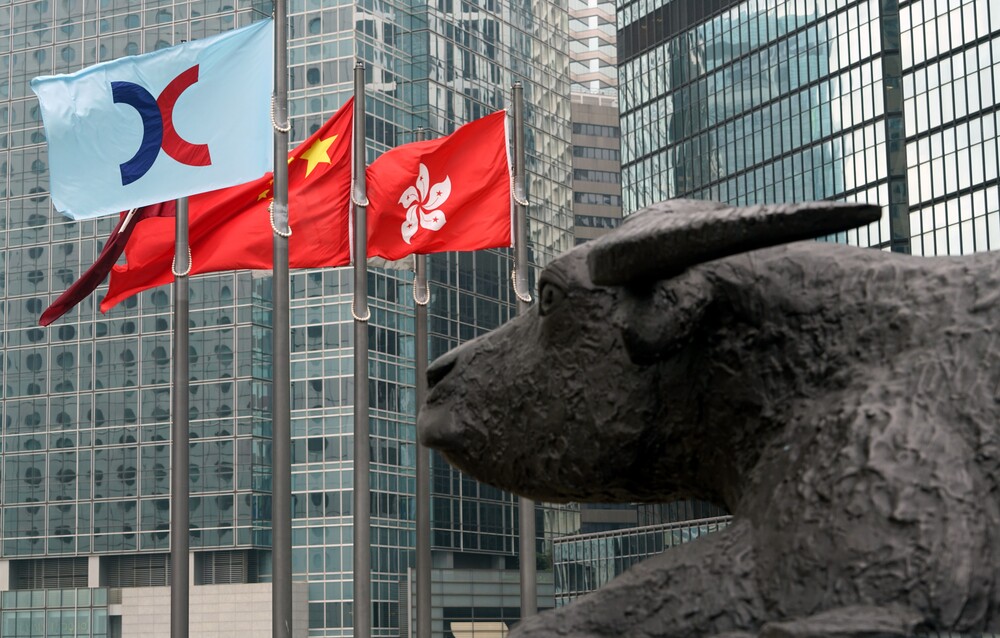
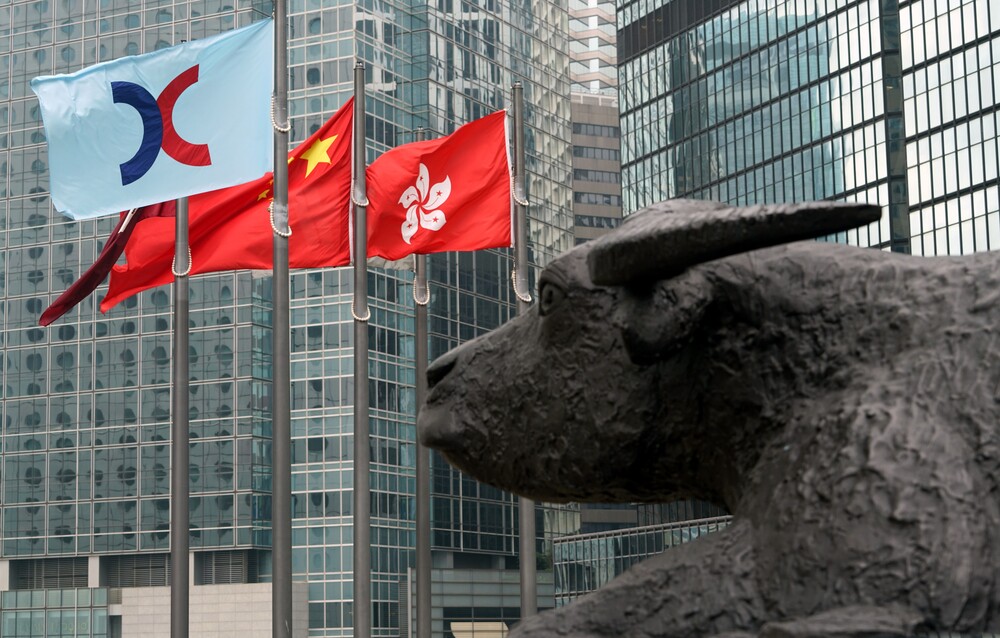
I agree with Hui that it was too far fetched for those mainland critics to conclude so readily that the international financial center of Hong Kong was over, with Exchange Square in Central remaining as just a relic of its past financial success.
That said, the figures cited by Hui were still too simplistic to serve the purpose of refuting the mainland critics.
While figures speak for themselves, it is true that Hong Kong has been making progress since all Covid restrictions were lifted in December 2022, albeit at a painfully slow pace that has upset almost everyone.
While the progress made over the past year is not to be underestimated, it is definitely not something to be proud of.
The Hang Seng Index, up by 16.5 percent to 17,112 as of October end, was 22,688 at the beginning of 2023 and above 30,000 as recently as February 2021.
The market capitalization of HK$30.8 billion sounds great but it had been a lot more than that. Consider Tencent, whose shares were HK$719 apiece in February 2021 prior to the mainland crackdown on the internet sector.
Last Friday, Tencent closed at HK$319 a share.
Meanwhile, local blue chip Sun Hung Kai Properties stood at HK$76 a share last Friday, compared to HK$124 in February 2021.
Even though there might be no significant capital outflow from the local banking system, it was curious that HIBOR has been on the rise since September, from 3.6 percent to above 5.5 percent, which suggests liquidity has been tight.
It is lucky that Hong Kong’s banking system is resilient and unemployment is low, allowing both to withstand the economic headwinds.
Unlike its competitor, Hong Kong is constrained by factors beyond its control, primarily the US-China relationship that falls outside the SAR’s high degree of autonomy.
Hong Kong will benefit when the US-China relationship thaws. In the meantime, perhaps it should talk more about the economy and steer away from political rhetoric to highlight the two systems arrangement under the Basic Law.
It is vital not to allow a fallacy to evolve into a self-fulfilling prophecy.