Read More


Defying the demographic cliff: restoring hope
06-10-2026 04:56 HKT

Typhoon season winds down as HK faces low October risk
07-10-2026 17:02 HKT


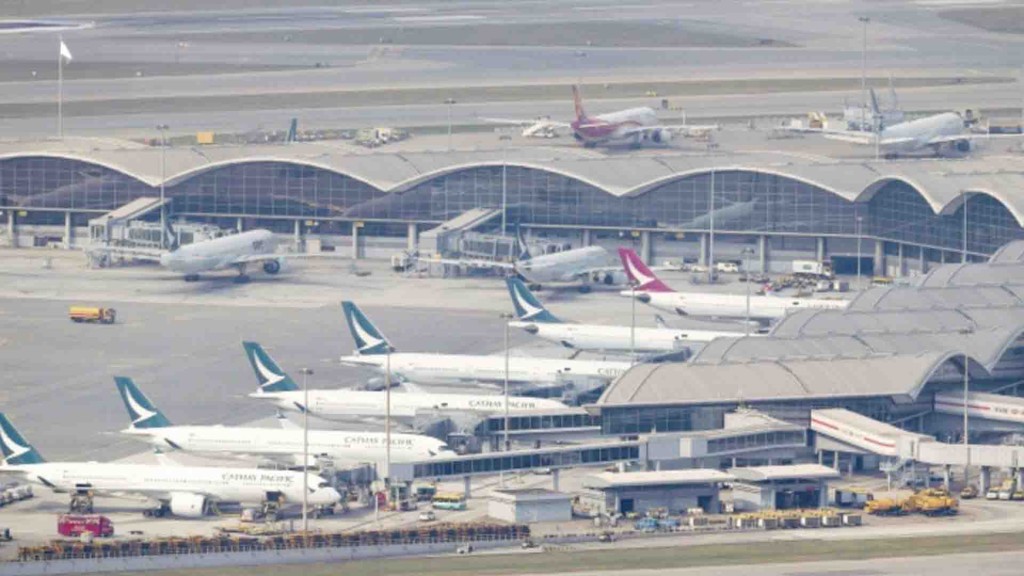
Hong Kong International Airport is aggressively securing its position as a premier global aviation hub, underpinned by tangible infrastructural milestones and expanding global connectivity. The recent commissioning of the Terminal 2 departure facilities marks a crucial leap in operational capacity.
Commercially, HKIA successfully retained its prestigious crown as the world's busiest cargo airport last year, with total cargo volume registering a robust 2.6 percent year-on-year increase in the first eight months of this year.
Strategically, following Chief Executive John Lee Ka-chiu's recent delegation visits, new passenger routes to emerging hubs like Almaty and Riyadh – Kazakhstan's largest city and Saudi Arabia's capital, respectively – have been officially secured. Now, guided by the 2026 Policy Address and the city's inaugural Five-Year Plan, HKIA is accelerating its structural transformation from a traditional transit node into an unprecedented, multifaceted "Airport City."
Central to this evolution is the ambitious Skytopia blueprint. In September 2026, the Airport Authority Hong Kong and New World Development reached a strategic agreement to prematurely terminate the operating contract for the 11 Skies mega-project.
Originally envisioned as a conventional retail and entertainment flagship, the massive complex is now fully managed by the AAHK. It will be completely rebranded and seamlessly integrated into the overarching Skytopia masterplan.
Recognizing a profound structural shift in global consumer behavior, authorities are drastically increasing the site's experiential entertainment offerings – planning permanent amusement rides and expansive go-kart tracks – pivoting decisively away from a pure retail consumption model.
Consequently, the former 11 Skies site transitions into a core physical hub within a much broader commercial ecosystem. This comprehensive Skytopia network will feature the AsiaWorld-Expo – or AWE – Phase 2, a scenic "Bay Promenade" on the artificial island, a bustling air-cargo fresh food market, and an exclusive "Yacht Harbor" at the South Cargo Precinct.
To support this multifaceted mega-development, both infrastructural and diplomatic expansions are rapidly accelerating. The state-of-the-art T2 Concourse is slated for operational launch by the end of next year, systematically boosting passenger throughput to meet rising international demand.
Concurrently, construction on Phase 2 of the AWE has officially commenced, targeting completion by late 2028. Building upon AWE's highly successful foundation as a premier destination for massive international concerts and large-scale trade exhibitions, this expansive upgrade will powerfully inject long-term momentum into Hong Kong's burgeoning mega-event economy, drawing diverse demographics from across the Greater Bay Area and the broader Asia-Pacific region.
Simultaneously, the government is executing a proactive diplomatic strategy to broaden Hong Kong's aviation network. Authorities are actively conducting targeted visits to South America, Africa, Central Asia, the Middle East, and the Caucasus to rapidly expedite new civil aviation agreements and expand lucrative traffic rights.
This extensive routing network directly supports the government's Five-Year Plan mandate to consolidate HKIA's absolute dominance as the world's busiest cargo airport. By integrating specialized infrastructure like the air-cargo fresh food market, HKIA leverages its unparalleled cold-chain logistical efficiencies to capture high-value freight. Ultimately, this visionary consolidation ensures that HKIA operates not merely as an efficient gateway to Asia, but as a dynamic, world-class destination in its own right.