Read More


Defying the demographic cliff: restoring hope
06-10-2026 04:56 HKT

Transport chief takes a back seat on fining transit nuisance behavior
14-10-2026 18:09 HKT


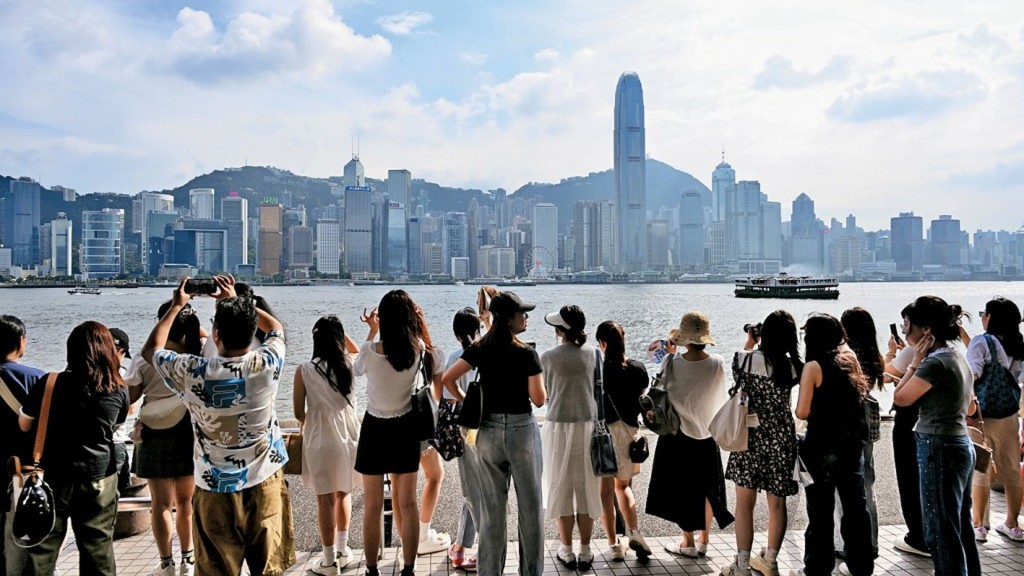
The latest tourism figures released by the Hong Kong Tourism Board signal a robust and encouraging recovery trajectory for the city’s travel sector. In September alone, Hong Kong welcomed approximately 4.03 million visitors, marking a remarkable 22 percent year-on-year increase. Cumulatively, arrivals for the first nine months of the year reached 40.7 million, reflecting a solid 12 percent growth compared to the corresponding period last year.
While these headline figures – bolstered by a nearly 30 percent surge in mainland visitors during the Mid-Autumn Festival – highlight a resilient rebound, the city’s macro-level strategy must definitively pivot from merely chasing gross headcount volume to capturing high value-added yield. The fundamental imperative is to transform vast visitor flows into tangible economic benefits for local enterprises while actively safeguarding resident well-being and fragile ecological resources.
Converting substantial tourist foot traffic into durable economic dividends requires a concerted elevation of Hong Kong’s mega-event economy.
Rather than depending on low-margin day-trippers who generate minimal local expenditure, the government and the HKTB must strategically curate premium, internationally branded conventions, elite sporting fixtures, and cultural festivals. High-profile spectacles – such as the Hong Kong Wine & Dine Festival, Halloween celebrations, and WinterFest – demonstrate how immersive experiences attract affluent travelers.
Furthermore, the operational debut of world-class facilities like the Kai Tak Sports Park provides a crucial platform to host stadium-scale concerts and international championships that command substantial hotel bookings.
Notably, while short-haul regional arrivals dipped 9 percent in September due to elevated airfares, long-haul arrivals surged by 20 percent. These long-haul travelers and corporate MICE – or Meetings, Incentives, Conferences, and Exhibitions – participants consistently exhibit longer lengths of stay and exponentially higher per capita spending across hospitality, luxury retail, and fine dining, stimulating the broader economy.
However, unchecked tourism expansion inevitably strains urban capacity, congests public transport, and disrupts grassroots livelihoods. Moreover, Hong Kong’s unique natural ecology – a prime attraction for post-pandemic eco-travelers – faces severe deterioration from unmanaged crowding.
To reconcile commercial ambitions with environmental preservation, the government must institutionalize smart, digitized capacity management.
The recent reservation pilot launched by the Agriculture, Fisheries and Conservation Department at Po Pin Chau, located at the High Island Reservoir East Dam, serves as an exemplary and highly replicable blueprint.
By mandating digital pre-registration and capping daily visitors to a strict quota of 2,000 individuals – evenly partitioned into four time slots of 500 – on designated days, authorities have successfully curbed environmental wear on sensitive hexagonal rock columns while drastically easing rural taxi bottlenecks. This proactive rationing preserves the integrity of Hong Kong’s Unesco Global Geopark while markedly enhancing the overall visitor experience.
Ultimately, Hong Kong’s tourism success cannot be measured solely through border-crossing tallies. By aggressively courting high-spending demographics through world-class events, and expanding targeted quota mechanisms like the Po Pin Chau model to other vulnerable rural and urban sites, the city can achieve a sustainable equilibrium.
Protecting residential neighborhoods from foot-traffic saturation while elevating commercial spend across local districts will ensure long-term public support for the sector’s continued international expansion. This dual-track strategy ensures that tourism operates as a high-yielding, socially harmonious economic driver, reinforcing Hong Kong’s status as a sophisticated, livable world city.