Read More










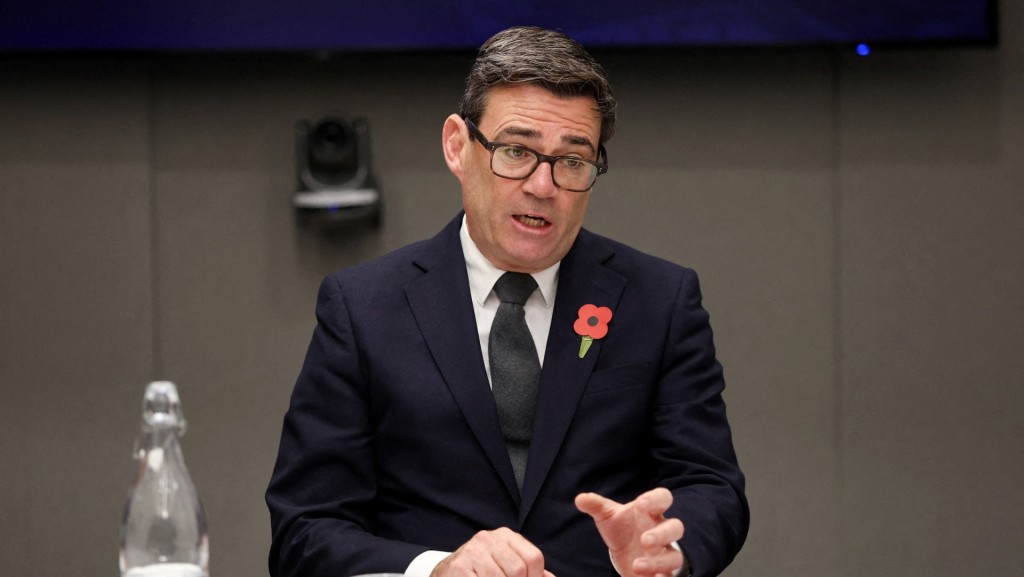
Before flying to the Commonwealth Heads of Government Meeting (CHOGM) in Antigua and Barbuda last week (the Commonwealth of Nations comprises 56 countries), British Prime Minister Andy Burnham said he was "open" to calls for a formal apology for his country's role in the transatlantic slave trade.
Although Burnham's predecessor, Tony Blair, expressed "deep sorrow" and "regret" for Britain's role in the slave trade in 2006, calling it a "shameful enterprise" and a crime against humanity, he declined to issue a formal state apology.
The UK was involved in the slave trade for approximately 300 years (the Abolition of the Slave Trade Act was enacted in 1807). British slave traders had forcibly transported over 3 million Africans to the Americas and the Caribbean. Although, as Head of the Commonwealth, King Charles told CHOGM that it was a "shameful chapter of history", he said evil did not need to have the last word (Nov 3). He highlighted "the determination to end international trade in enslaved people, in which the Royal Navy played such a leading role".
Although Burnham made clear there would not be reparations in the form of financial compensation, he was prepared to help poorer countries restructure their debts on more favorable terms.
It also emerged that Burnham was prepared to donate 40 million pounds to green energy schemes in the West Indies, and would consider increasing financial assistance for Commonwealth countries. Nonetheless, he emphasized, his government could not be held responsible for wrongdoing centuries ago.
However, those demanding "reparatory justice" want the UK to make formal payments of millions of pounds to countries affected by slavery. Only last week, Commonwealth Secretary-General Shirley Ayokor Botchwey said the "time has come" for a serious conversation on reparations, a widely shared view in the Caribbean.
Thus, Professor Verene Shepherd, vice-chair of the Caribbean Reparations Commission (CARICOM), the regional bloc of Caribbean countries, has demanded actual reparations. CARICOM was established by Caribbean heads of government in 2013, and seeks to make the case for reparations from colonial powers (including the UK, France, Portugal and Spain).
Shepherd said the descendants of enslaved people wanted "a conversation on actual reparations," and rejected suggestions that Britain today cannot be held liable for reparations.
Indeed, CARICOM has prepared a 10-point reparations plan. Apart from an apology, it wants support for health and education and measures to address the economic and social damage caused by slavery. However, it must expect to be disappointed.
Notwithstanding Burnham's proposed apology, his chancellor of the exchequer (finance minister), John Healey, has explained that reparations will not be paid for the UK's role in perpetuating slavery because the British people had "no role" in the slave trade.
Conservative Party leader Kemi Badenoch agreed. She said an apology for Britain’s role in the transatlantic slave trade would be a “navel-gazing distraction". She described slavery as an evil “in which people from every continent and region participated”. She wanted any spare cash to go to national defense, not reparations.
In reality, there are two significant hurdles in the way of the UK making reparations for its complicity in the slave trade.
The UK Treasury announced last month (Oct 21) that it had borrowed 6 billion pounds more than expected so far this year, pushing the national debt over 3 trillion pounds for the first time. With debt like this, the UK lacks, for example, the money required for its own defense, education, and health needs. It is simply in no position to pay compensation for the horrors of yesteryear.
If, moreover, the UK agreed to make reparations for the slave trade, where would it draw the line? If "reparatory justice" were accepted in principle for the countries whose ancestors were slavery victims, it would become impossible to resist parallel claims from other places. After all, many other countries have cause to resent the harms they underwent historically, and examples abound.
For example, the UK's opium trade inflicted untold misery on millions of Chinese people, and China would presumably also be entitled to reparations.
When the UK conquered India, many died. For example, in the Jallianwala Bagh (Amritsar) Massacre in 1919, British troops opened fire on an unarmed crowd of peaceful protesters and festival-goers trapped inside a walled garden, killing almost 1,000 people and injuring approximately 1,500 others. The last thing on Burnham's mind will be compensating the victims' descendants, let alone the Indian state.
Moreover, some claim the UK also bears direct responsibility for the Bengal Famine of 1943 in British India. An estimated 3.8 million Bengalis starved to death in a manufactured food crisis. This allegedly arose because Britain's wartime government denied them essential supplies, choosing instead to prioritize the home market.
In 2025, moreover, the Yoorrook Justice Commission concluded that British colonists committed genocide against Australia's Indigenous population in Victoria in the 1830s. The report found that from 1834, "mass killings, disease, sexual violence, exclusion, linguicide, cultural erasure, environmental degradation, child removal" and assimilation contributed to the "near-complete physical destruction" of Victoria's Indigenous community. It called for "redress" to acknowledge a range of human rights violations, which could include "reparations" (for which, if forthcoming, the British state would presumably be responsible).
If the case for "reparatory justice" were to prevail, the scale would be massive. Given the number of potential claimants, it would bankrupt the UK. However, if this line of thinking prevailed, Britain would presumably be entitled to seek its own reparations against those who harmed it over the centuries. It might, for example, seek compensation from Italy for the depredations of the Romans, Denmark for the pillaging of the Vikings, and France for the excesses of the Norman Conquest.
However, in the real world, none of this will happen.
The focus, therefore, needs to be on addressing the atrocities of the present, not on digging up the wrongs of the past.
On Feb 28, for example, the US killed 120 children in its strike on the Shajareh Tayyebeh primary school in Minab, southern Iran, and the families of the victims have yet to be compensated (there has not even been an apology).
On Oct 16, UNICEF reported that in the year since the ceasefire in Gaza took effect in 2025, more than 340 Palestinian children had been killed and hundreds injured in airstrikes, drone attacks and associated military action (Israel has yet to offer compensation).
If, therefore, "reparatory justice" is to be credible, it should be in the contemporary context. After all, history is replete with wrongs of one sort or another; the events of yesteryear are inherently controversial, and it is generally impossible to identify actual victims. If, however, current concerns are addressed timeously, it can help relieve present suffering, which everybody should welcome.
The author is a senior counsel and law professor, and was previously the Director of Public Prosecutions of the Hong Kong SAR.