Read More

Beyond the boardroom: showcasing Hong Kong’s unique charm to the world
21-10-2026 05:30 HKT
Office lottery dispute leads to High Court lawsuit over $33m prize
26-10-2026 17:24 HKT


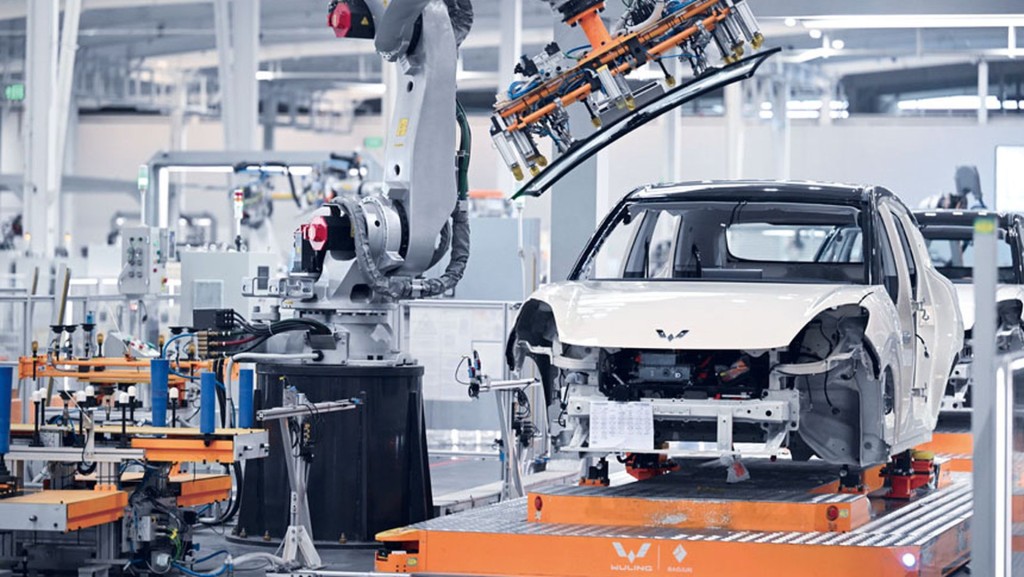
German President Frank-Walter Steinmeier’s visit to China notably began at the Volkswagen Group China Technology Company in Hefei. Ahead of the tour, the Chinese-German joint venture FAW-Volkswagen launched Jetta’s new M6 model, marking the German automotive industry’s latest attempt to penetrate China’s hyper-competitive electric vehicle market.
Equipped with Chinese lithium batteries, intelligent driving chips, and AI services, the M6 embodies a fundamental paradigm shift. The outdated model of “German technology, assembled in China” has squarely been replaced by “Chinese digital architecture built around legacy German mechanical engineering.”
As China leaps from exporting lower-level consumer goods to advanced manufacturing, it inevitably threatens Germany’s once-dominant automotive industry. This evolution has triggered a chronic wrestling match between China and the European Union over ballooning trade imbalances.
Consequently, Brussels has proposed a series of trade barriers. Beyond punitive tariffs on Chinese hybrid and electric vehicles, the EU is set to impose a 2 euro (HK$17.5) processing fee on foreign e-commerce parcels starting November 1. Furthermore, early 2027 will see new trade defense measures targeting Chinese chemicals, furniture, and machinery.
Yet, Steinmeier’s visit underscores that in the renewable energy sector, the two economies remain highly complementary. Europe urgently needs affordable Chinese green tech to alleviate inflation exacerbated by global oil shocks from the US-initiated conflict with Iran, while China requires the vast European consumer market to absorb its industrial output.
Tellingly, at the exact same time, German Chancellor Friedrich Merz is visiting Singapore, South Korea, and Japan. This highest-level “synchronized diplomacy” executes Berlin’s “de-risking” policy: maintaining economic ties with Beijing while strengthening Indo-Pacific alliances. Encouragingly, it demonstrates Germany’s determination to maintain strategic autonomy, refusing a Washington-led “hard decoupling” as the transatlantic rift under Donald Trump widens.
In Singapore, Chancellor Merz is pushing for deeper collaboration on open market access within Asean. Paradoxically, this provides a vital lifeline for China’s global supply chain restructuring. As Chinese firms aggressively offshore manufacturing to Southeast Asia under the “China Plus One” strategy, an open EU-Asean trade corridor allows them to supply intermediate goods to Asean factories.
These factories then export finished products to Europe, bypassing direct EU-China tariffs. Ultimately, a robust economic circulation between China, Asean, and the EU helps Beijing navigate this new era of global protectionism.
As two of the world’s largest economic blocs, China and the EU cannot afford a complete decoupling. Trade imbalances must be addressed, but they should not choke off vital economic cooperation.
This sentiment was echoed during Steinmeier’s specially arranged visit to the former Hefei residence of Li Hongzhang. As a pioneer of late-Qing China’s push for an industrial revolution, Li – often dubbed the “Bismarck of the East” – visited Germany in 1896 to meet Otto von Bismarck and learn from German industrial advancement.
Today, 130 years later, at the dawn of the Fourth Industrial Revolution, the tables have turned. Germany now urgently needs Chinese digital infrastructure and battery prowess to achieve its own industrial restructuring. History repeatedly demonstrates that China and Germany have far more to gain from cooperation than conflict.