Read More










78 years ago today, proud Indonesians represented by Soekarno and Hatta, proclaimed independence in Jakarta. The country has been developing towards progress and continues effort to fulfil constitutional mandate to its 270 million people. On this historical day, the Consulate General of Indonesia in Hong Kong extends cordial greetings to all Indonesian nationals living or working in Hong Kong, along with warm friendship to the people of Hong Kong.
Close Relations between Indonesia and Hong Kong Post-Pandemic
The bilateral relations between Indonesia and Hong Kong are entering a new era following the end of the challenging COVID-19 pandemic from 2020 to 2022. Starting the end of last year, Hong Kong has reopened its borders and relaxed most of the travel bans. At the same time, Indonesia is gradually returning to normal, then last June, the Indonesian Government no longer imposed restrictions related to pandemic control.
This new era is cherished by all, including the business communities. In fact, relations between Indonesia and Hong Kong remained well-established during the pandemic. However, the improving situation of the world presented an impact to boost the economic performance of the two entities. Data from the Indonesian Trade Ministry states that since 2022, the trade balance between Indonesia and Hong Kong has returned to pre-pandemic, USD 5.9 billion. As of mid-2023, the two sides have recorded USD 2.4 billion in trade. In tourism, the number of visits between the two entities has yet resumed but has shown an increase. Throughout 2022, 7,480 Indonesians visit Hong Kong, and 7,086 vice versa. In January-June 2023 period, Indonesian visitors to Hong Kong increased rapidly to 94,147, and Hong Kong visitors to Indonesia reached 4,726. In terms of investment, Hong Kong has consistently been one of the largest investors in Indonesia. In 2022, Hong Kong is the third largest foreign investor with an investment value of USD 5.5 billion, following Singapore and China. Hong Kong is consistently placed third also in the first half of 2023 with investment realisation of USD 3.5 billion.
The stable economic performance between Indonesia and Hong Kong pre- and post-pandemic shows the role of each entity towards one another. This was reaffirmed during Chief Executive John Lee’s visit to Indonesia last July. At a meeting with President Joko Widodo at the Merdeka Palace, Jakarta, the two leaders continued to emphasize the growing cooperation in trade and investment, in addition to commitment to take measures to protect Indonesian citizens working in Hong Kong, mostly as domestic helper. Considering the high value of Hong Kong’s investment in Indonesia, President Jokowi again introduced the opportunity to invest in a number of strategic projects in the country, one of which is the construction of Ibu Kota Negara (IKN) or National Capital City of Nusantara in East Kalimantan. CE John Lee appreciated the offer saying that megaprojects of IKN opened up various opportunities that could strengthen the bilateral relations between Indonesia and Hong Kong which has been already closely intertwined.
From Jakarta to East Kalimantan
Indonesia has been echoing to transfer the IKN from Jakarta, even since the reign of President Soekarno. In July 1957, President Soekarno selected Palangkaraya, a city in Central Kalimantan, as a candidate for the IKN for its centre position in the vast Indonesian archipelago. President Soekarno finally appointed Jakarta as the Republic’s capital in 1964 following various considerations.
The discourse of transferring the IKN reappeared during the administrations of President Soeharto and President Yudhoyono. Jakarta’s chronic issues, such as flooding and traffic jams, are considered to require long-term solutions, including transferring the government centre to another city or even building a new IKN. By President Jokowi, this plan was carried out. Subsequently to the ratification of Law Number 3 Year 2022 on the National Capital City and the approval of the 2020-2024 National Medium-Term Development Plan, the construction of IKN began in the second half of 2022. To oversee the construction of IKN, President Jokowi has appointed the National Capital Authority in March 2022 with Mr. Bambang Susantono as Chairman and Dhony Rahajoe as Deputy Chairman.
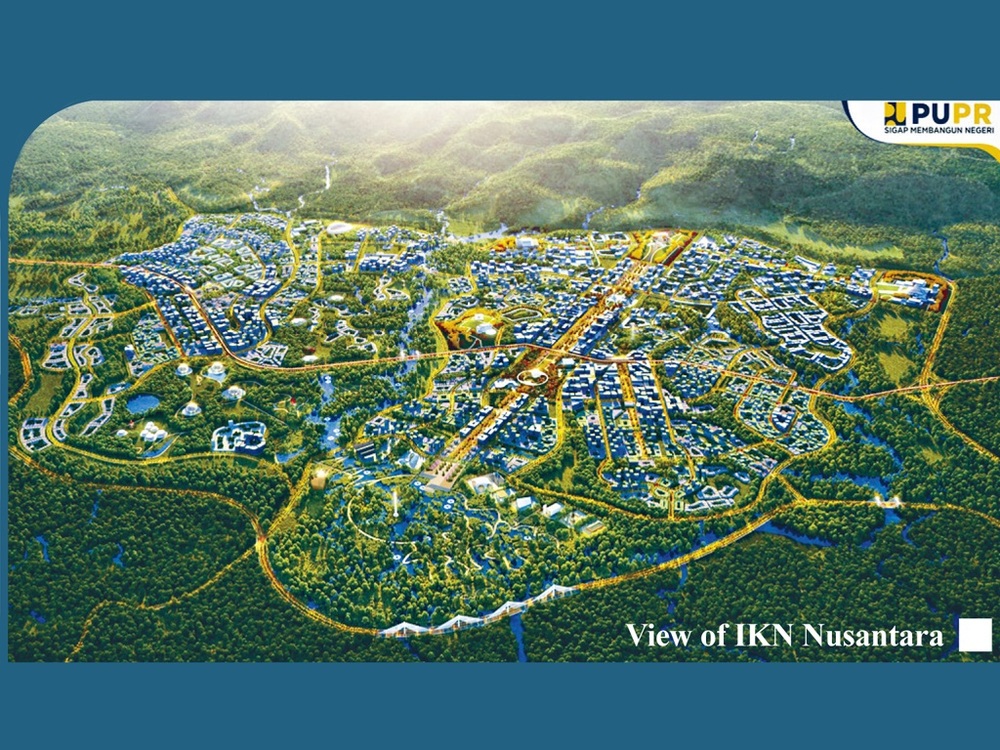
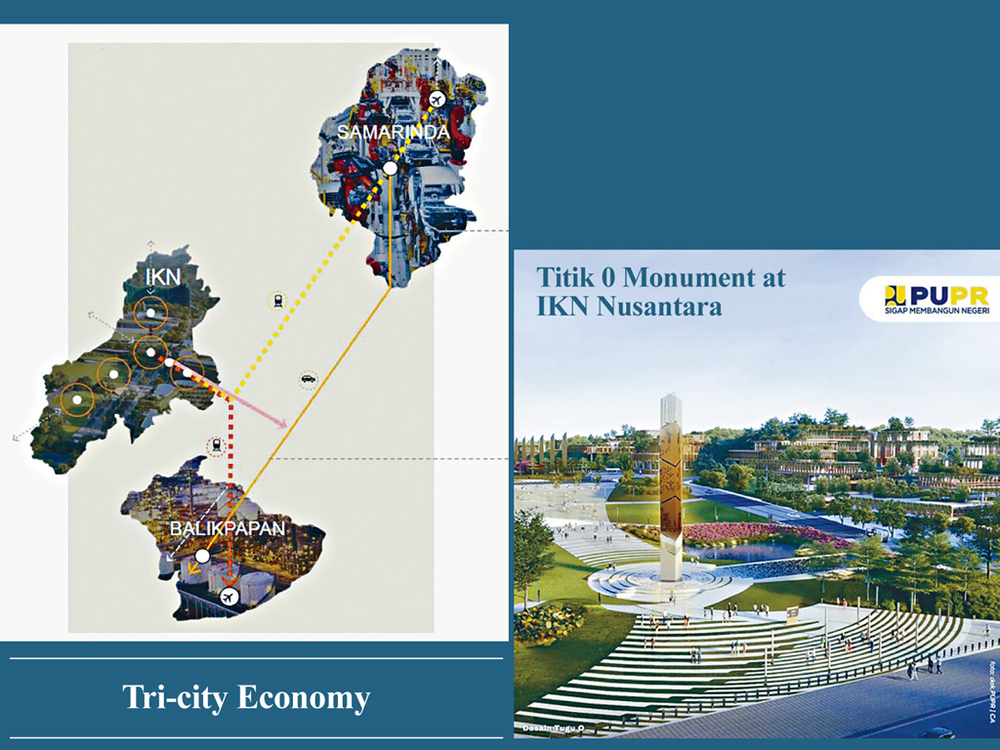
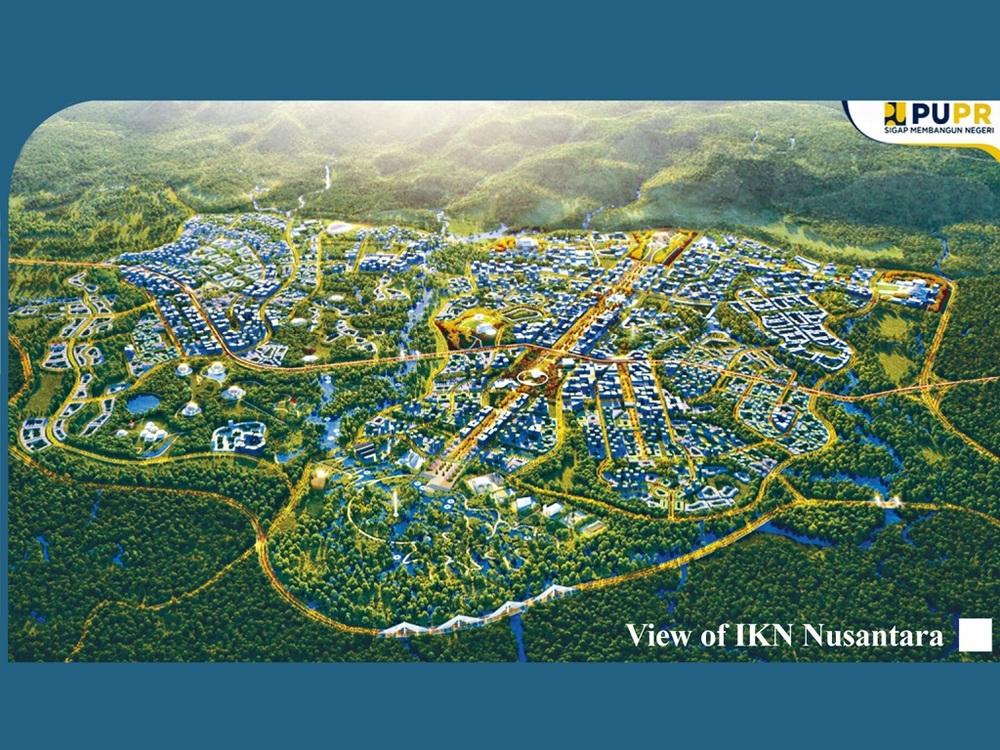
Nusantara is how we call the new IKN, a name chosen by President Jokowi which philosophically explains Indonesia as an archipelagic country. Built in an area part of the territory of Penajam Paser Utara regency and part of Kutai Kartanegara Regency, East Kalimantan Province, the city is located strategically in the centre among islands that make up Indonesia. IKN is relatively neighbour to two major cities in the province, Balikpapan and Samarinda, making it highly accessible.
Further, IKN Nusantara is seen as a solution to a number of major issues currently confronting Jakarta and the island of Java. Covering only 7% of Indonesia’s territory, Java has almost 57% of the entire population (2021) and contributes 59% to the national Gross Domestic Product. Numerous developments and progress are considered Java-centric, creating somewhat an economic inequality in areas outside Java. IKN Nusantara is projected to be the commencement of equal distribution of Indonesia’s population and economy. The construction itself is predicted to absorb up to 500,000 workers, in addition to the potential for the development of new economic and industrial zones. New economic opportunities at IKN Nusantara are in turn expected to attract more residents to live and work in the new capital region.
Jakarta continues to be overshadowed by problems of flooding and congestion, caused by high urbanization growth, among others. Floods are an annual episode in this special region, in addition to it being one of the most congested cities according to TomTom Traffic Index (2018). Jakarta is also the 10th most populous city in the world with a population density of 16,704 people/km2, far higher than the national average of 141 people/km2. Transferring the capital to IKN Nusantara may be understood as one of the solutions to lifting Jakarta’s urban carrying capacity as the centre of government as well as the centre of economy for decades.
Nusantara: A World City for All
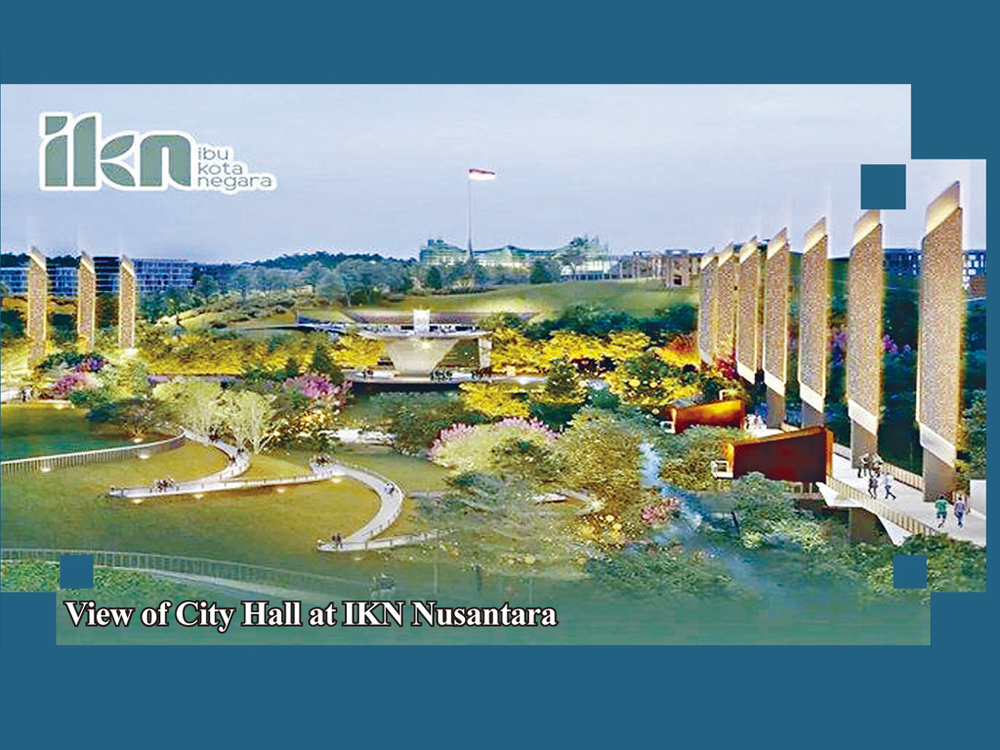
IKN Nusantara is designed with the vision of becoming a World City for All on an area of 324,332 ha. The three indicators of the vision are: 1) Sustainable world city, 2) Future economic driver, and 3) National identity symbol.
To ensure sustainability, the design of the IKN Nusantara refers to the principles of safety and accessible, in harmony with nature, net zero emissions, resilient and circular, as well as connected, active, and easy access to all points. More than 75% of the area will be dedicated to green zone with environmentally friendly building construction and convenient access to open space from residence or office. 80% of trips are by public transportation or on foot applying the 10-minute city concept. The energy for IKN Nusantara is supplied 100% by renewable energy, committing to a target of net zero emissions in 1945. 10% of IKN Nusantara’s land area is allocated for food production, with a target of self-sufficiency of 60% waste recycling in 2045 and 100% water waste processing in 2035. IKN Nusantara is further targeting itself to enter top 10 on the Global Liveability Index in 2045. In achieving this target, the city is committed to provide affordable access for all residents to assorted essential facilities within the capital.
Future economic driver is propelled through the principles of creating equal economic opportunities for all parties and developing efficient industries based on innovation and technology. In the governmental sector, IKN Nusantara plans to expand the implementation of e-Government, targeting Very High ranking in United Nations’ e-Government Development Index. IKN Nusantara, too, encourages digital connectivity as well as information and communication technology both in daily life and within the business and economic framework.
IKN Nusantara is a representation of Bhinneka Tunggal Ika, meaning Indonesia is a heterogeneous nation with various ethnicities, religions, and cultures but remains united and synergised. Visitors from all parts of the country or abroad are allowed to enter and integrate, then directly access social services and public spaces that are designed to be universal and inclusive.
IKN Nusantara supports new economic growth by configurating a superhub with Samarinda and Balikpapan in tri-city economy scheme. While IKN Nusantara takes role as the centre of government and green innovation, Samarinda operates as the cultural centre of East Kalimantan as well as source of sustainable and renewable energy, and Balikpapan becomes a downstream node for oil, gas, and logistics. The cities of Samarinda and Balikpapan have international airports and container seaports. They are also connected to the Balikpapan-Samarinda Toll Road and the Trans Kalimantan national road.
Within IKN Nusantara itself, nine areas are planned to be built that will function as economic generators. First, core government area (6,671 ha). Second, economic and financial centre (17,206 ha). Third, renewable energy area (6,753 ha). Fourth, tourism and recreation area (9,761 ha). Fifth, education service area (12,067 ha). Sixth, innovation and research area (3,720 ha). Seventh, area of agricultural commodities, trade, and logistics (2,986 ha). Eighth, agricultural industrial area (4,299 ha). Ninth, fishery area (9,084 ha).
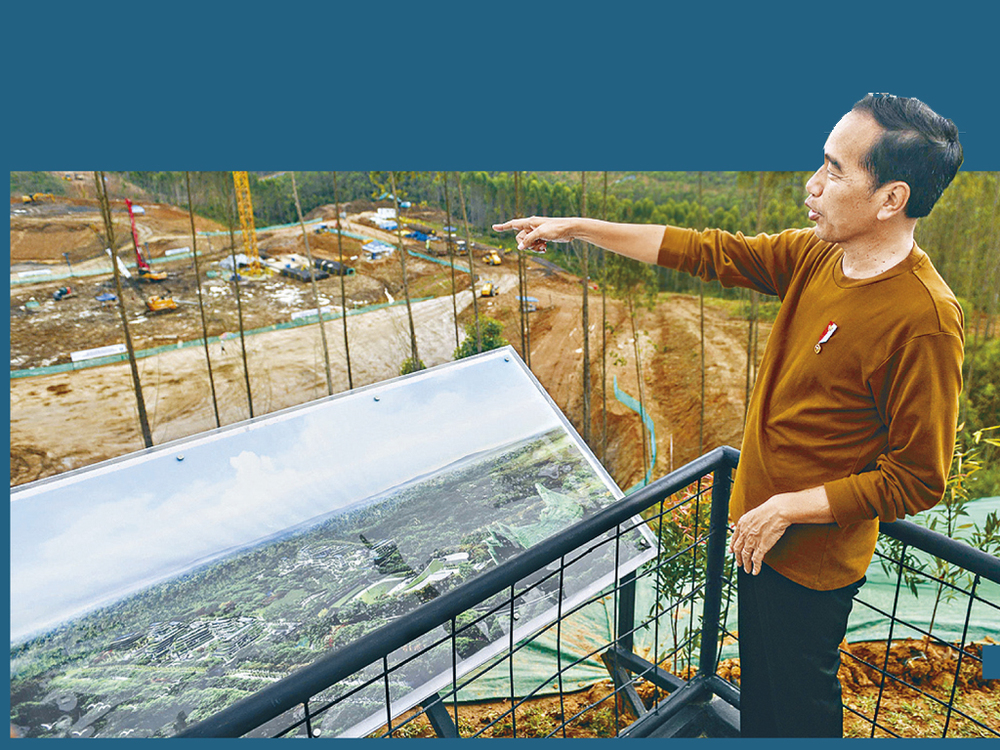
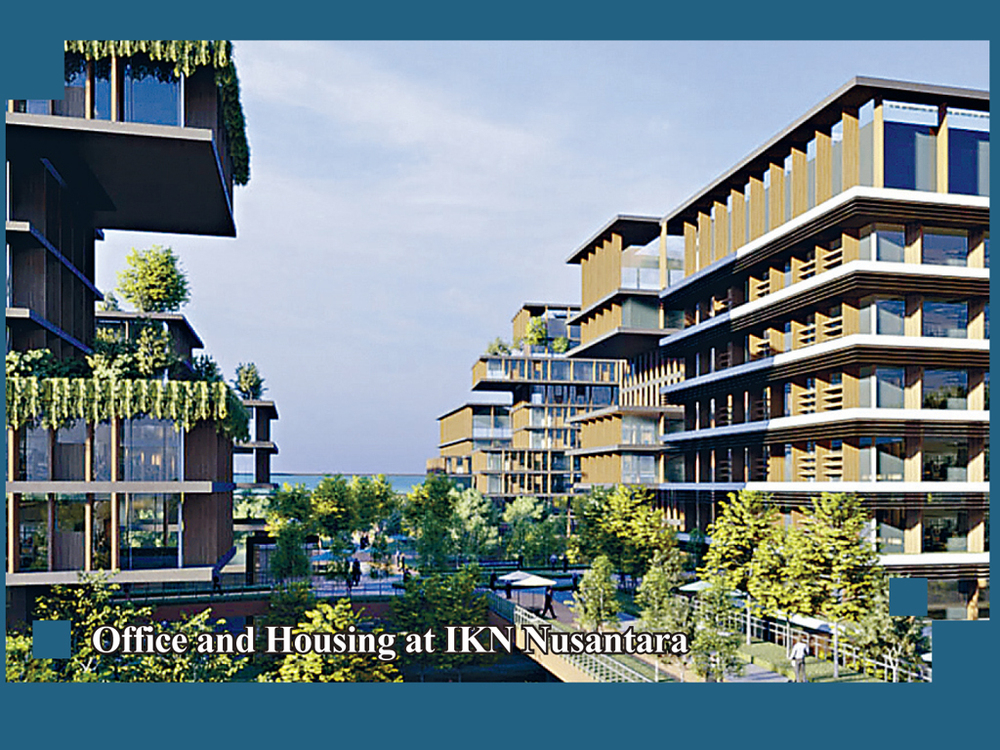
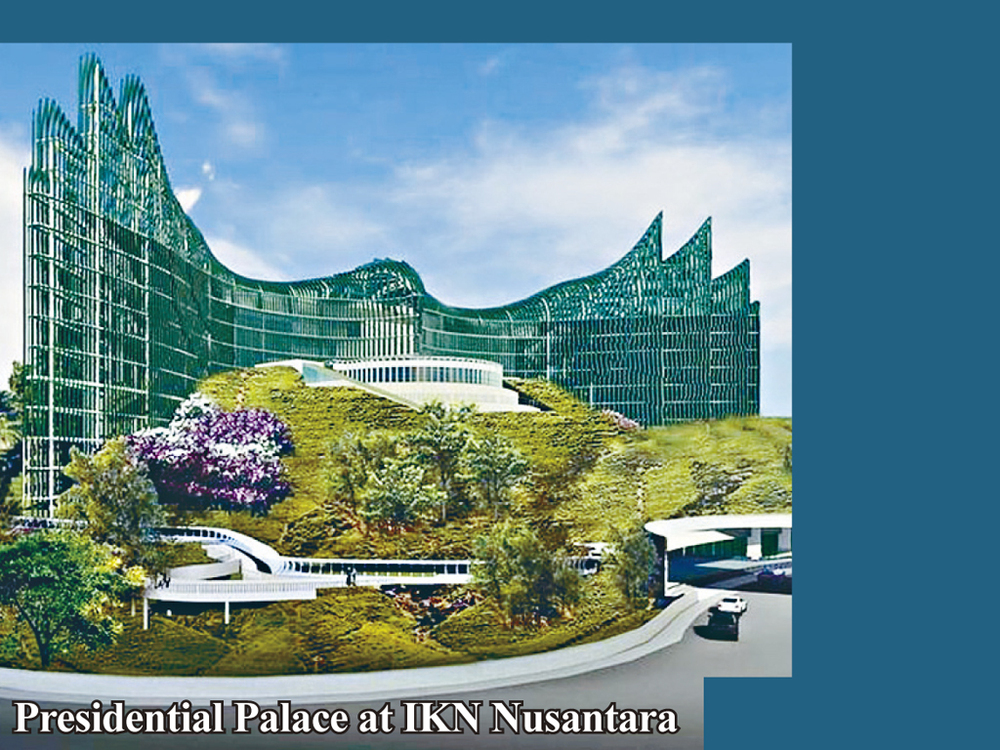
In the early stage until August 2024, construction is carried out in a number of areas and sectors: core government area with the construction of the presidential palace complex, ministry offices, and housing for state officials; as well as other key infrastructure sectors such as toll roads and dams. As of May 2023, construction progress has exceeded the expectation, thus the plan for the Government to start operating at IKN Nusantara in August 2024 is assumed to be on schedule.
Investing in IKN Nusantara
The construction cost of IKN Nusantara is estimated at 466 trillion Indonesian rupiah, proportioning 19% or 91 trillion rupiah from the state budget. Indonesian Government accordingly provides opportunities for investors to contribute the remaining cost, amounting to around IDR 375 trillion, with two types of schemes: public-private partnership (54%) and private sector (26%).
A total of twelve sectors and more than 300 investment projects can be taken up both by domestic and foreign investors, six of which are top priority sectors: renewable energy, housing, transportation, telecommunications, water services, and waste management. The other six are high priority sectors, consisting of technology, health facilities, commercial infrastructure, education, industry, and urban management.
Investment for the development of renewable energy is offered at around USD 0.6-6.14 billion, with land allocation of 2,622 ha in the south of the core government area. Housing, on the other hand, offers the most projects to investors with 307 projects valued at USD 0.67-1.09 billion with land allocation of 452 ha in the core government area. Investment in transportation sector offers five projects in the core government areas worth USD 4.2-5.2 million, including the provision of electric public vehicles, battery charging stations, vehicle lanes, as well as bus terminals and bus stops.
In high priority sector, education offers 63 investment projects including the construction of school buildings and provision of education services from early childhood to higher education with an estimated value of USD 64.4-105.4 billion. The education project area is allocated around 45 ha in the government core area and other areas. Health sector offers 7 investment projects, particularly hospitals, worths USD 4.5-7.3 million with an allocation of 4.3 ha of land.
To attract potential investors to contribute in developing IKN Nusantara, Indonesian Government has issued special ease of doing business in the region policy, in addition to a number of fiscal and non-fiscal incentives. Through Government Regulation Number 12 Year 2023, it is easier for business actors to obtain permits to invest in IKN Nusantara. This facility includes land acquisition as well as work permits and residence permits for foreign workers. More broadly, the fiscal and non-fiscal incentives have been offered to potential investors include tax holidays for large investors and MSMEs; VAT-free for investors in property, electric vehicle, construction, and waste management sectors; super deduction of tax for donations, vocational education, and research and development; as well as guarantee of data confidentiality and facilitation of transactions in foreign currencies for financial sector.
As of June 2023, Indonesian Government has signed more than 200 Letters of Intent with potential investors from friendly countries, such as Japan, Singapore, Malaysia, China, and South Korea. Referring to bilateral meeting between President Jokowi and CE John Lee a few weeks ago, Foreign Minister Retno Marsudi said that Indonesian Government had offered a number of prospective sectors in IKN Nusantara to potential Hong Kong investors, which include infrastructure, transportation, digital technology, and green energy. Acting Consul General of the Republic of Indonesia in Hong Kong, Slamet Noegroho, said that the sectors offered to Hong Kong were a testimony to Hong Kong’s capabilities in related sectors, in addition to efforts to continue enhancing economic cooperation, especially investment, which has been closely maintained between Indonesia and Hong Kong.