
Read More
The dismembered remains of 28-year-old socialite Abby Choi Tin-fung showed distinct bone cut marks consistent with a meat chopper and saw-like lacerations, a senior forensic pathologist testified on the 32nd day of the murder trial in the High Court.
ADVERTISEMENT
SCROLL TO CONTINUE WITH CONTENT
Testifying for the prosecution, the expert detailed autopsy findings showing extensive postmortem mutilation to the victim's shoulder, limbs, and pelvic region, alongside 7 blunt force injuries on her lower body sustained shortly before death from severe external impacts.
Dismembered parts exposes cut marks consistent with chopper
Expert witness and senior forensic pathologist Dr Kwok Ka-ki, who conducted the autopsy, told the court that Choi's right shoulder joint had been severed into multiple components, including the lateral scapula and humerus, with the inner scapula split into 3 fragments.
Substantial amounts of skin, muscle, and ligament tissue remained attached to the fragments. Kwok confirmed that cut marks along the edges of the bones were consistent with those inflicted by a meat chopper, though she could not determine the exact number of blows required to sever the bone structure.
She affirmed that all injuries to the right shoulder joint were inflicted postmortem, noting that bleeding would have been observed had the cuts occurred while the victim was still alive.
Addressing the recovery of the lower limbs, Kwok testified that both legs were retrieved from a refrigerator wrapped in two layers of black plastic bags.
The left lower limb remained connected to the left pelvis, sacrum, and lower lumbar spine, where the spinal column had been severed. Sharp, irregular, saw-like cut marks were identified along the lower left thigh and above the knee.
Kwok further testified that the right lower limb was severed above the right pelvis, with horizontal open wounds across the right lower abdomen and lower back. Portions of the right ovary, a section of the fallopian tube, and fragments of the bladder wall remained attached to the pelvic cavity wall.
She confirmed these were also postmortem injuries, explaining that such pelvic organs naturally remain attached along the internal wall when a human body is divided down the midline.
Autopsy reveals seven pre-mortem blunt force impact injuries to lower body
In addition to postmortem dismemberment, Kwok identified 7 recent injuries on Choi's lower body sustained prior to death that were considered relevant to the case.
These included two deep intramuscular bruises within the left pelvis, subcutaneous bruising on the left thigh and left knee, and bruises across the left calf and instep of the foot.
Kwok explained that the pelvic bruises were located deep within muscle tissue, indicating they were from blunt force trauma caused by violent external impacts. She pointed out that external blunt force trauma frequently produces internal muscular hemorrhaging, confirming that all 7 identified pre-mortem injuries were the result of forceful blunt impact.
Three family members deny murder charge but admit unlawful burial
The 3 defendants—Choi's former brother-in-law Anthony Kwong Kong-kit, former father-in-law Kwong Kau, and former husband Alex Kwong Kong-chi—face joint charges of murder and preventing the lawful burial of a body.
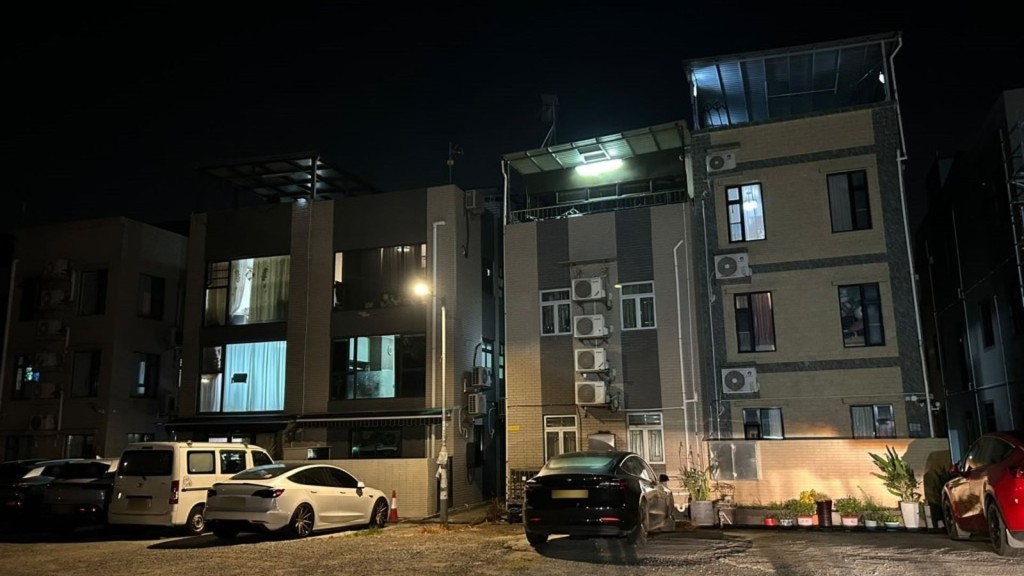
Prosecutors allege that the trio murdered Choi on 21 February 2023 inside the ground-floor unit of village house 56B in Lung Mei, Ting Kok Road, Tai Po, and subsequently prevented her lawful burial between 21 and 23 February 2023.
All 3 accused have pleaded not guilty to the murder charge but have pleaded guilty to preventing the lawful burial of a body.
The trial continues in English before Deputy High Court Judge Brian Keith.
The prosecution is led by external Senior Counsel Charlotte Draycott, alongside Senior Assistant Director of Public Prosecutions Gary Leung Yuk-hang, Senior Public Prosecutors Human Lam Hiu-man and Gabriel Ng Hay-lok, and Public Prosecutor Herman Wan Pui-hin. Anthony Kwong is represented by barrister Trevor Beel, Kwong Kau by barrister Oliver Davies, and Alex Kwong by barrister Andrew Raffell.