Read More
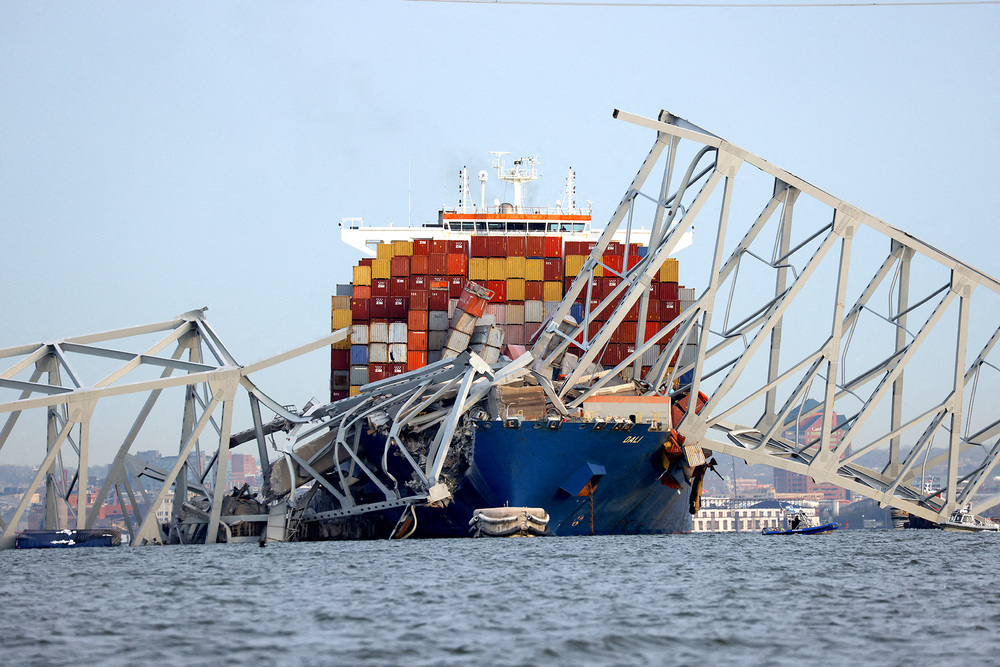
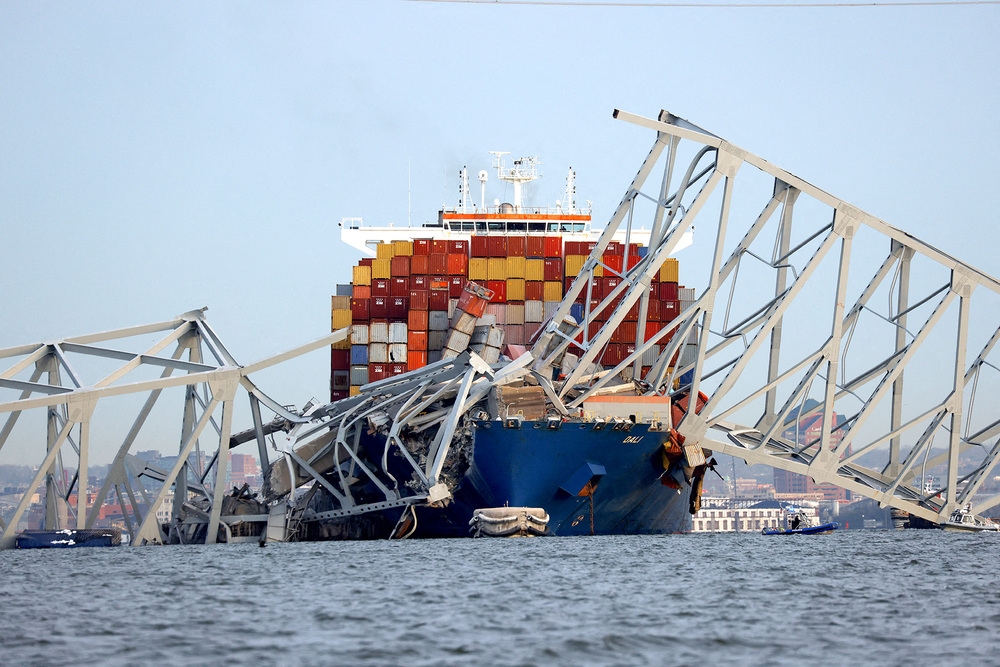
Terrorism does not appear to have been a factor in the collapse of a major US bridge that fell into Baltimore harbor after a container ship crashed into it.
ADVERTISEMENT
SCROLL TO CONTINUE WITH CONTENT
"There is absolutely no indication that there's any terrorism, that this was done on purpose," said Baltimore Police Commissioner Richard Worley.
Separately, the city's fire chief said emergency services scouring the site have found signs of a number of vehicles in water.
"Our sonar has detected the presence of vehicles submerged in the water," Baltimore City Fire Department chief James Wallace told reporters, adding: "I don't have a count of that yet."
He added that two people were pulled from the water after the bridge collapse, with one was in serious condition and the other was not seriously injured.
It was learned that at least seven vehicles plunged into the water, according to local news reports.
The cause of the ship collision has "yet to be determined," the managers of the Singapore-flagged Dali said Tuesday.
"Whilst the exact cause of the incident is yet to be determined, the 'DALI' has now mobilised its Qualified Individual Incident response service," the company said in a statement, adding they were "fully cooperating with Federal and State government agencies".
The container ship may have "lost propulsion" as it was leaving port, and crew on board notified Maryland officials they had lost control of the vessel, ABC News reported, citing an unclassified U.S. intelligence report.
"The vessel notified MD Department of Transportation (MDOT) that they had lost control of the vessel and an collision with the bridge was possible," ABC quoted the report by the Cybersecurity and Infrastructure Security Agency as saying. "The vessel struck the bridge causing a complete collapse."
At least 10 commercial ships that were sailing to the port of Baltimore have dropped anchor in waters nearby, data from ship tracking and maritime analytics provider MarineTraffic showed on Tuesday.
Port traffic was suspended until further notice, Maryland transportation authorities said.
The vessels that anchored included container and bulk carrier ships.
Baltimore port's private and public terminals handled 847,158 autos and light trucks in 2023, the most of any U.S. port. The port also handles farm and construction machinery, sugar, gypsum and coal, according to a Maryland government website.
"While Baltimore is not one of the largest U.S. East Coast ports, it still imports and exports more than one million containers each year, so there is the potential for this to cause significant disruption to supply chains," said Emily StausbA?ll, market analyst at Xeneta, an ocean freight shipping rate benchmarking and intelligence platform.
"Far East to U.S. East Coast ocean freight services have already been impacted by drought in the Panama Canal and recent conflict in the Red Sea, which saw rates increase by 150 percent, so this latest incident will add to those concerns."
(Reuters and AFP)
Read More: (Video) Baltimore bridge collapses after ship collision, sending vehicles into water