Life in Hong Kong is fast-paced, and mental stress is a health issue that many city dwellers, especially office workers, cannot ignore. In recent years, non-pharmacological adjunctive therapies have attracted much attention, and among them, horticultural therapy has promotion potential because it is easy to participate in and diverse in form. "Flower arranging" is not only a pleasing art, but scientific research has confirmed that it can effectively improve physical and mental health.
Horticultural Therapy Attracts Attention
Long-term stress can lead to autonomic nervous system dysfunction, causing blood pressure and heart rate to rise and increasing cardiovascular health risks. Sitting meditation helps relax body and mind, but for some people the process is relatively monotonous and may not be easy to sustain.
Some studies indicate that the flower arranging experience helps improve the mood of patients with depression and reduces feelings of tension and fatigue. The research team once compared the performance of 86 hospitalized patients in the experimental group and 24 in the control group, assessed mood changes through the Brief Mood Introspection Scale and smiley face scale, and monitored objective physiological indicators such as heart rate, blood pressure, and salivary cortisol. Results showed that flower arranging activities can effectively improve patients' emotional state and bring a relaxing effect.
Green Hemisphere/Yellow Triangle - The Most Significant Stress-Relieving Effects
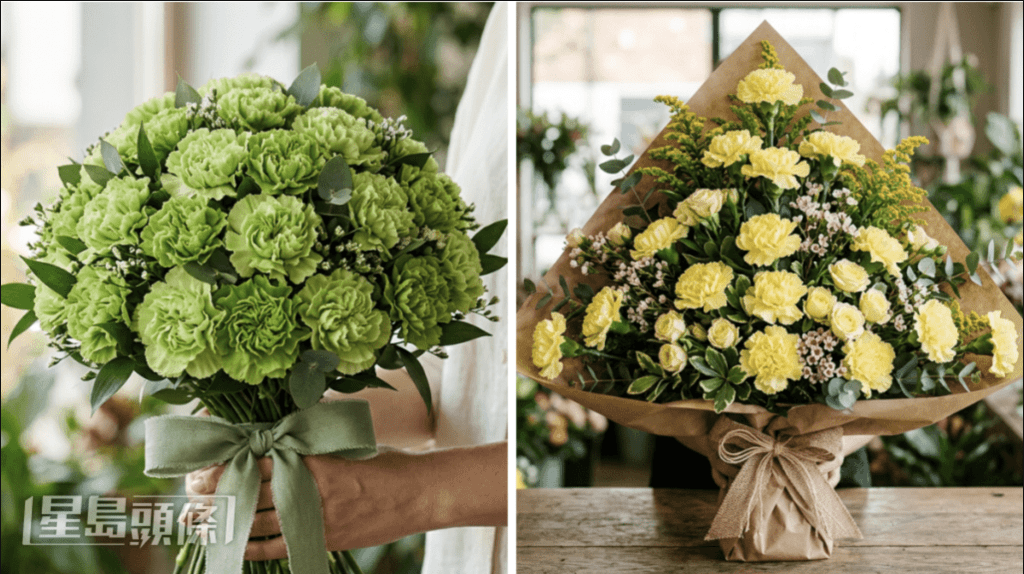
The team used red, yellow, and green carnations combined with 4 geometric flower shapes for the experiment, yielding an interesting finding: among many combinations, the "green hemisphere" and "yellow triangle" flower arrangements had the most significant effects in relieving stress and relaxing mood.
Mindful Flower Arranging: A Multi-Sensory Experience That Solves the Boredom of Meditation
"Mindful flower arranging" cleverly combines mindfulness with the horticultural experience, allowing people to achieve inner calm through visual, olfactory, and tactile stimulation. During the process, instructors guide participants to focus non-judgmentally on the texture, fragrance, and color of plants, learn to accept the imperfections of natural plants, and transform the act of flower arranging into an "anchor" for focusing on the present moment. This multi-sensory experience not only helps lower heart rate and blood pressure, but also adds fun to the stress-relief process, making it easier for people to persist. Compared with traditional sitting meditation, mindful flower arranging is easier to get into, and participants naturally enter a focused state through hands-on creation.
Low Space Requirements - Flexibly Integrated into Corporate Employee Benefits
Hong Kong has limited space, and large outdoor horticultural therapy activities are often restricted by venue. In contrast, flower arranging only requires a table and simple floral materials, and can be flexibly conducted even in indoor spaces such as offices, community centers, or small workshops. Mindful flower arranging can also be integrated into corporate employee support programs, attracting busy office workers to participate during lunch breaks or weekends, and as body and mind relax, regain work-life balance.
In summary, flower arranging is no longer merely an interior decoration that embellishes life, but also a natural remedy for soothing workplace anxiety and protecting cardiovascular health. In high-pressure Hong Kong, promoting simple mindful floral art can undoubtedly provide an oasis of tranquility for the souls of city dwellers.
Written by: Hilda Tsang Hiu-ting, Senior Lecturer, School of Nursing and Health Studies, Hong Kong Metropolitan University