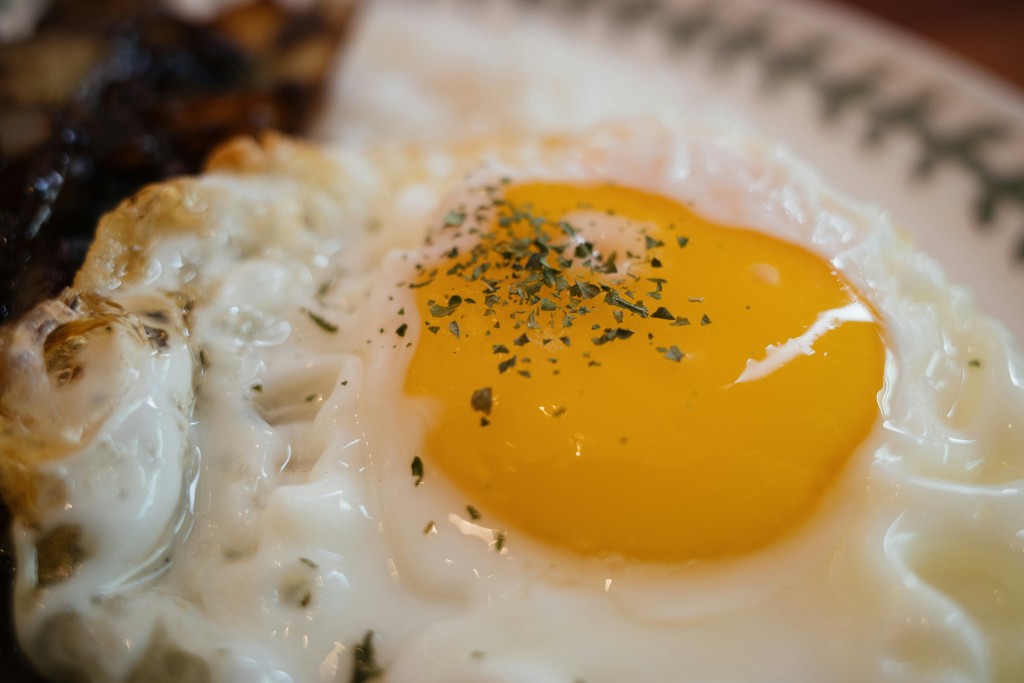
Fried eggs may look simple, but many people find that as soon as the egg hits the pan, the white spreads everywhere and the yolk breaks. Why does this happen? A Japanese cooking expert breaks it down—it turns out that directly adding oil to fry and adding oil too early are major taboos! As long as you master the correct order, you can fry a complete, beautiful, non-stick perfect egg.
Fried Eggs Often Fail? Expert Breaks Down the Taboo of Adding Oil Too Early
Japanese cooking expert Papuchan shares in a personal column that failed fried eggs are often not due to poor skill, but three common mistakes: adding oil too early, using too little oil, and cracking the egg into the pan from too high up.
Fried Egg Mistake 1: Adding Oil Too Early
Many people are used to adding oil before the pan is hot, but this is one of the culprits behind failed fried eggs. Especially with iron pans, moisture may remain on the surface before heating. If oil is added at this time, the water and oil cannot merge, making it difficult to form an even oil film. As a result, the egg easily sticks to the bottom, and when you forcefully scrape it up with a spatula, the white breaks and the yolk may also be pierced.
Fried Egg Mistake 2: Too Little Oil
For health reasons, many people only add a few drops of oil when frying eggs, but with too little oil, an adequate oil film cannot form between the egg and the pan surface, and the white will stick to the bottom. This is especially true for non-stick pans or iron pans with aged coatings, where less oil makes sticking even easier. When you forcefully scrape it up, the white will break apart and the yolk may also rupture. If you want to reduce oil use, you can choose a non-stick pan in good condition, but you still need to coat it with a thin layer of oil—never use completely no oil.
Fried Egg Mistake 3: Cracking the Egg In from Too High Up
Some people, for convenience, directly crack the egg into the pan from high up, but this creates a large impact force, the yolk easily breaks, and the white quickly spreads outward, making it difficult to maintain a round shape.
Expert Teaches the 5-Step Fried Egg Method
To fry a beautiful fried egg, follow these steps:
-
Preheat: Preheat the pan over medium heat for about 1 minute to ensure moisture completely evaporates.
-
Add oil: Add an appropriate amount of oil and swirl to spread the oil over the pan surface, forming a thin oil film.
-
Crack the egg: First crack the egg into a small bowl, then bring the bowl close to the edge of the pan and gently slide the egg into the pan.
-
Fry: Turn to low heat, and you can cover with a lid and fry until the white sets and the yolk is half-cooked.
-
Plate: Use a spatula to gently push the edge, confirm it is not sticking, and then plate.
Which Cooking Method Absorbs 100% of Nutrients—Boiled, Fried, Steamed, or Scrambled Eggs?
Dietitian Li Wan-ping points out that eggs are the highest-quality protein source most easily absorbed by the human body, containing protein, fat, vitamins, and minerals. However, the white and yolk have different nutrients. In one egg, the white makes up a larger portion, but most of the nutrition actually comes from the yolk. The yolk is rich in fat-soluble vitamins A, D, E, B2, B6, B12, folic acid, pantothenic acid, choline, selenium, zinc, iron, and more, and also contains lutein and zeaxanthin, which help protect the eyes. Although the yolk is the part with the highest cholesterol content, it is also rich in lecithin, which helps cholesterol metabolism. She suggests that eggs should be eaten whole to obtain the most complete nutrition.
Li points out that different cooking methods affect the nutritional absorption and digestibility of eggs:
-
Raw eggs: about 30% to 50%
-
Deep-fried methods (such as baked eggs): about 80%
-
Scrambled eggs, fried eggs: about 92% to 97%
-
Boiled eggs, steamed eggs: 100%
She states that animal fats are rich in saturated fatty acids and more likely to raise cholesterol, so boiled eggs are better than fried eggs, baked eggs, and omelettes. In addition, it is not recommended to eat eggs raw, because besides the risk of salmonella infection, raw egg white also contains substances that hinder the human body's absorption of biotin, affecting skin and hair health.
Source: Papuchan