Recently, videos and photos circulated on social media showing netizens wiping spring onions with tissue paper, revealing blue-green liquid. Some claimed to have bought "dyed spring onions," even alleging they contained the chemical "copper sulphate." The incident sparked public panic. Has "toxic spring onion" really infiltrated Hong Kong wet markets? Dr. Man Ka-man, Chairperson of the Hong Kong Food Professional Association, told Sing Tao Headline in an exclusive interview that such claims lack scientific basis, urging the public not to trust unverified information. She also teaches the correct way to wash vegetables to ensure food safety.
Expert: Judging "Dyeing" by Wiping Onions with Tissue Is Highly Unscientific
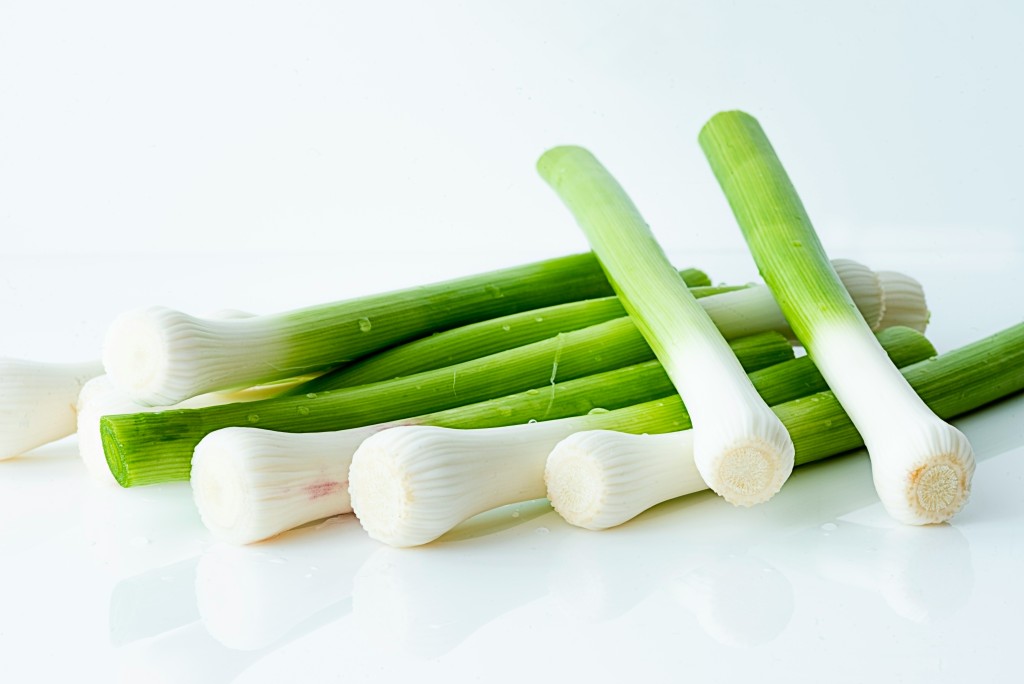
Man points out that in the viral videos, the spring onions are clearly no longer fresh. Most people wouldn't wipe onions with tissue paper to clean them—this method isn't scientific. She explains that when spring onions begin to rot, surface cells rupture, and natural pigments leak from the cells. Even a light touch with a finger can pick up the blue-green liquid, which is actually the onion's natural colour, not an artificial additive. Black substances on tissue are also normal dirt.
Man emphasises: "Whether it's natural or artificial pigment, it's very difficult to distinguish with the naked eye—chemical testing is required, because chemically, the two are quite similar." Therefore, the colour on a tissue alone cannot determine whether an onion has been dyed.
Natural vs. Artificial Pigments Hard to Distinguish
She notes that if the onion is fresh and intact, no colour should leak when rinsed. If colour leaches out immediately upon soaking, artificial dye may have been added. If the onion is rotten, bent, or stale, both natural and artificial pigments may leak, making visual judgment unreliable. She advises consumers to choose fresh, intact onions and avoid soft, mushy, or poor-quality ones.
How to Identify Fresh Spring Onions
-
Fresh: Firm texture; no colour leakage when washed.
-
Not fresh: Soft, bent, yellowed; natural pigments may leak after cell damage.
-
Shopping tip: Avoid soft, bent, or poor-condition onions.
What Is Copper Sulphate? Water-Soluble with Residue Limits
Regarding claims that the blue-green liquid is copper sulphate, Man explains that copper sulphate mixed with lime can create a fungicidal pesticide that helps extend crop shelf life. Such pesticides are used on various crops and are not completely banned, but residue concentrations are regulated by law.
She notes that most pesticides are water-soluble. Thorough rinsing with clean water can wash away surface residues. Generally, people won't eat large amounts of spring onion at once, nor consume enough pesticide to cause discomfort. "If you really ate 1g (of onion), you might have a reaction, but you wouldn't normally eat that much, and you wouldn't eat a large amount at once." Thorough washing makes it safe to eat.
Correct Washing Method: Rinse Under Running Water for 10 Minutes, Separate and Rinse Again
Man recommends following the Centre for Food Safety's washing method:
-
Rinse the produce under running water for about 10 minutes.
-
Tear the onions apart into sections and rinse each piece individually, paying special attention to the base where residue accumulates.
-
Rinse twice more. The entire process, rinsing with clean water for about 10 minutes, effectively removes most water-soluble pesticides.
Expert Appeal: Don't Trust Information Without Scientific Basis
Man advises the public that food safety must be based on scientific evidence, not unfounded online rumours. She states: "Defining a stale onion as 'dyed toxic onion' based solely on a netizen wiping it with a tissue is extremely unfair to farmers and vendors who grow onions, and it also causes unnecessary panic among consumers." She urges those lacking expertise in food science or agricultural technology not to spread such unverified images or videos that may cause public panic. She also reminds the public to first examine the publisher's professional background when receiving such information, and to analyse it scientifically and rationally—never blindly believing everything.
Reporter: Irene