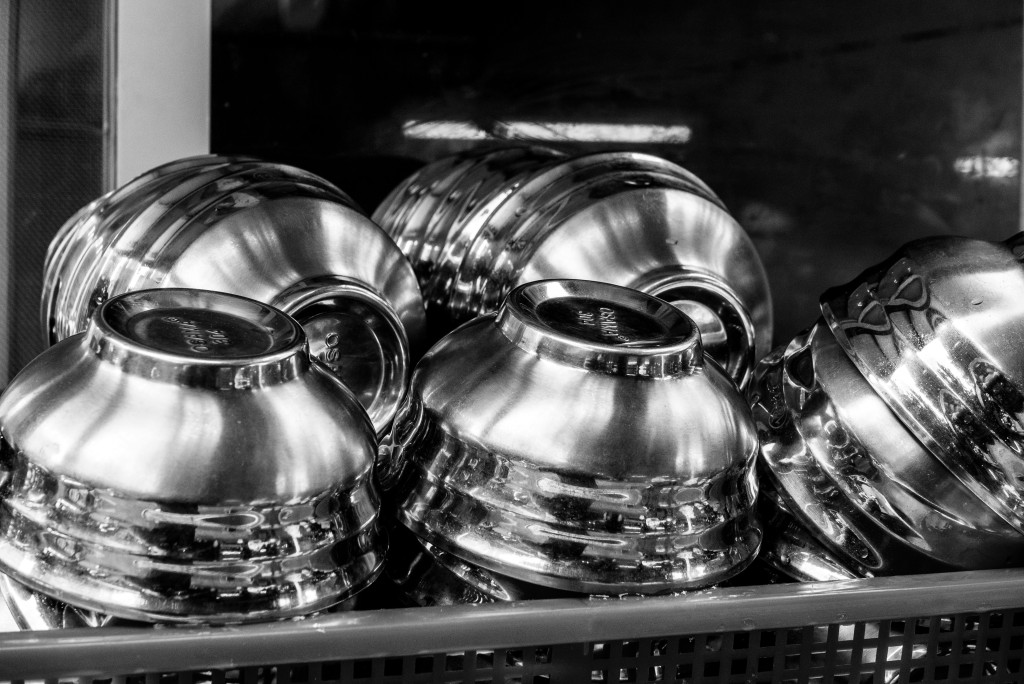
As the new school year begins, many parents are buying new stainless steel bowls and cutlery for their kindergarteners. Stainless steel is durable and easy to maintain, making it a household staple. A netizen, "dinosaurs_ni," shared her struggle on Threads: her child's teacher had told her to wipe the bowls with cooking oil, but after doing so, the paper towel turned "blacker and blacker." She wondered, "It seems like I can never wipe it all off," and asked for help on how to clean them properly.
Why Black Oil Appears on Stainless Steel Tableware
The poster added that she had tried using dough to absorb the residue, but perhaps because she had applied too much oil beforehand, the dough couldn't pick up the black marks. The post sparked heated discussion, with many experienced users offering tips: some suggested "using more cooking oil to wipe several more times—oil dissolves oil—and let it sit overnight before washing." Others recommended "boiling the utensils in water with sodium percarbonate for a few minutes, then washing with mild detergent," or using baking soda, white vinegar, or stain-removing powder.
During manufacturing and polishing, factories use stamping oils or polishing oils to reduce friction between metal and moulds. If pre-shipping cleaning is inadequate, industrial black oil remains on the surface. Toxicologists warn that such lubricants contain organic compounds with neurotoxic properties. If not thoroughly cleaned before use by young children, there's a risk of ingesting toxins.
3 Methods to Remove Black Oil
Housekeeping expert Lulu recommends these 3 effective methods:
-
Oil Dissolves Oil: Spray a little cooking oil onto the stainless steel utensil. Using the solvent effect, wipe inside and out with kitchen paper until no black marks remain.
-
Dough Absorption: Mix flour and water in about a 2:1 ratio to form a dough. Roll and press the dough over the utensil to absorb oil trapped in crevices.
-
White Vinegar Boiling: Add white vinegar (or sodium percarbonate/baking soda) to a pot of water, place the stainless steel items in, and boil for about 30 minutes. The heat and acid dissolve the oil.
Whichever method you use, the final step is crucial: wash thoroughly with mild detergent and a sponge, rinse off all residue, and air-dry upside down to ensure the utensils are completely clean and safe for children.
Avoid 200-Series Stainless Steel for Food Use
Another concern: 200-series stainless steel contains 5.5% to 7.5% manganese—about 2.75 times higher than food-grade 304 stainless steel—posing serious food safety risks. Nephrologist Dr. Yan Zonghai warns that 200-series utensils are not only more prone to rust but may also release high levels of manganese. Long-term ingestion of manganese can have neurotoxic effects, damaging the nervous system, liver, and kidneys, and potentially affecting brain function—leading to weakness, dizziness, and coordination problems. Parents should always check the material before buying.
Sources: Threads @dinosaurs_ni, IG @lulu.1021_