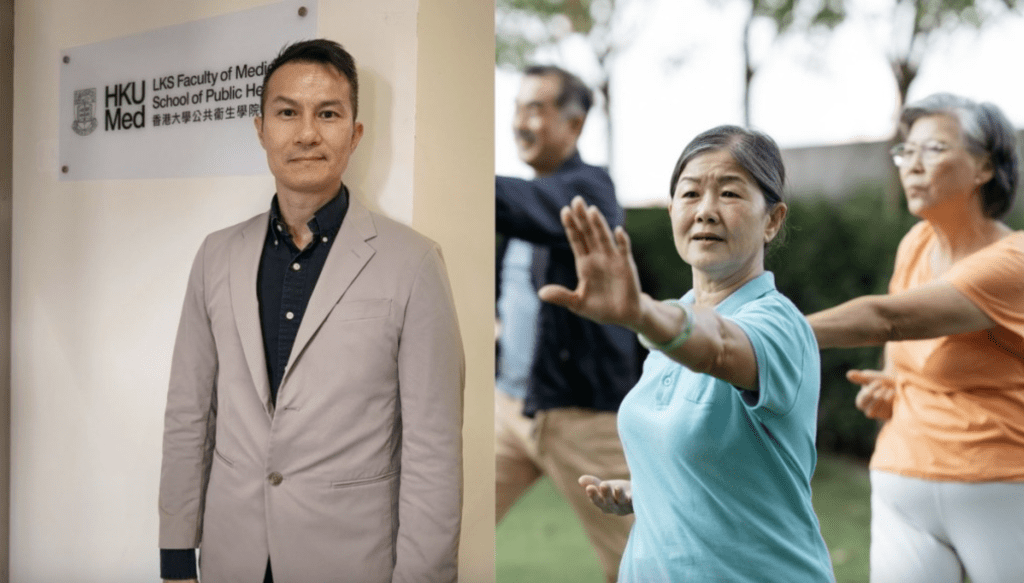
Many city dwellers struggle with insomnia, and the current first-line non-drug therapy, Cognitive Behavioral Therapy for Insomnia (CBT-I), often comes with high costs. A new clinical study from the University of Hong Kong (HKU) Faculty of Medicine brings good news for insomnia sufferers, proving that the traditional Chinese martial art Tai Chi has significant and long-lasting therapeutic effects for chronic insomnia, with long-term efficacy comparable to CBT-I.
The Challenges of Insomnia Treatment & HKU's Clinical Trial
Insomnia is the most common sleep disorder among older adults and is closely linked to the risks of cardiovascular disease, mental health issues, and cognitive decline. While CBT-I is the internationally recognized standard treatment, its high cost and severe shortage of qualified therapists make it difficult to access widely. Previous observational studies have suggested Tai Chi might aid sleep, but rigorous evidence was lacking. In light of this, a research team from the School of Public Health at HKU Faculty of Medicine conducted a randomized controlled trial in Hong Kong between May 2020 and July 2022. The team recruited 200 participants aged 50 or older suffering from chronic insomnia and randomly assigned them to two groups:
- Tai Chi Group: Received a 3-month training program in the 24-form Yang-style Tai Chi, with two 1-hour sessions per week.
- Cognitive Behavioral Therapy (CBT-I) Group: Received standard Cognitive Behavioral Therapy for Insomnia.
Research Results Confirm Tai Chi's Long-Term Efficacy in Improving Insomnia
The research team assessed participants' insomnia using the internationally recognized Insomnia Severity Index (ISI) at three key time points: before the intervention, at 3 months, and at 15 months. The results showed that the two therapies demonstrated different strengths at various time points:
- Short-term Effects (3 months):
- The CBT-I group's insomnia score significantly decreased by 11.19 points; the Tai Chi group's score decreased by 6.67 points.
- The difference between the two groups was 4.52 points, indicating CBT-I had a stronger ability to relieve symptoms in the short term.
- Long-term Effects (15 months):
- The Tai Chi group's insomnia score showed a cumulative reduction of 9.51 points, with the improving effect continuing to strengthen.
- The CBT-I group's improvement was 10.18 points. The efficacy gap between the two groups narrowed substantially to only 0.68 points.
- This means Tai Chi possesses long-term therapeutic efficacy for improving chronic insomnia.
Integrating Insomnia Treatment into Daily Life
Professor Parco M. Siu, Head of the Division of Kinesiology at HKU's School of Public Health, stated that this research provides solid scientific evidence: "Cognitive behavioral therapy can rapidly alleviate insomnia symptoms, while Tai Chi can provide sustained long-term improvement."
Siu emphasized the advantages of Tai Chi. Many middle-aged and older adults suffering from chronic insomnia often face long waiting times for CBT-I and may not be able to afford the high costs in the long run. Tai Chi serves as a practical and feasible alternative, capable of improving sleep while also promoting overall physical and mental health.