Read More
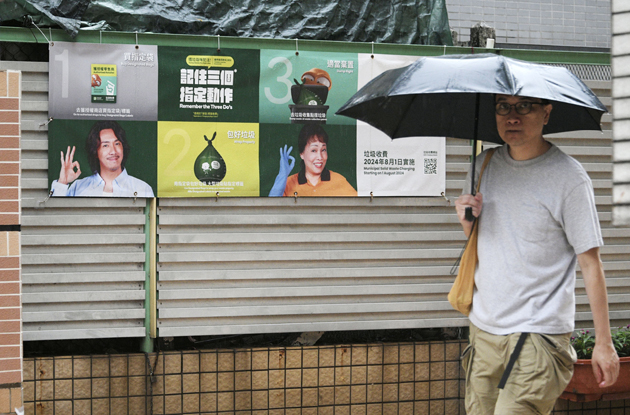
In hindsight, the scheme to charge households according to the amount of waste they dump was doomed from the start.
ADVERTISEMENT
SCROLL TO CONTINUE WITH CONTENT
The fact that households were required to buy special bags of different sizes designated by the government was already a disincentive.
Then, making cleaners liable to legal consequences if they did not finish the rest of the collection correctly made an unpleasant job even more unpleasant.
The scheme defeated itself through its poor design rather than by the public, many of whom had been trying to live in a greener manner than before.
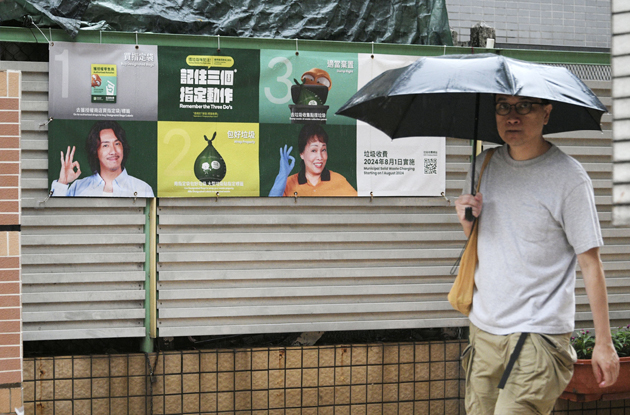
When deputy chief secretary Warner Cheuk Wing-hing informed the Legislative Council that the controversial waste-charging scheme had been shelved indefinitely, many people breathed a sigh of relief for the very simple reason that they no long had to tackle the issues.
From a conservation point of view, it was definitely a setback.
Although policy makers like to say they are proud of Hong Kong being an advanced international city, the irony is that it is certainly not when it comes to the subject of waste management.
The city still relies on landfills to deal with waste that could be recycled despite the fact that other advanced cities have already separated recyclables from non-recyclables for a long time.
It is true that, when the law to provide for the now-shelved pay-as-you-throw scheme was prepared and passed by Environment and Ecology Secretary Tse Chin-wan's predecessors, one of the primary objectives was to reduce the amount of waste dumped every day in order to extend the life span of the city's landfills.
If the city continued to dump waste at the current rate, landfills would likely fill up more quickly than planned.
Look around and Tse can readily discover that a more common practice to reduce waste was through recycling.
A household used to practicing waste separation at the source is able to reveal that a bin fills up quickly if food waste, recyclables like paper and plastic packaging and non-recyclables are dumped together.
But about two-thirds of bin space could be saved if the recyclables were discarded separately.
It is dismaying to see the quantity of paper wraps, plastic packaging, metal cans and glass bottles involved in groceries - and all these recyclables occupy space in the bins.
What the government does not have is a modern waste management strategy or an industry that can recycle waste into something of new economic value.
It was not funny at all when Hong Kong almost lost its only drinks-carton recycler Mil Mill when the quasi-government Hong Kong Science Park refused to renew its lease last year. It was an episode full of sarcasm.
Mil Mill's experience over the years showed it was possible to operate a recycling business in Hong Kong despite its high population density.
What is missing is government policy.
It is pointless for both officials to repeat how committed the government is to improving waste management. Cheuk and Tse should know that actions speak louder than words.