Read More
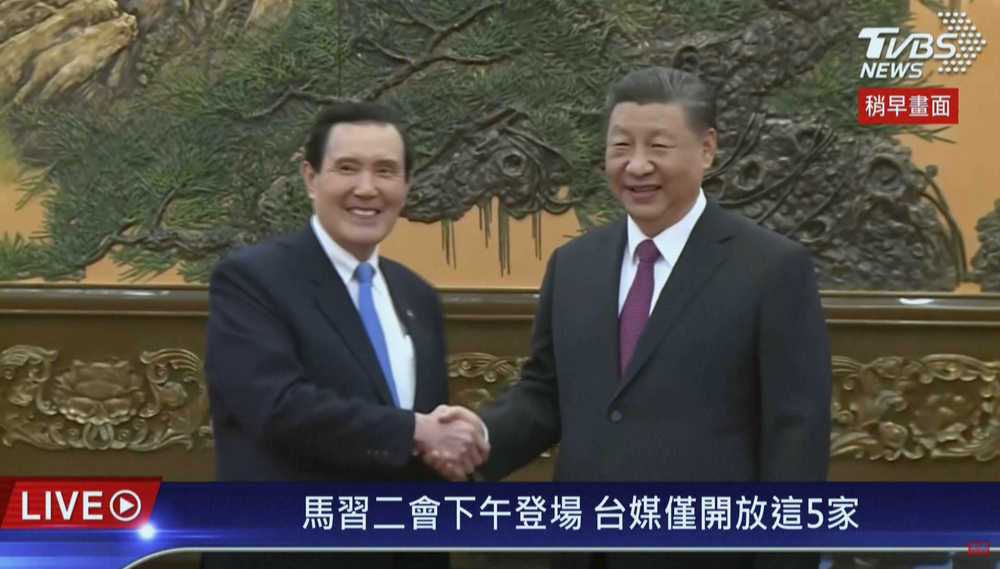
President Xi Jinping told former Taiwan President Ma Ying-jeou yesterday that outside inference could not stop the "family reunion"between the two sides of the Taiwan Strait and that there are no issues that cannot be discussed.
ADVERTISEMENT
SCROLL TO CONTINUE WITH CONTENT
Ever since the Republic of China government fled to Taiwan in 1949 after losing a civil war to Mao Zedong's communists, no serving Taiwanese leader has visited China.
Ma, president from 2008 to 2016, became the first former Taiwanese leader to visit China and is now on his second trip to the country, at a time of simmering military tension across the strait.
He first met Xi in Singapore in late 2015 for a landmark summit shortly before the current Taiwan president, Tsai Ing-wen, won the election.
Meeting Ma in Beijing's Great Hall of the People, Xi said that people on both sides of the strait are Chinese.
"External interference cannot stop the historical trend of reunion of the country and family," Xi said.
Xi did not elaborate but typical Chinese terminology refers to external interference as the support Taipei gets from countries like the United States, especially arms sales which infuriate Beijing.
"There is no rancor that cannot be resolved, no problem that cannot be discussed and no force that can separate us," Xi proclaimed.
China has never renounced the use of force to bring democratically-governed Taiwan under its control and has ramped up military and political pressure to assert its sovereignty claims.
Ma told Xi that tensions have caused unease for many Taiwanese. "If there is a war between the two sides, it will be unbearable for the Chinese people," Ma said, using a term that refers to people who are ethnically Chinese rather than their nationality.
Xi called Ma "Mr Ma Ying-jeou" rather than former president, given neither the Chinese nor Taiwanese governments formally recognize each other. Ma called Xi by his title as head of the Communist Party - general secretary.
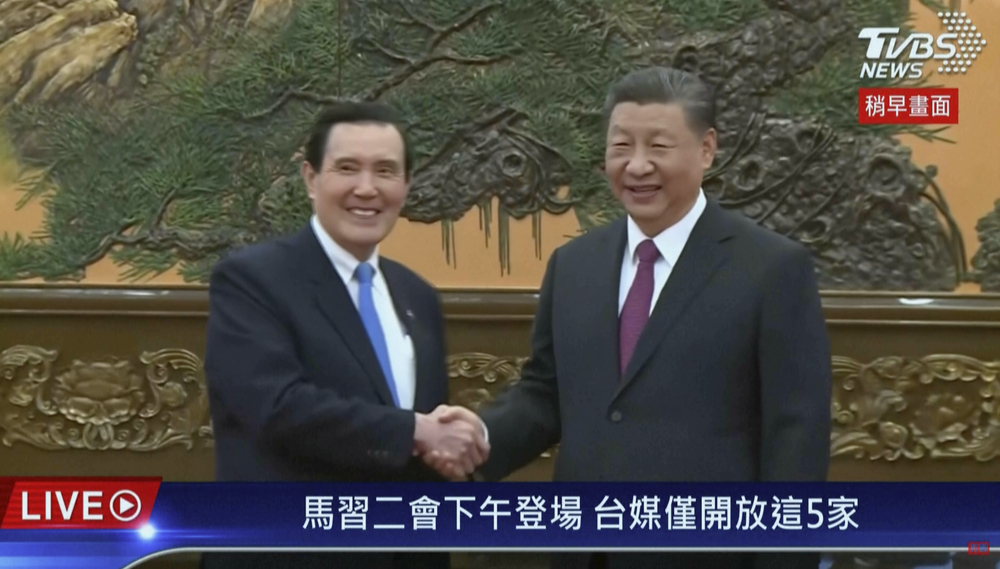
Ma Ying-jeou is met by Xi Jinping at the Great Hall of the People. AP