Read More



Night Recap - October 23, 2026
10 hours ago




Late police constable Chu Chun-kwok to receive full honors funeral on Fri
22-10-2026 15:33 HKT
Kyle Kennedy, granddaughter of Robert F. Kennedy, dies at 42
22-10-2026 04:11 HKT
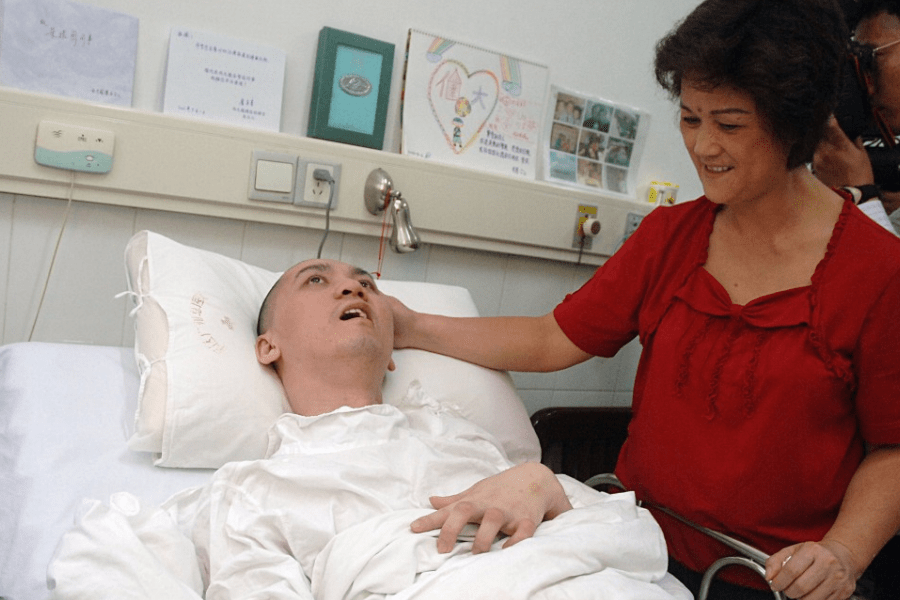
A speech reconstruction machine that speaks for people with a speech disorder, including stroke victims and patients with brain injuries, Alzheimer's and Parkinson's diseases, has been developed by researchers at Chinese University.
The invention earned the research team at the university's Center for Perceptual and Interactive Intelligence a champion award in the "SciTech Challenge 2021" competition in October.
The center - founded last year and headed by the university's Department of Systems Engineering and professor Helen Meng Mei-ling - is one of the university's six research centers under the InnoHK scheme at the Science Park in Pak Shek Kok that encourages research collaboration.
Meng said the machine targets patients' dysarthria - a condition characterized by losing control of the voice box or slurring words due to damaged, paralyzed or weakened speech production muscles.
"These patients' speech can be hard to comprehend, but their speech can be reconstructed through the machine learning function," she said.
Also among the center's inventions is "Real-time Decentralized Video Analytics," which sees smooth real-time communication between devices via a unique code.
A "smart lamppost" in the university's parking lot uses the technique, which can "communicate" with incoming vehicles in real-time.
Another invention at the center excels in recognizing various road situations, a member of the center said.
But he said the system's decision-making ability on roads has yet to improve.
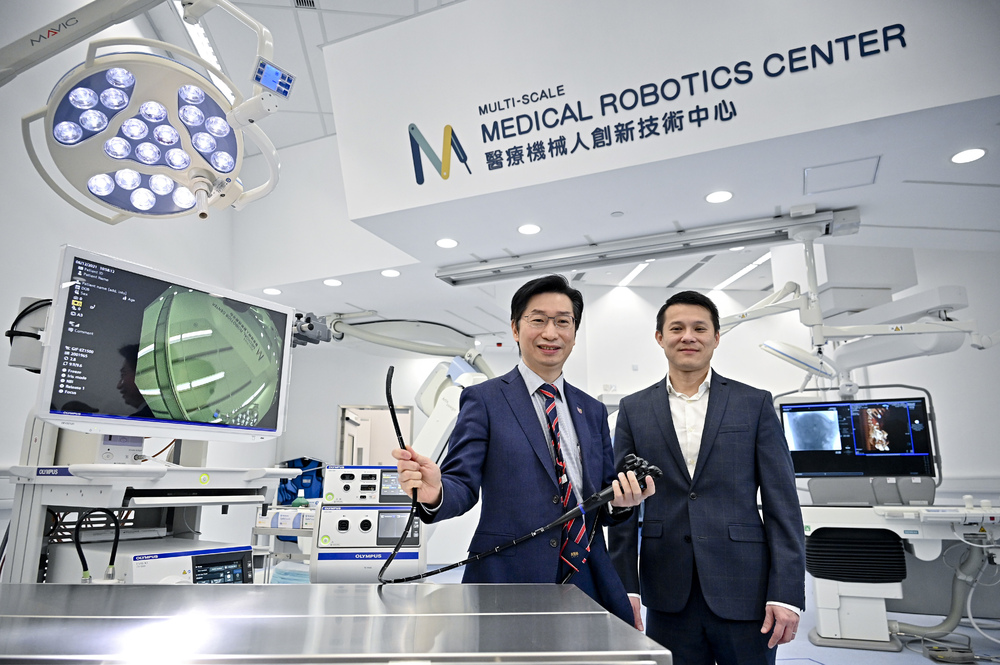
Also on the list of highlighted inventions is the "Multi-Scale Medical Robotics Research Lab" in the Multi-scale Medical Robotics Center.
The lab, founded in 2019, is equipped with diagnostic and therapeutic robotics, such as a C-Arm X-Ray machine, an MRI machine and a medical milling machine to enhance diagnosis and treatment efficacy.
Associate professor at the university's Department of Mechanical and Automation Engineering Samuel Au Kwok-wai said both X-Ray and MRI scans could be done in the lab instead of in two separate rooms.
Professor at the university's Department of Surgery Philip Chiu Wai-yan said engineers could help doctors solve challenges that arise in the lab, but doctors would also need to examine if the engineers' solutions are appropriate for medical decisions.
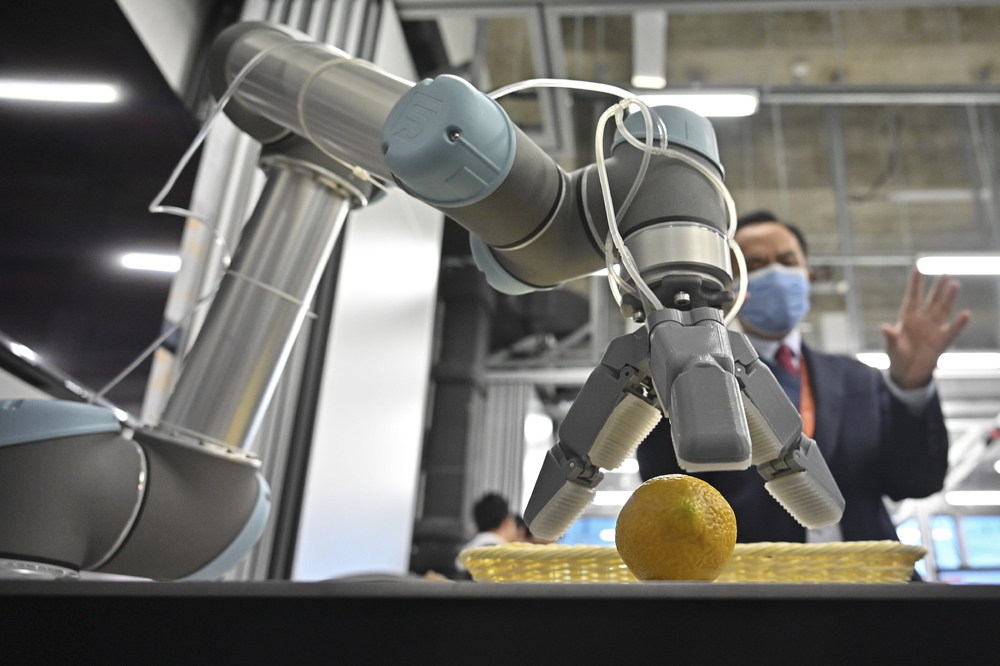
Meanwhile, the university's Center for Logistics Robotics has developed a robotic arm equipped with a 3D camera, which can grab and distribute goods. The center helps companies such as DHL and Alibaba.