Read More
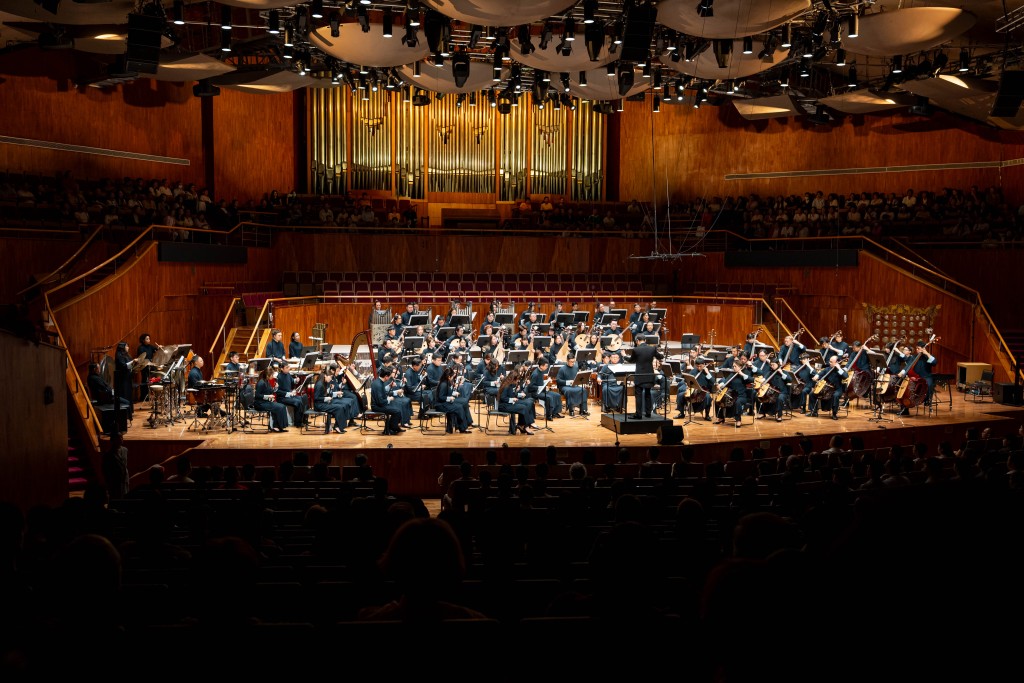
Even after the final note had faded, many audience members remained in their seats at Symphony Hall, Xinghai Concert Hall. Thunderous applause and cheers brought the Hong Kong Chinese Orchestra (HKCO) and its guest soloists back to the stage for repeated curtain calls, while listeners lingered in the hall, reluctant to let the evening end.
ADVERTISEMENT
SCROLL TO CONTINUE WITH CONTENT
For one returning audience member, the concert offered a new experience despite its familiarity. “It's truly stunning. I've been to this concert for the past three years . Each one has a different vibe. Overall, it's just so powerful.”
That response captured the energy surrounding The Spirit of the Masters, presented in Guangzhou on 6 November as a key programme of the GBA Culture and Arts Festival. Conducted by HKCO Artistic Director and Principal Conductor for Life Yan Huichang, the concert brought together history, literature, Chinese opera and contemporary orchestral expression, demonstrating how Chinese music can remain rooted in tradition while continually finding new voices.
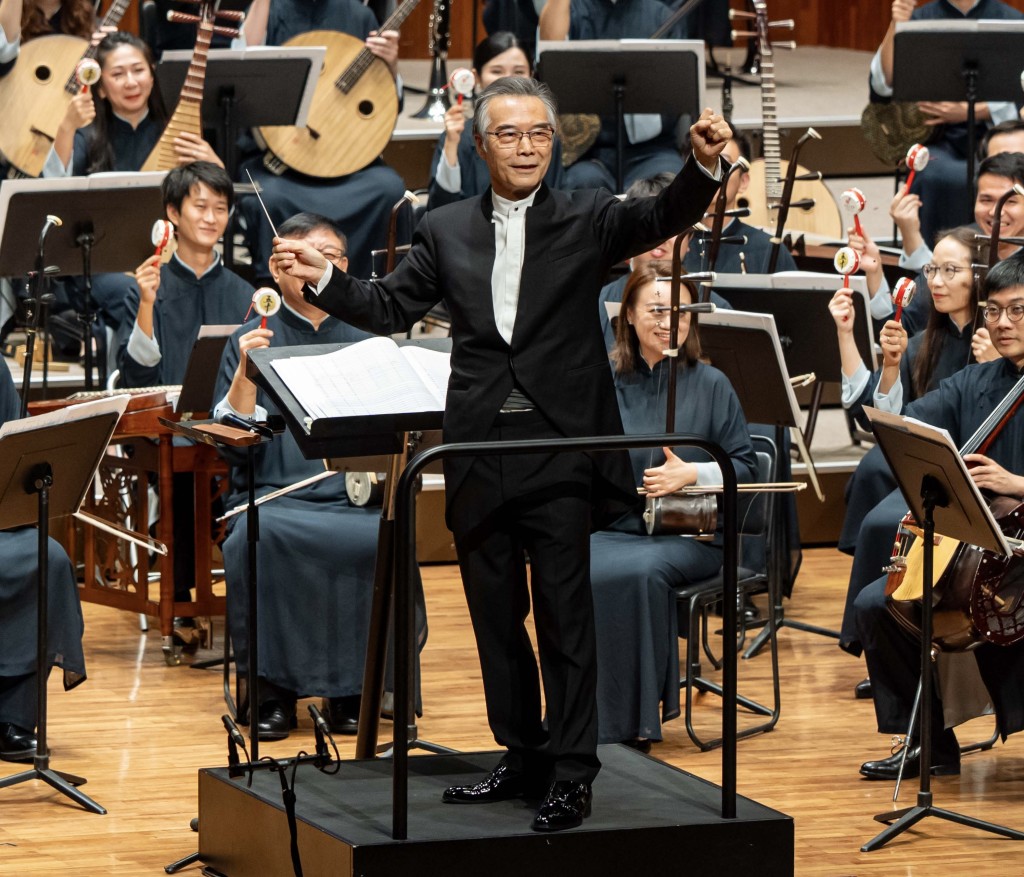
Prof Yan Huichang, Artistic Director and Principal Conductor for Life of the Hong Kong Chinese Orchestra, said: “I have great affection for Guangzhou’s music lovers. Your enthusiastic applause will always be the greatest motivation for the Orchestra to give its all.”
Following its warmly received Guangzhou presentation, The Spirit of the Masters will move to the Hong Kong Cultural Centre Concert Hall on 21 November. While the two concerts share the same artistic framework and several major works, the Hong Kong programme features Yan Huichang’s sanxian concerto Nuo, performed by Zhao Taisheng, in place of The Xianqiang Rhapsody with Wang Kun, giving local audiences a distinctive interpretation of the concert’s central theme.
A musical dialogue across traditions
The Guangzhou concert featured dizi player Wang Junkan, cellist Trey Lee and Wang Kun, a master of pixianhu and gubanhuai. Its programme included works by Zhao Jiping, Wang Liping, Jia Daqun and Yan Huichang, each approaching Chinese cultural traditions from a different musical perspective.
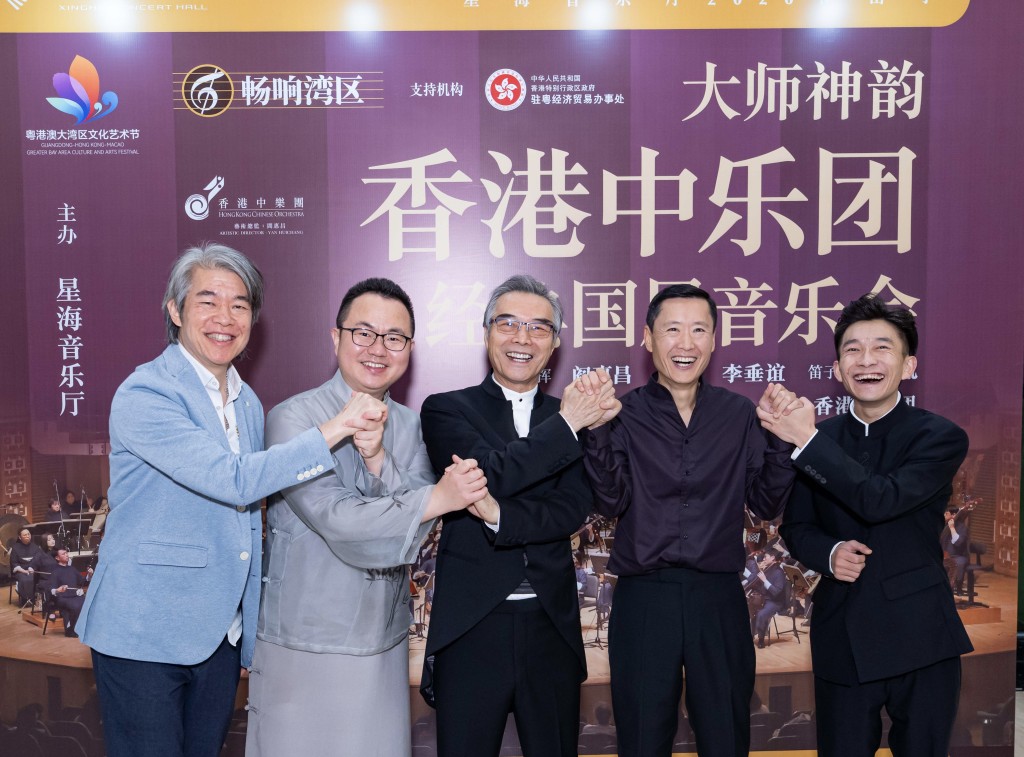
(From left) Mr Chew Hee Chiat, Assistant Artistic Director and Resident Conductor of the Hong Kong Chinese Orchestra; Mr Wang Junkan, renowned young dizi and xiao player; Prof Yan Huichang, Artistic Director and Principal Conductor for Life of the Hong Kong Chinese Orchestra; Mr Trey Lee, internationally renowned cellist; and Mr Wang Kun, pixianhu and gubanhuai performer from the Shaanxi Heyang County Xianqiang Puppet Troupe.
A highlight was the world premiere of the Chinese orchestra version of The Dream of the Red Chamber Capriccio by Wang Liping for Cello and Chinese Orchestra, arranged by Alfred Wong and Trey Lee. The performance placed the cello’s lyrical Western voice within the colours, textures and scale of a Chinese orchestra, opening a fresh conversation between different musical traditions.
One audience member described the effect in deeply personal terms: “Every note resonates deep within the soul. My favourite is 'The Dream of the Red Chamber Capriccio by Wang Liping for Cello and Chinese Orchestra.' It was powerful and refreshingly new. The interaction of rattle drum at the end was fun too.”
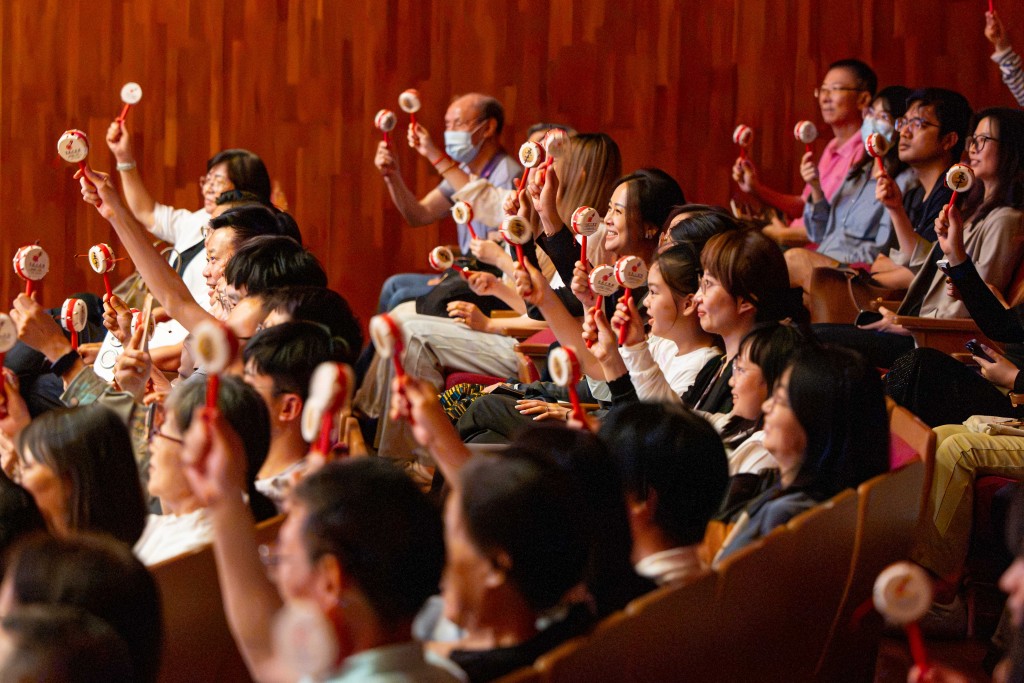
The entire audience joined in an excerpt from Let the Thunder of Drums Roll VII.2023 on rattle drums, creating a lively atmosphere.
The rattle-drum interaction was part of a lively finale that brought performers and listeners together. Alongside the concert’s carefully constructed artistic programme, this direct audience participation gave the evening an approachable, celebratory quality.
HKCO extended that connection beyond the concert hall two days later, when its sheng section performed outdoors on Ersha Island. Set against a green urban landscape, the free concert presented the ancient instrument through traditional melodies and contemporary ensemble arrangements. The programme included Suite from Miyazaki Hayao’s Animation Pictures, alongside other inventive works that revealed the sheng’s tonal range and versatility.
The outdoor appearance also continued the momentum of the International Sheng and Reeds Festival 2026. In March, the Festival assembled 1,230 reed-instrument players from Hong Kong and overseas to set a Guinness World Record for the largest reed instrument ensemble. By taking professional performances into a relaxed public setting in Guangzhou, HKCO brought the sound of the sheng closer to the community while extending cultural exchange beyond formal venues.
The cello as a singing voice
For Trey Lee, the new version of The Dream of the Red Chamber Capriccio marks both his first collaboration with a Chinese orchestra and his first performance alongside Chinese instruments. The partnership carries particular meaning for the Hong Kong cellist: the cello embodies a Western musical tradition, while HKCO represents the cultural character of Hong Kong and Chinese music on the international stage.
Creating the arrangement required the artists to consider how the cello could retain its expressive presence against the forces of a full-sized orchestra. Alfred Wong took primary responsibility for the orchestration, while Lee adapted the solo cello part. Their work sought not simply to place one musical tradition beside another, but to allow the two to listen and respond to each other.
Lee sees the cello’s affinity with the human voice as central to the work’s emotional power.
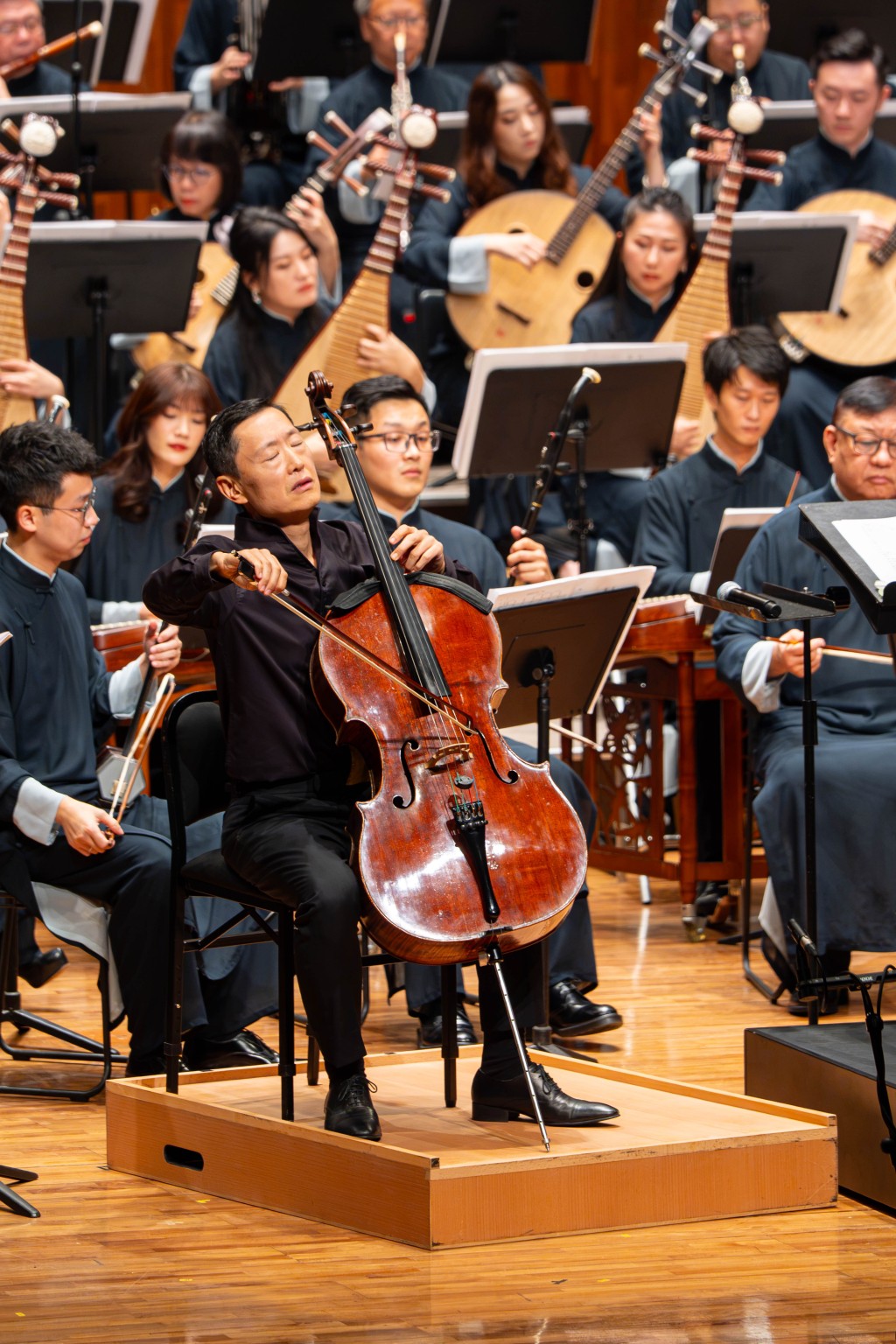
Cellist Trey Lee co-arranged The Dream of the Red Chamber Capriccio by Wang Liping for Cello and Chinese Orchestra with Alfred Wong and performed as the soloist in the world premiere of its Chinese orchestral version.
“If you ask classical music audiences anywhere in the world, they will tell you that the cello is the instrument closest to the human voice. When the cello interprets The Dream of the Red Chamber, it sounds almost like singing—as though a soprano were pouring out her heart.”
Hong Kong audiences will hear the Chinese orchestral version for the first time on 21 November. Supported by the full ensemble and working closely with Yan Huichang, Lee brings the familiar emotional world of Wang Liping’s music into a newly expanded soundscape.
Four works and four perspectives
The Hong Kong programme opens with Zhao Jiping’s Guo Feng, which draws on the ancient melody Three Variations on Plum Blossom. Through two sets of variations and shifting harmonic colours, the work moves through hardship and sorrow towards endurance and resilience.
The programme then moves to Yan Huichang’s sanxian concerto Nuo, performed by Zhao Taisheng. Inspired by one of the three major religious ceremonies of ancient China, the work draws on the sanxian’s robust timbre and virtuosic character to evoke the earthiness and dramatic force of age-old ritual.
Jia Daqun’s Capriccio: The Melodies of Bamboo inspired by Kun Opera, from the Concerto Cycle of Impressions of Liyuan (Chinese Opera), follows with the dizi at the centre of a rich musical panorama. Performed by Wang Junkan, its melodies evoke the atmosphere of Kunqu opera troupes both on and off stage, while its changing harmonies suggest landscapes stretching from China’s northern frontiers to its southern rivers.
Completing the programme is the Hong Kong premiere of The Dream of the Red Chamber Capriccio by Wang Liping for Cello and Chinese Orchestra. With Lee as soloist, the work brings together the intimacy of the cello and the breadth of the Chinese orchestra, creating a musical encounter that is at once personal and expansive.
The inclusion of Nuo distinguishes the Hong Kong presentation from the Guangzhou concert, where audiences heard The Xianqiang Rhapsody with Wang Kun. Rather than reproducing the earlier programme in full, the Hong Kong concert develops the same artistic idea through a different instrumental voice and cultural lens.
Following an enthusiastic reception in Guangzhou, The Spirit of the Masters arrives at the Hong Kong Cultural Centre Concert Hall at 8:00pm on 21 November. Audiences will have an opportunity to experience the next chapter of that journey—one in which enduring traditions speak through fresh sounds. Tickets priced from HK$250 to HK$550 are available through URBTIX.