Hong Kong International Airport will keep expanding its global air network and cargo capacity to reinforce its role as a global gateway for cross-border e-commerce, according to the Airport Authority Hong Kong (AAHK).
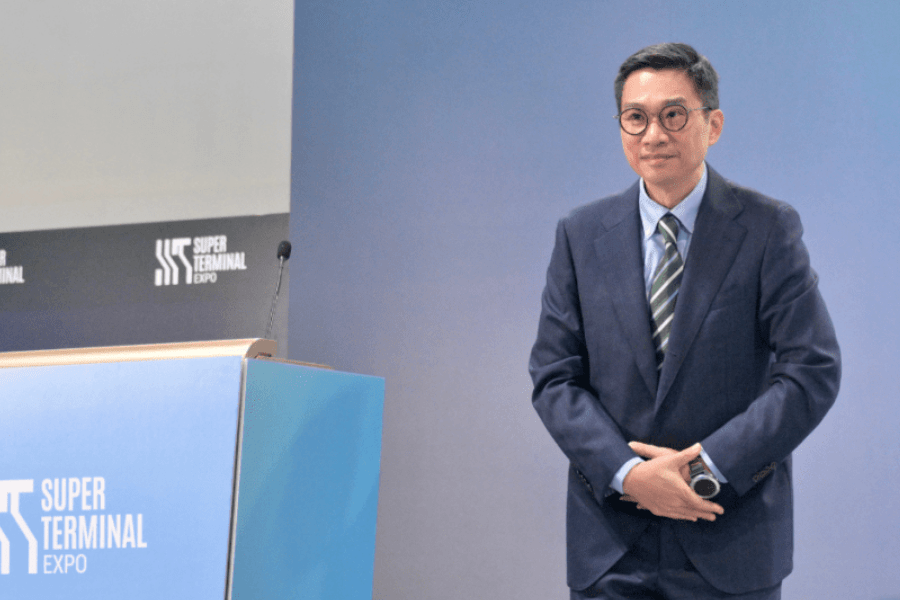
The remarks came as Chapman Fong, the authority's deputy director of airport operations, delivered a speech on the second day of the Super Terminal Expo.
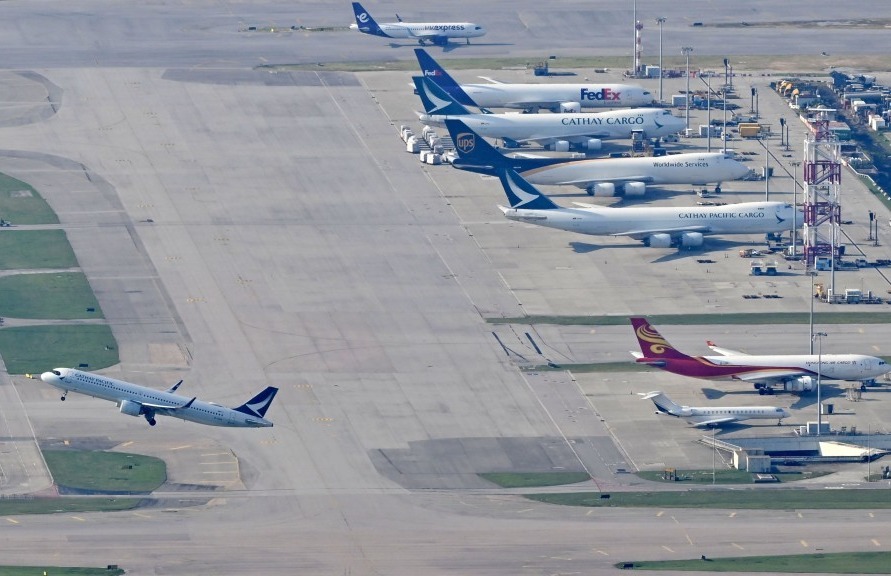
Pointing to HKIA's 5 million tonnes of annual cargo, Fong said the airport has been named the world's busiest cargo airport 15 times since 2010.
He said the authority plans to keep sharpening the airport’s competitiveness to support cross-border e-commerce. As a "two-way gateway," he noted that the airport will help mainland firms go global and bring international goods to Greater Bay Area customers.
E-Commerce as a key cargo pillar
Fong also called the e-commerce sector crucial for the airport, noting that its share of southern China's air export demand had risen from 24 percent in 2019 to an estimated 46 percent in 2026.
Meanwhile, the airport backs flexibility with 220 destinations and 24-hour customs clearance at its cargo terminals, with goods accepted as late as three hours before departure.
He added that the authority will continue to expand its network and capacity and leverage the three-runway system to help e-commerce companies to grow their footprint in new markets
Beyond the airport, Fong highlighted the HKIA Dongguan Logistics Park as another way to bring cargo services closer to manufacturers and exporters in the Greater Bay Area.
He said security screening, palletizing and freight acceptance can all be completed in Dongguan, with goods then traveling by sea directly to the airport's restricted area for onward shipment worldwide.
He estimated the model to cut costs by about 50 percent and processing time by one-third compared with traditional methods, offering e-commerce firms a more efficient, lower-cost option with direct access to the global air network.
The first phase of the permanent facility is scheduled to commence operation in the first half of next year with an annual handling capacity of one million tonnes, he added.
Eyes on the Southeast Asia market
With increasing factories relocating from mainland to Southeast Asia, Fong stated that the authority is also pitching the HKIA’s network and services to potential Southeast Asian partners.
For instance, the airport launched the "HKIA Vietnam-Hong Kong Express Lane" in August, offering a land-air intermodal solution for outbound shipments from Vietnam to worldwide destinations in as little as 48 hours.
To promote cargo digitalization, Fong also pointed to the one-stop HKIA Cargo Data Platform, which connects logistics players on a single platform for information sharing and collaboration.
Through real-time tracking across the entire supply chain, the platform allows different parties to share information, including import and export declarations, helping e-commerce firms manage shipments and connect to onward delivery, he explained.